

The highest-paid man on the JSE received the equivalent to R34.6 million a week in a single year


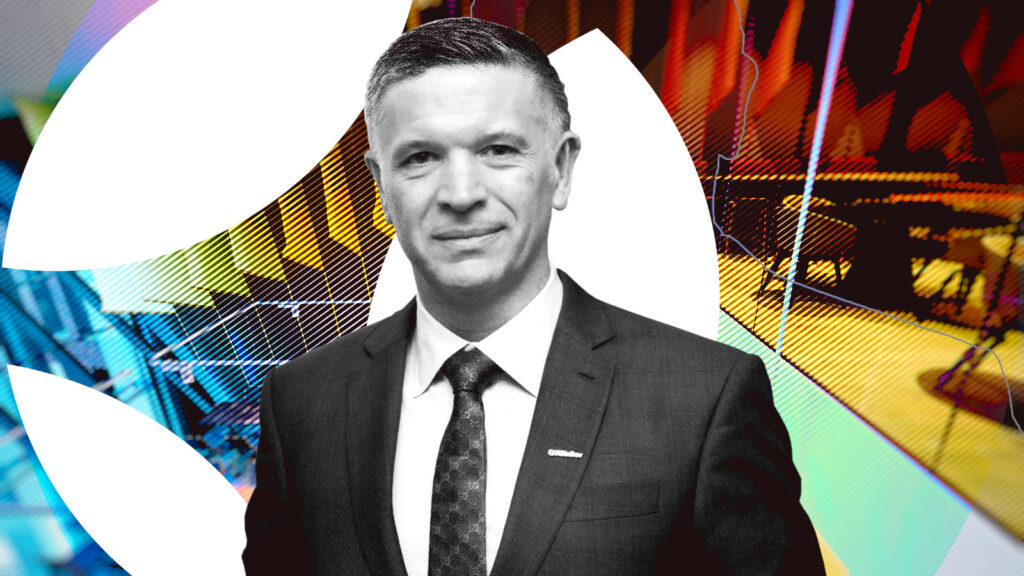
Michel Doukeris, the CEO of global brewer Anheuser-Busch InBev (AB InBev), was the highest-paid executive among companies listed on the Johannesburg Stock Exchange (JSE) Top 40 in 2025.
He received a total remuneration of R1.784 billion. This equates to approximately R148.7 million per month, or R34.3 million per week over the financial year.
However, the bulk of his remuneration package consisted of long-term share-based incentives rather than cash payments.
According to the Labour Research Service (LRS) JSE Top 40 CEO Remuneration Report for the 2025 financial year, Doukeris earned almost 29 times the median remuneration of R58.5 million recorded among the executives analysed.
The report found that JSE Top 40 CEOs received a combined R6.7 billion in remuneration during the year, with Doukeris alone accounting for more than a quarter of that amount.
The LRS described Doukeris and second-ranked Fabrizio Bloisi of Naspers and Prosus, who received approximately R1 billion, as extreme outliers.
“Doukeris (AB InBev) at R1.7 billion and Bloisi (Naspers) at R1 billion are in a different universe from everyone else,” the report said.
It added that the unusually high figures were partly due to substantial long-term incentive (LTI) awards that vested during the year and to the fact that both executives are paid in foreign currencies.
“Both outliers are international executives paid in foreign currencies, and both had massive LTI vesting events in the year,” the LRS said.
Long-term incentives are generally awarded in the form of company shares or options, which executives can access once specified employment and performance conditions have been met.
The LRS also highlighted the effect of currency conversion on comparisons between international and locally based executives.
“When CEO pay is ranked and compared across the JSE in rands, these executives appear at the very top,” it said.
The report added that a weaker rand increases the reported value of remuneration denominated in foreign currencies.
Historic vesting awards
AB InBev’s annual report also provided further insight into Doukeris’s remuneration. It showed that fixed and variable remuneration accounted for just 2% and 98% of his total package, respectively, in 2025.
His annual salary was €1.36 million, and his annual bonus was €3.48 million. The much larger component came from share-based incentives awarded over several years.
A significant portion of these awards originated from incentives granted in March 2020, which vested on 25 March 2025. These included 1,423,122 stock options and 482,689 restricted stock units.
Other share awards also vested during the year, including performance stock units that paid out at 150% after the company’s three-year shareholder return performance placed it in the third quartile of its peer group.
AB InBev said the increase in executive remuneration between 2024 and 2025 was largely driven by the vesting of these historic awards.
The brewer’s remuneration policy is benchmarked against an international group of 22 companies, including Apple, Microsoft, Coca-Cola, PepsiCo and LVMH.
It aims to position executive total compensation at a target 10% above the peer group’s third quartile.
The LRS report identified Absa Group chief executive Kenny Fihla as the highest-paid South African national among the JSE Top 40 CEOs, ranking eighth with remuneration of R148.04 million.
The report also warned against assuming that larger or more profitable companies necessarily pay their executives more.
The report noted that revenue and profit before tax were only modest predictors of CEO remuneration after statistical outliers were removed.








 Loading ...