

Eskom bites back


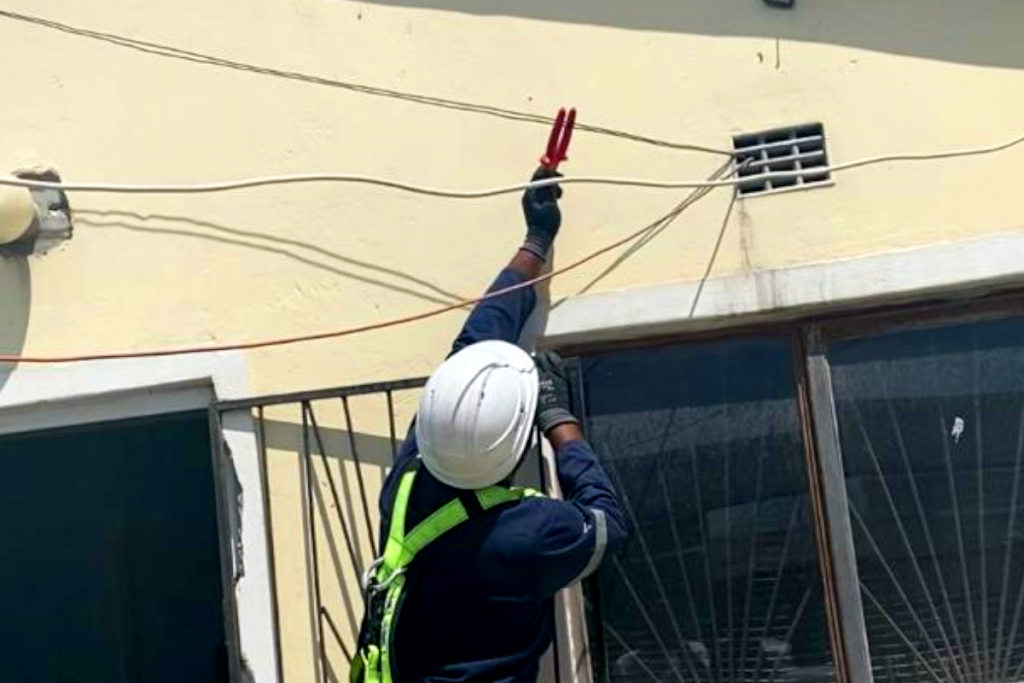
As power utility Eskom takes action against municipalities that owe it billions of rands in debt, the group is also shifting its focus to areas where residents persistently steal electricity and break its equipment.
Responding in a parliamentary Q&A this past week, representatives of Eskom said the group is experiencing a very high number of incidents of illegal connections, meter bypassing and tampering, unauthorised operations on the network, infrastructure vandalism and theft, and the non-payment and non-purchasing of electricity tokens.
This number is constantly on the rise, the group said.
Over the years, Eskom has repeatedly replaced and repaired failed equipment without holding customers accountable – even when the failure was because of illegal electricity activities.
Eskom said that its debt levels have continued to grow, and its operational costs keep accelerating exponentially as it keeps repairing, refurbishing, or replacing infrastructure that breaks or is frequently vandalised.
This is no longer the case, however, with the utility noting that it has started implementing “stringent control measures” to hold these areas to account as it has become financially unsustainable to keep replacing this equipment – especially without any return on investment.
#EskomWesternCape in partnership with @SAPoliceService, @WCLiveTraffic, Metro-police & Law enforcement embarked on removal of illegal connections at Japhta K Masemola and Fukutha street in Makhaza, Khayelitsha this morning. pic.twitter.com/vrWBW8nd1S
— Eskom Hld SOC Ltd (@Eskom_SA) November 29, 2022
Part of these control measures is charging customers who are caught tampering with Eskom’s equipment a R6,050 ‘remedial fee’, Eskom said.
To ‘accommodate’ customers who cannot immediately settle the remedial fee for tampering with Eskom infrastructure, Eskom has reinstated the Deferred Payment Arrangement (DPA) to allow these customers to pay the balance over a maximum period of six months, it said.
In cases where entire areas have had their power supply cut off or disrupted due to communities vandalising or refusing to pay their bills, Eskom said that 60% of customers who have been issued with remedial charge sheets must have made the upfront payment of R500 before supply can be restored.
“The 60% threshold is aimed at ensuring that most customers honour the payment to avoid repeated equipment failure,” it said.
Eskom said that while the frequent equipment failures inconvenience law-abiding and paying customers of electricity in the areas affected – while costing Eskom billions of rands in damaged infrastructure and lost sales – its control measures are in place to combat illegality, vandalism and other electricity-related crimes.
In one of the areas affected by this policy – Ivory Park in Tembisa – Eskom said that there are a large number of customers who have illegally connected transformers to the Eskom network.
It noted that in this region specifically, almost half the residents are not buying electricity from registered electricity vendors and are also refusing Eskom entry into the area to remove the illegally connected transformers.
“Out of 158 failed transformers, Eskom has replaced 107 and is in the process of replacing the remaining 51. It should be noted that Eskom is not refusing to replace the failed transformers in Ivory Park, but merely following the equipment replacement process it has implemented,” it said.

An illegal connection set up by residents
Taking on the bigger fight
As Eskom courts controversy by taking on communities that refuse to pay, it is also directing its attention to the municipalities themselves.
On Thursday (1 December), the power utility started attaching the assets of Emfuleni Local Municipality to the tune of R1.3 billion over the non-payment of bills. At the same time, it approached the Department of Cooperative Governance and Traditional Affairs to mediate between it and the City of Tshwane over an outstanding bill of R1.6 billion.
Municipalities in South Africa owe more than R50 billion to Eskom, which the group has claimed is exacerbating the ongoing power crisis in the country.
When the power utility recently ran out of funds to pay for diesel supply, it pointed to this debt – among other factors – as being a core reason for the lack of financing.
Despite the national government agreeing to take on two-thirds of Eskom’s ballooning R400 billion in debt, the utility remains in a severe financing crunch, and needs all the money it can get if it wants to meet the growing demand for diesel to power its emergency generators and keep the lights on.
The non-payment by municipalities and specific communities also has a wider-reaching impact on all other South Africans: Eskom’s application for a 38% tariff hike for 2023 is being considered by energy regulator Nersa. A decision on whether or not to grant it will be made before the end of the year.














 Loading ...