

Eskom warns its R110 billion headache could reach R300 billion in 5 years


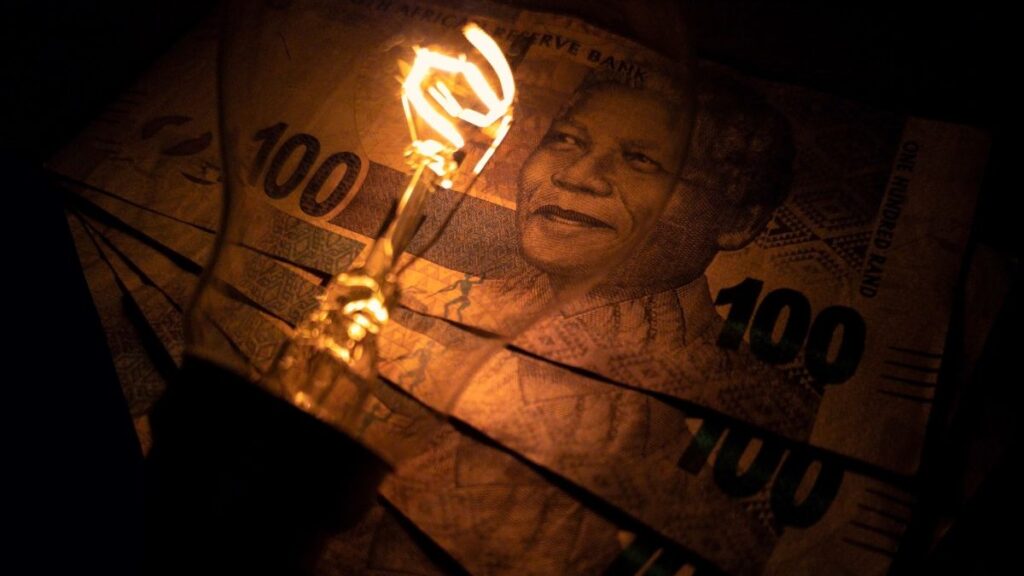
Eskom has seen its pre-tax profit grow, but has warned that municipal debt could reach over R300 billion if left unchecked.
In its FY26 Q3 Business Performance Report to parliament, Eskom said that its performance from Q2 to Q3 improved.
The state-owned entity said that financial metrics remained on target, supported by improved operations performance.
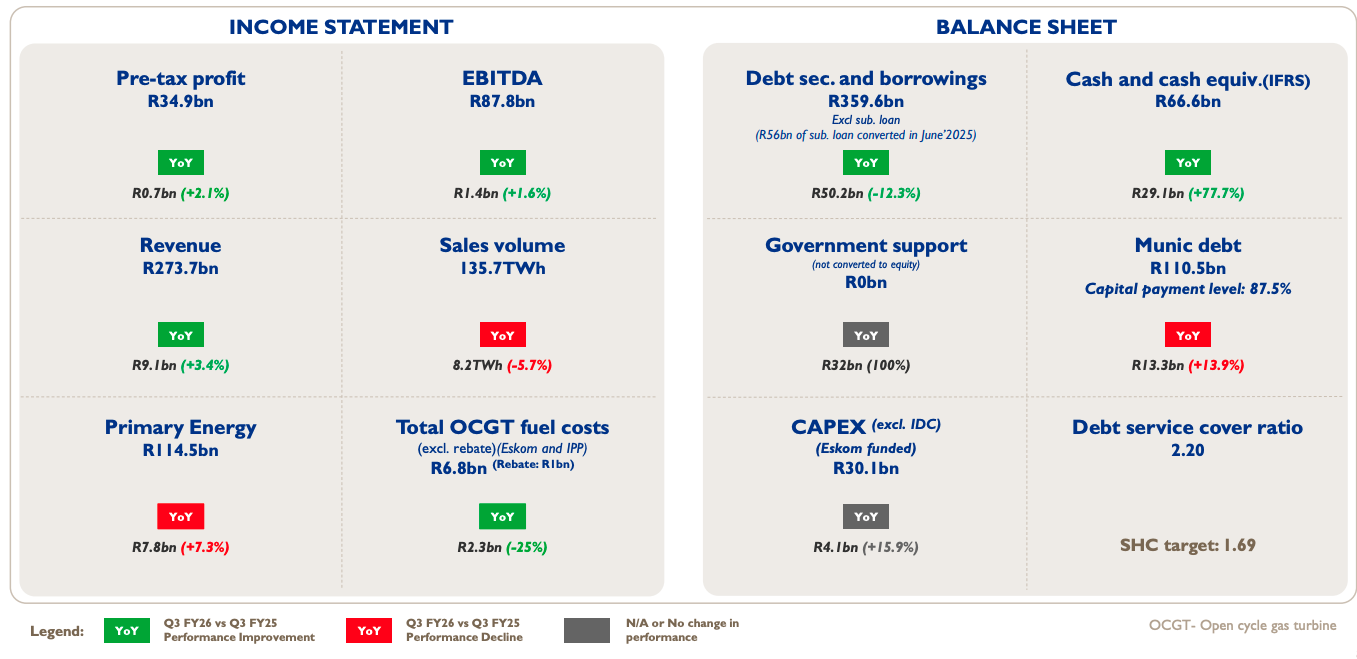
Q3 year-to-date total revenue of R273.7bn was 3.4% better year-on-year. It was mainly due to a tariff increase, as local sales were 5.7% lower and cross-border sales 5.6% lower year-on-year.
The group’s year-to-date profit is up 2.1% year-on-year to R34.9 billion. Year-end profit is expected to be 7.9% higher year-on-year.
The group’s primary energy cost was below budget, as the Open-Cycle Gas Turbine cost was down 25% year-on-year and coal usage was 7% below budget.
Debt securities and borrowings also declined to R359.6 billion from R410 billion in the prior year, and liquidity and cash position strengthened.
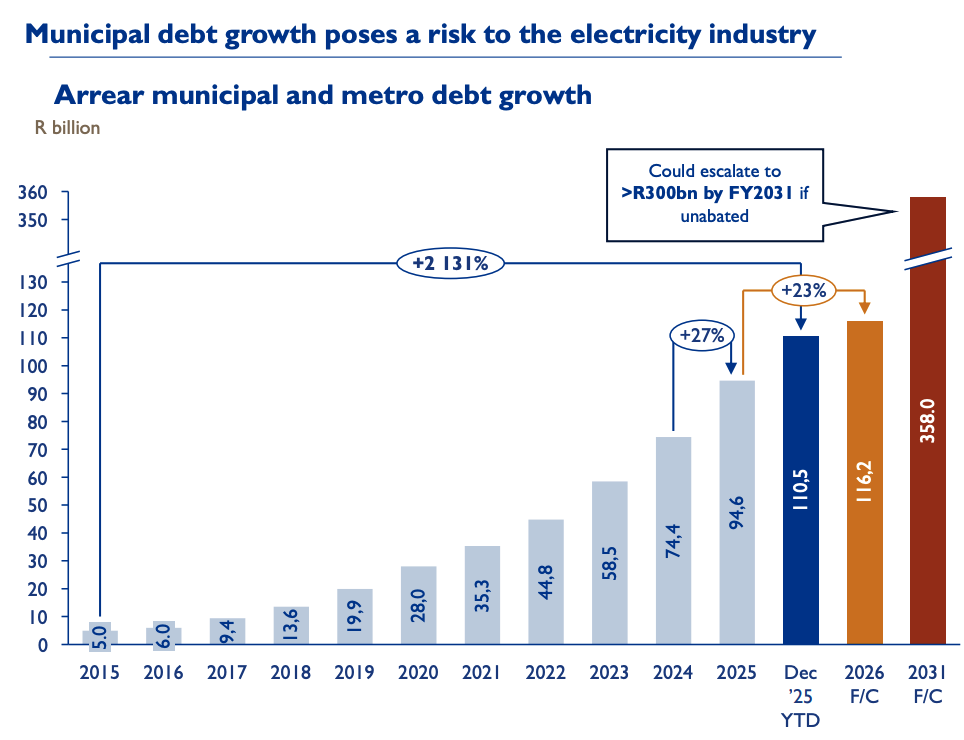
However, the group admitted that growing municipal debt remains a concern. The group saw year-to-date municipal debt growth of R15.9 billion.
Metros contributed R2.3 billion to the debt growth, and non-metros added R13.6 billion. This brought the total municipal debt to R110.5 billion.
“A coordinated effort is required to arrest municipal debt growth, which poses a risk to the electricity distribution industry,” said the SOE.
Eskom said that municipal debt could balloon to R116.2 billion by the end of the 2026 financial year, which would mark a year-on-year increase of 23% from the 2025 financial year.
It added that municipal debt could grow to over R300 billion by FY2031 if it remains unabated.
Eskom said that 71 municipalities are on the National Treasury’s debt relief programme, with 10 municipalities compliant with their current account payments.
Eskom and the government are thus working on alternative solutions, such as distribution agency agreements (DAAs).
“DAAs will help support municipalities achieve sustainable local service delivery, while also supporting Eskom’s financial stability through improved billing and revenue collection,” it said.
DAAs see the licence remaining with the municipality, but would see Eskom manage services. Eskom aims to sign 14 DAAs by 31 March 2026.
Eskom lays down the hammer
The municipal debt problem has become so large that Eskom started issuing notices to municipalities earlier this month, where they must make representations over why their supply should not be cut.
Eskom said that it had exhausted all reasonable avenues through the Intergovernmental Relations Framework Act, with around 14 municipalities at risk of having their power cut.
Affected parties have been given the opportunity to make representations before further action is considered, as per the Promotion of Administrative Justice Act (PAJA).
The municipalities have been selected because they have either:
- Not settled their accounts for at least the last 18 months;
- Not met the conditions of the National Treasury municipal debt relief programme; or
- Pose a significant financial risk to Eskom.
The debt relief programme ring-fenced historic electricity debt and suppressed related interest, which created space for municipalities to meet ongoing obligations to Eskom.
However, Eskom has still seen a rise in arrears, which has underscored the need to proceed with debt recovery.
Eskom said that the PAJA process ensures it can comply with legal requirements while taking the necessary steps to maintain the stability of the electricity supply system.


















 Loading ...