

Warning to anyone thinking of stockpiling fuel at home in South Africa


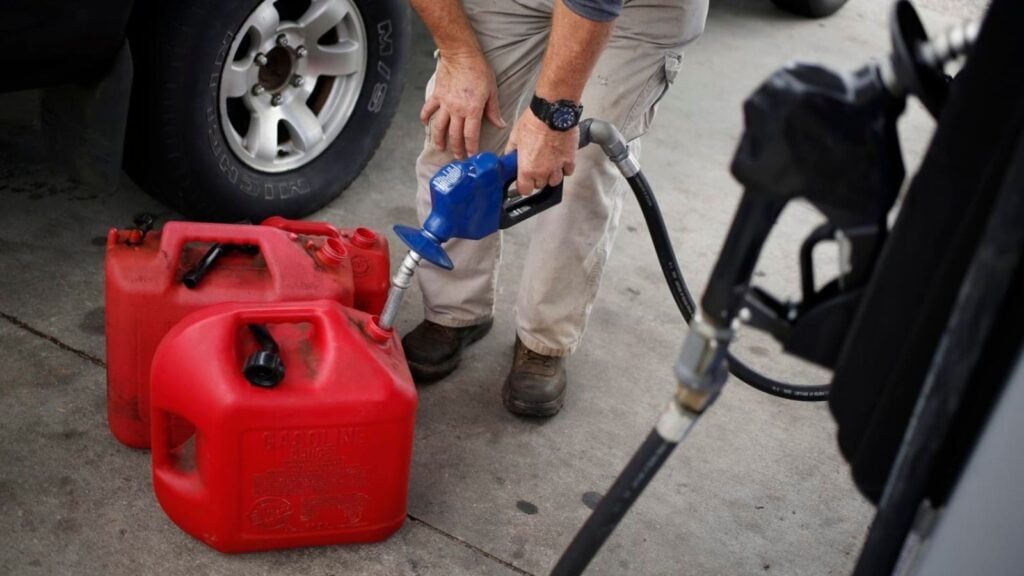
South Africans facing the prospect of record-high fuel prices in October have been warned against stockpiling large quantities of petrol and diesel at home.
This is the feedback from PSG Insure, which said that improperly stored fuel can create serious safety risks and potentially affect insurance claims.
The warning comes as petrol and diesel prices are on track for another major increase next month, with current data from the Central Energy Fund (CEF) showing significant under-recoveries during the first week of September.
Petrol 93 and 95 are currently showing under-recoveries of R1.81 and R1.93 per litre, respectively, while diesel is tracking under-recoveries of between R1.73 and R2.03 per litre.
If these market conditions continue for the rest of September, South African motorists could face the highest petrol prices in the country’s history.
Based on current projections, petrol could rise to as much as R28.83 per litre in October. This would surpass the previous record of R28.06 per litre reached in June 2026.
With ongoing conflict creating uncertainty in global oil markets, many South Africans and businesses may be considering increasing their fuel reserves to protect themselves against further price hikes or potential supply disruptions.
However, Ryno de Kock, Head of Distribution at PSG Insure, warned that keeping excessive quantities of fuel at residential properties could create dangers that homeowners underestimate.
“Many homeowners may not realise that fuel storage at residential properties is subject to specific guidelines,” he said.
“These requirements are designed to reduce the risk of accidental fires, spills and other incidents that could endanger people and property.”
Fuel is inherently hazardous, and storing petrol or diesel incorrectly, in unsuitable containers or in excessive quantities can significantly increase the risk of fires, explosions, leaks and environmental damage.
De Kock said that failing to comply with applicable regulations and insurance requirements could affect insurance cover and the way an insurer assesses a claim following an incident.
Know the law

According to the South African Insurance Association (SAIA), residential properties should generally store no more than 25 litres of fuel or other flammable liquids.
Fuel should be kept in secure, properly ventilated containers and stored in a way that reduces the risk of ignition, leakage and contamination.
“Property owners should also ensure compliance with municipal by-laws, occupational health and safety requirements, and relevant building regulations,” De Kock said.
“While these measures may seem straightforward, overlooking even a small detail can substantially increase both safety and insurance-related risks.”
The rules are different for businesses, which may need to store significantly larger quantities of fuel for operational purposes.
De Kock said there are generally no fixed limits on the amount of fuel businesses can keep, provided they meet their insurer’s underwriting requirements and comply with applicable regulations and safety standards.
Businesses must ensure that fuel storage facilities are appropriately designed, maintained and operated, with measures in place to prevent fires and spills.
Requirements can also change depending on where a business operates, as municipal by-laws vary between jurisdictions.
The warning comes as diesel prices are also approaching new records. The wholesale price of 0.005% diesel is currently R30.05 per litre, while the record high of R31.88 per litre was reached in May 2026.
With the current under-recovery sitting at R2.03 per litre, diesel could climb to around R32.08 per litre in October.
De Kock said that while stockpiling fuel may appear to be a sensible precaution during periods of uncertainty, homeowners and businesses should first consider the safety and insurance implications.
“Before increasing fuel storage volumes, it is best to speak to your insurance adviser to confirm the requirements applicable to your policy and insurer,” he said.


















 Loading ...