

101% electricity price hike for South Africa


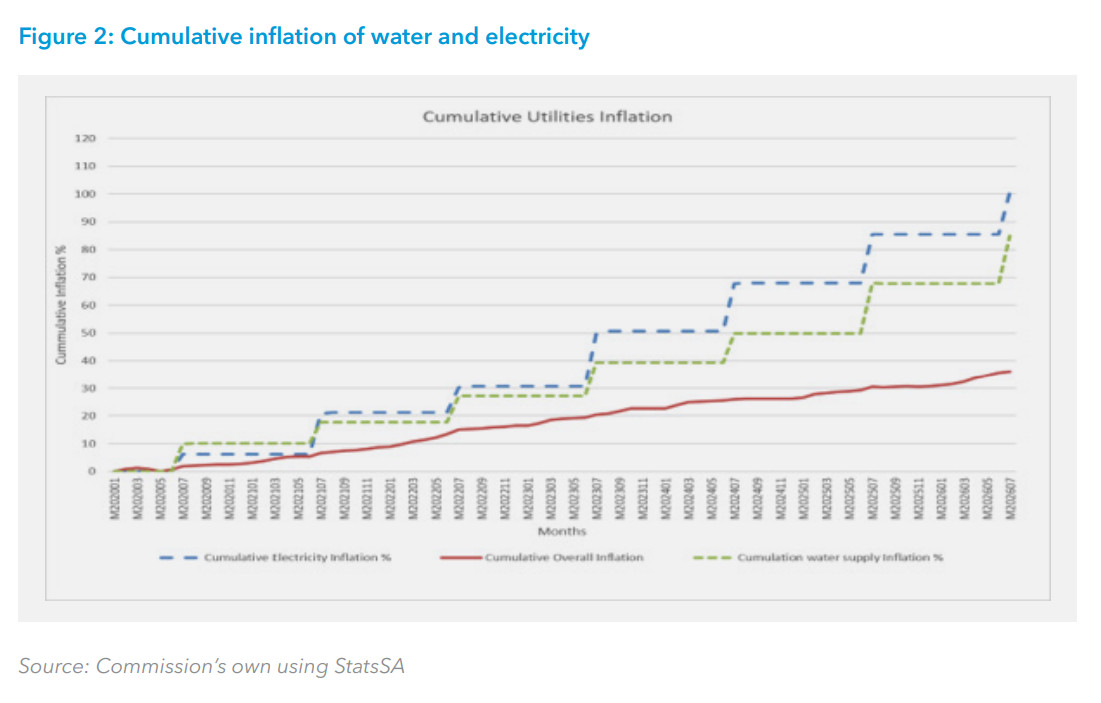
Cumulative electricity price inflation in South Africa hit 101% by July 2026, far exceeding the 35% increase in overall consumer prices since 2020.
According to the Competition Commission, this highlights a disproportionate contribution of electricity costs to household expenditure, exacerbating the cost of living crisis in the country.
The data was contained in the commission’s latest Cost of Living Report, which tracks the short-term (y/y) and long-term cumulative inflation trends from 2020 to July 2026.
It specifically looks at the affordability of basic food and non-food items—the latter of which includes utility costs such as water and electricity.
The commission noted that electricity and water continue to rank among the most significant administered expenses faced by South African households.
Both are indispensable to well-being and economic activity, with electricity in particular accounting for a significant portion of spending.
The rub is that there are very few alternatives for electricity provision, with Eskom having a monopoly in the sector.
“These services underpin virtually every aspect of daily life, from food preparation, heating, sanitation, education, business operations and agricultural production,” the commission said.
“As essential services with few practical substitutes, increases in electricity and water tariffs have an immediate and unavoidable impact on household expenditure.”
In recent years, persistent cost pressures across both sectors, including ageing infrastructure, rising operating and maintenance costs, and the need to finance ongoing network rehabilitation and expansion, have driven tariff increases that consistently outpace overall consumer inflation.
Between July 2025 and July 2026, electricity inflation increased by 8.1% and water inflation increased by 10.1%.
Between July 2025 and July 2026, headline CPI increased by 4.3%.
The commission said that this indicates that electricity and water inflation have both outpaced headline inflation during this one-year period.
Electricity inflation is double headline inflation, while water inflation is more than double headline inflation.
Over the longer term (between 2020 and 2026), cumulative electricity inflation increased from approximately 85% in 2025 to around 100.5% by July 2026.
More price pain is coming
South African households will not see any relief in electricity prices any time soon.
While the government has moved to introduce a new electricity price policy, which will primarily help indigent households, and has put political pressure on Eskom to keep hikes contained, this won’t stop above-inflation increases.
Most recently, Eskom chair Mteto Nyati made it clear that Eskom would not be putting any of the group’s R30 billion profit toward price relief, instead opting to reinvest it in the company.
Nyati said the utility has big ambitions to participate in renewables, deliver energy, and invest in ways that support the growth of data centres.
“All of that requires money. We have decided not to declare a dividend; we are going to put the money to good use…so that we never go back to the situation we had a few years ago,” he said in September.
The group has committed to no longer implementing any double-digit price hikes—however, that means anything below 9.99%
For 2027, for example, the group will implement another average increase of 8.8%.
In its assessment of its cash-generating unit (CGU), the group forecasts price increases averaging 6% from 2029 through to 2050.
With the South African Reserve Bank (SARB) moving to contain inflation at 3% over the next few years, electricity prices are likely to increase at double the inflation rate for the foreseeable future.











 Loading ...