

3% of taxpayers pay 33% of South Africa’s total income tax



A tiny minority of taxpayers in South Africa pays a significant share of the country’s income tax, with the numbers even tighter at the top.
Personal Income Tax is South Africa’s biggest income source, accounting for almost 40% of revenue collected for the fiscus.
South Africa has about 26 million individuals registered for tax, but not all of them actually pay income tax because they do not meet the threshold.
Instead, there are about 7 million or so taxpayers who are assessed for tax each year, where the bulk of collections comes from those earning at the top.
Approximately 12.5% of individual taxpayers earning more than R750,000 per year contribute close to 60% of personal income tax.
This equates to approximately 980,000 taxpayers out of the 26 million individuals registered.
The concentration intensifies at the upper end of the income scale. Taxpayers earning R1.5 million or more per year account for 32.7% of PIT payable—representing only 2.9% of assessed taxpayers.
This over-reliance on top earners in the country to finance the budget has raised serious red flags among economists and analysts, with two significant risk factors sticking out.
The first is the fact that the taxpayers in these narrow ranges are an ageing population. With persistently high levels of youth unemployment in South Africa, the fiscus is vulnerable to future shocks.
“High unemployment, particularly among younger South Africans, limits the expansion of the tax base through PAYE, a significant revenue stream for SARS,” said Tax Consulting SA.
“With overall unemployment at 31.9%, and youth unemployment at approximately 40%, fewer individuals enter the formal tax net despite being of working age.”
The second issue is that top earners in South Africa are also increasingly mobile, with emigration becoming a major risk factor as the government increasingly targets this group.
“Mobile high earners who emigrate to pursue a new life abroad expose revenue collection to economic volatility and behavioural responses,” Tax Consulting said.
The 2025 Tax Statistics bulletin shows that between the 2017 and 2024 tax years, more than 51,500 individuals formally declared that they had ceased to be South African tax residents.
Over the last four years, South Africans aged 18 to 44 made up an average of 61% of taxpayers who left the country and formally severed tax ties with SARS each year.
SARS noted that this removes a highly productive segment from the country’s tax base every year.
SARS and Ramaphosa’s challenge in 2026

The 2025 Budget, SARS and President Cyril Ramaphosa’s latest State of the Nation Address (SONA) made it clear that the government’s main goal is to expand the tax base.
However, they have conceded that this is a challenging ask.
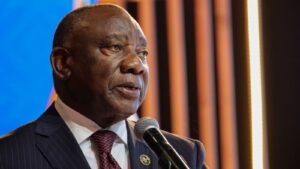
During a visit to SARS in early February, Ramaphosa admitted that “revenue collection is more challenging, both domestically and globally.”
“Slower economic growth and higher living costs are squeezing the tax base,” he said.
Unfortunately for taxpayers, this just means that SARS has ramped up, and is likely to continue ramping up its collection efforts.
The taxman has already cast its collection net wider through third-party partnerships to collect information, and has come down harder on trusts, their beneficiaries, and outlier trades like crypto.
SARS has repeatedly confirmed that it will, in the current financial year, broaden the tax base by systematically identifying and registering individuals and businesses that have previously operated outside the formal tax system.
National Treasury, meanwhile, had pumped billions of rands into the tax service to support its collection efforts.
Minister of Finance Enoch Godongwana has repeatedly stated that growing the tax base and improving the administrative efficiency of SARS will allow the government, over time, to spread the tax burden more evenly and equitably.
The net revenue estimate for the current financial year stands at approximately R2 trillion. With the 2026 Budget looming, the pressure on SARS and taxpayers will soon come into view once more.
















 Loading ...