

The weak rand has nothing to do with Zuma and his cabinet reshuffles: Gigaba


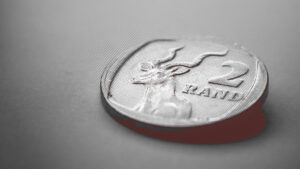
Finance minister Malusi Gigaba says that president Jacob Zuma’s recent cabinet reshuffle had nothing to do with the weakening of the rand – because the currency has always been volatile, and has had extreme movements in the past.
Speaking at the World Economic Forum on Africa being held in Durban this week, the finance minister said simply that “the exchange rate is okay”, and that the apparent weakness in the currency didn’t come from the recent cabinet reshuffle.
In fact, according to Gigaba, “it has absolutely nothing to do with changes in government because that does not happen frequently”.
“It could have on occasion have to do with the changes in the finance ministry, but it’s been volatile not as a result of that, for quite a long time. There was a time when it depreciated close to R18,” Gigaba said.
Despite the finance minister’s beliefs, many economists and analysts disagree – while ratings agencies have made their position very clear: South Africa’s downgrade to junk was because of Zuma reshuffling his cabinet, and bringing uncertainty to the table.
Leading up to and following the axing of former finance minister Pravin Gordhan and his deputy Mcebisi Jonas in the last reshuffle, the rand lost 6% of its value in the three-day period, waiting for the bubble to burst.
The rand crumbled from the 20-month lows of R12.35 on the Monday before the reshuffle, to R13.10 immediately after the move – losing about R1.50 in total during the whole fiasco. The currency has continued to fluctuate since, particularly with political uncertainty still high on the list of reasons why.

Economists have expressed some surprise that the rand’s depreciation hasn’t been more extreme – as it was when the rand tanked to R17.99 against the dollar after the president fired Gordhan’s predecessor, Nhlanhla Nene in 2015, which Gigaba alluded to – but that surprise comes with the understanding that the move was not entirely unexpected, and that the global markets also have a hand in it.
According to research analyst at Nomura, Peter Attard Montalto, the build up to Gordhan’s axing, as well as the junk status downgrades, had been priced into the market for some time.
Even so, the rand is in a volatile position, and is expected to worsen as the effects of said events take hold. This was seen this week, when weaker producer data, couple with low investor confidence, pushed the rand down to three-week lows, weakening to R13.70 to the dollar on Friday.
Further pressure on the rand is expected when the third ratings firm, Moody’s delivers its report on the country, with many expecting another downgrade (though only by one notch, to one level above junk status), and a further downgrade by S&P on South Africa’s local currency debt, which is still currently sitting above junk status.
Nomura anticipates the rand gradually weakening to around R15.50 by the end of 2017, as the country moves through its political calendar leading up to the ANC’s elective conference in December.
Read: 0.2% GDP growth in 2017: South Africa’s dismal outlook now that Gordhan is gone















 Loading ...