

Figures that show the shocking state of South Africa’s finances


Economist Mike Schussler has shared some shocking figures around South Africa’s finances, noting that the country is powering headlong towards a fiscal cliff and that a policy of prescribed assets is increasingly likely.
Schussler was speaking at a briefing at the Institute of Race Relations (IRR) on Tuesday (19 November).
Prescribed assets is a policy whereby pension and other fund managers are told via government prescription where they can invest money. In present circumstances, pension fund managers would likely be forced to invest in government bonds to help the country meet its rapidly rising debt burden.
Schussler pointed out that public debt – including debt guarantees for state-owned enterprises (SOEs) – had reached nearly 70% of GDP. This is compared to about 32% in 2010.
South Africa’s current government debt ratio is also higher than those of its emerging market peers. Schussler noted that even National Treasury’s own forecasts showed the situation was deteriorating markedly. In February, National Treasury had predicted that the debt-to-GDP ratio would be about 60% in 2026/27.
Six months later, this was forecast to be closer to 80% by 2026/27. This upward revision came against a background of declining tax revenue, Schussler said.
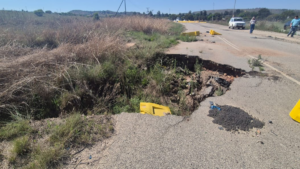
Already, the government is investing less in infrastructure such as roads, schools, hospitals, and dams.
Also concerning is South Africa’s low economic growth. According to Schussler, on current trends, strict unemployment could reach 37.7% (up from 29.1%) by 2030, with expanded unemployment nudging 45%.
Politicians are under pressure to do something, said Schussler, and the government is unlikely to approach the International Monetary Fund (IMF) for assistance. Far more likely would be a policy of prescribed assets, as the IMF would insist on reforms and accountability, the economist said.
South Africa’s significant pension assets, equivalent to nearly 100% of GDP, a higher ratio than most other countries, present an inviting target for profligate politicians looking to plug a funding hole, the IRR said.
However, Schussler said: “Our danger lies in not addressing the fundamental overspending and growth issues that South Africa faces. Without real reform we will make South Africans poorer.”
Marius Roodt, campaigns consultant at the IRR, said the Institute opposed any policy of prescribed assets. “It’s time the government makes the hard choices and cuts spending,” he said.
“The public sector wage bill must be reduced drastically and we must stop propping up failing SOEs. We must also create an environment where jobs can be created and where businesses can flourish.”
In August, president Cyril Ramaphosa said that South Africa should investigate using worker pensions to finance development and infrastructure projects.
“We need to discuss this matter (prescribed assets) and we need to discuss it with a view to actually saying what is it we can do to utilise the various resources in our country to generate growth in a purposeful manner,” Ramaphosa said.
The ANC has also previously floated the idea of using pensions to help fund embattled state-owned enterprises.
However, finance minister Tito Mboweni said last month that National Treasury is not actively considering prescribed assets.

















 Loading ...