

Major water crisis warning for Gauteng


A potential water supply crisis is on the cards for Gauteng metros as Rand Water’s supply system is “on the verge of collapse,” with water storage for the bulk supplier sitting at below 30%.
The warning was sent out by the City of Tshwane following a meeting with Rand Water and the metro’s provincial peers, Johannesburg and Ekurhuleni, over the weekend.
“The City of Tshwane held an emergency meeting… with representatives from Rand Water, City of Johannesburg and the City of Ekurhuleni to address a severe strain on the Rand Water supply system, which is on the verge of collapse.
“Rand Water’s total water storage has plummeted below 30%, necessitating immediate interventions to mitigate the crisis,” Tshwane said.
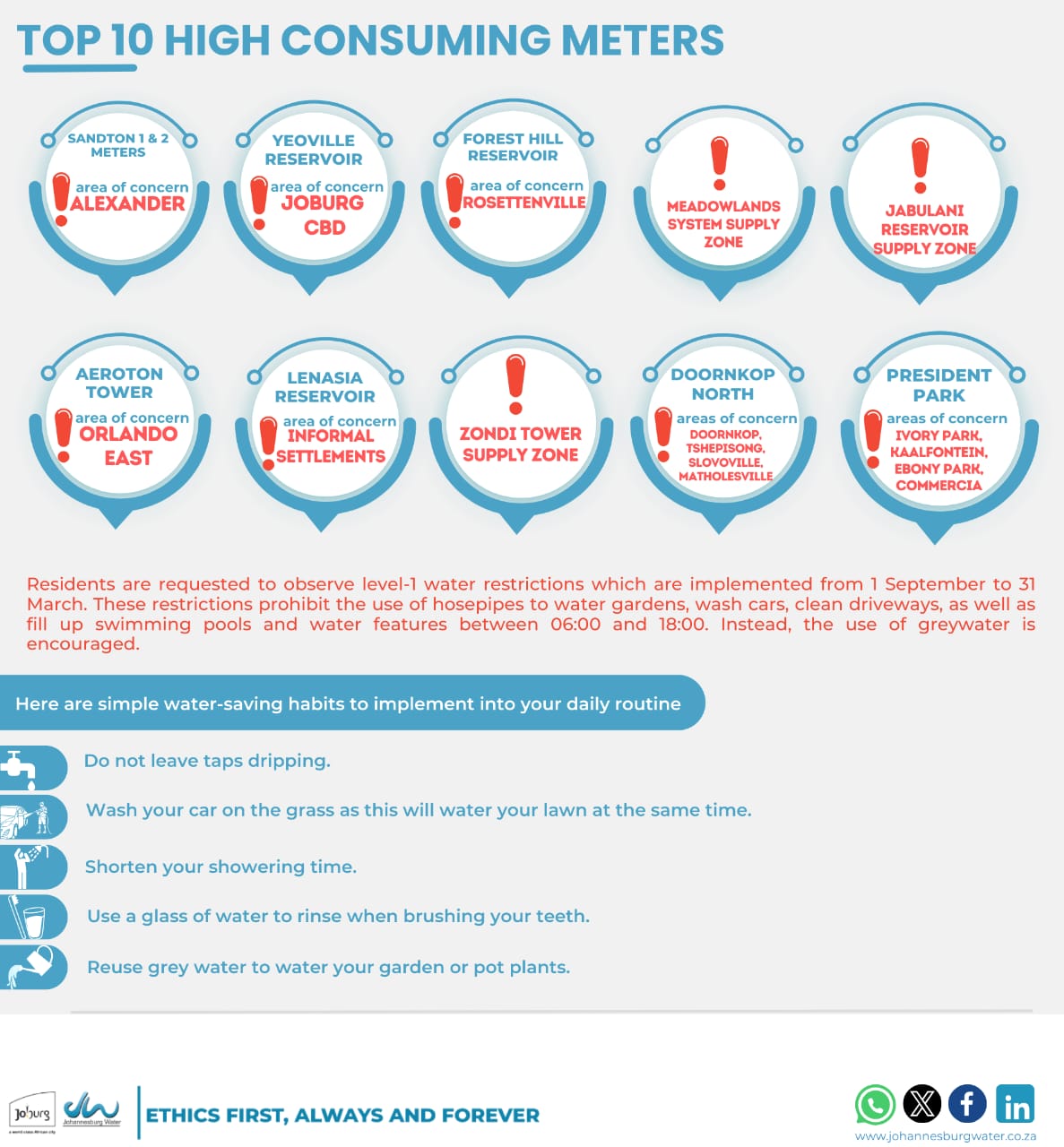
According to Rand Water, the metros have been consuming water far above agreed-to rates for quite some time, and have been encouraged to implement mitigation measures.
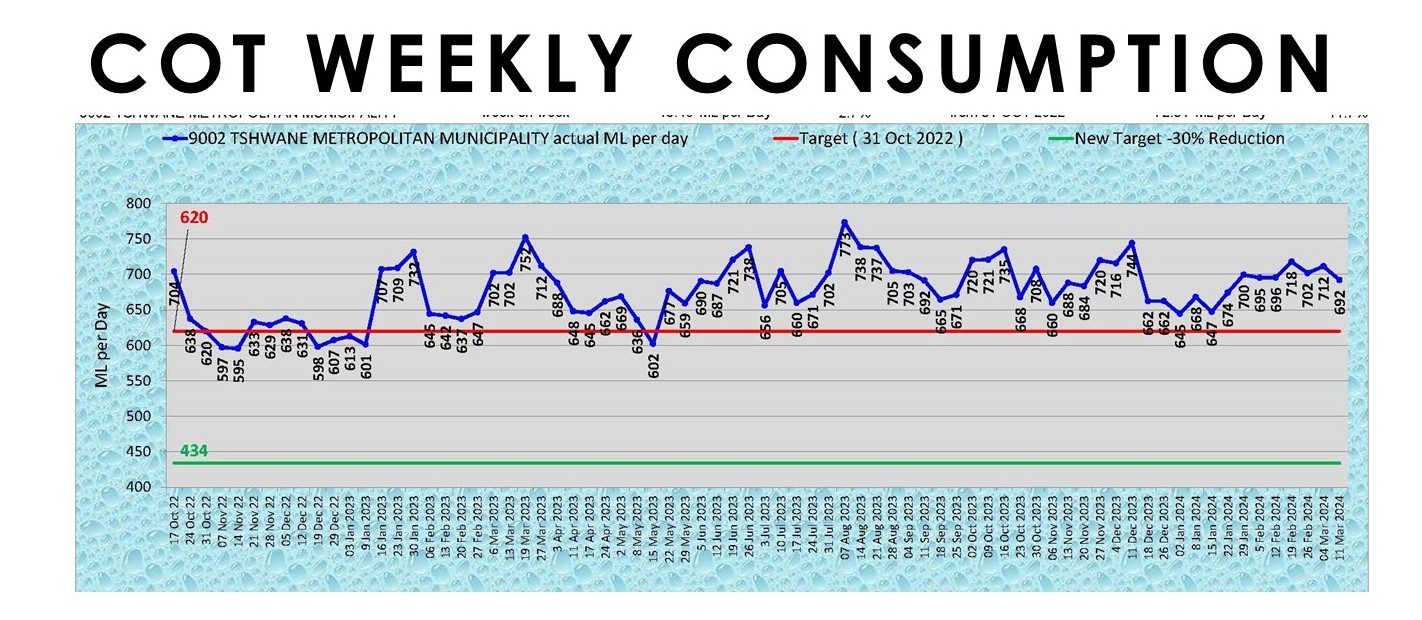
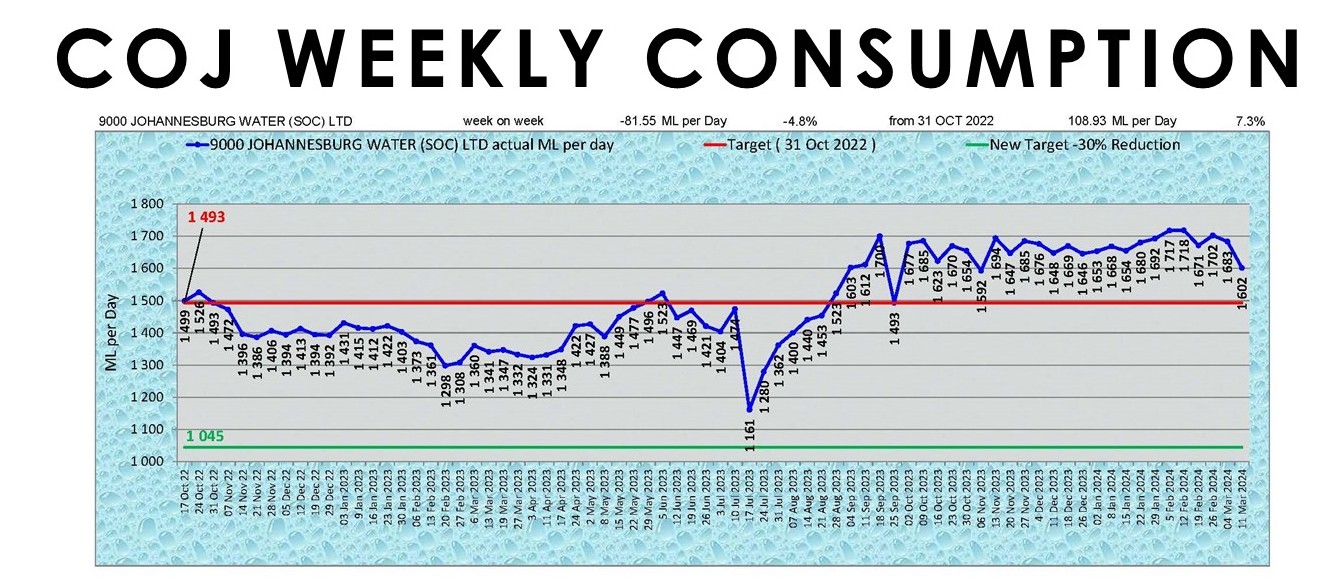
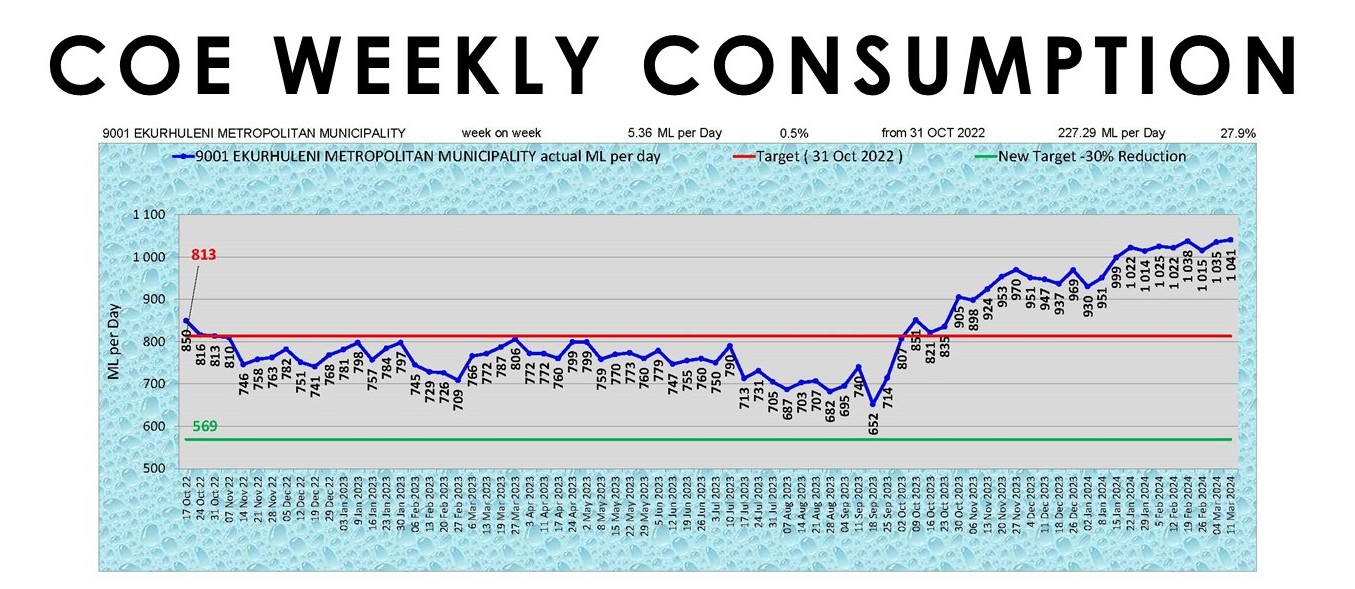
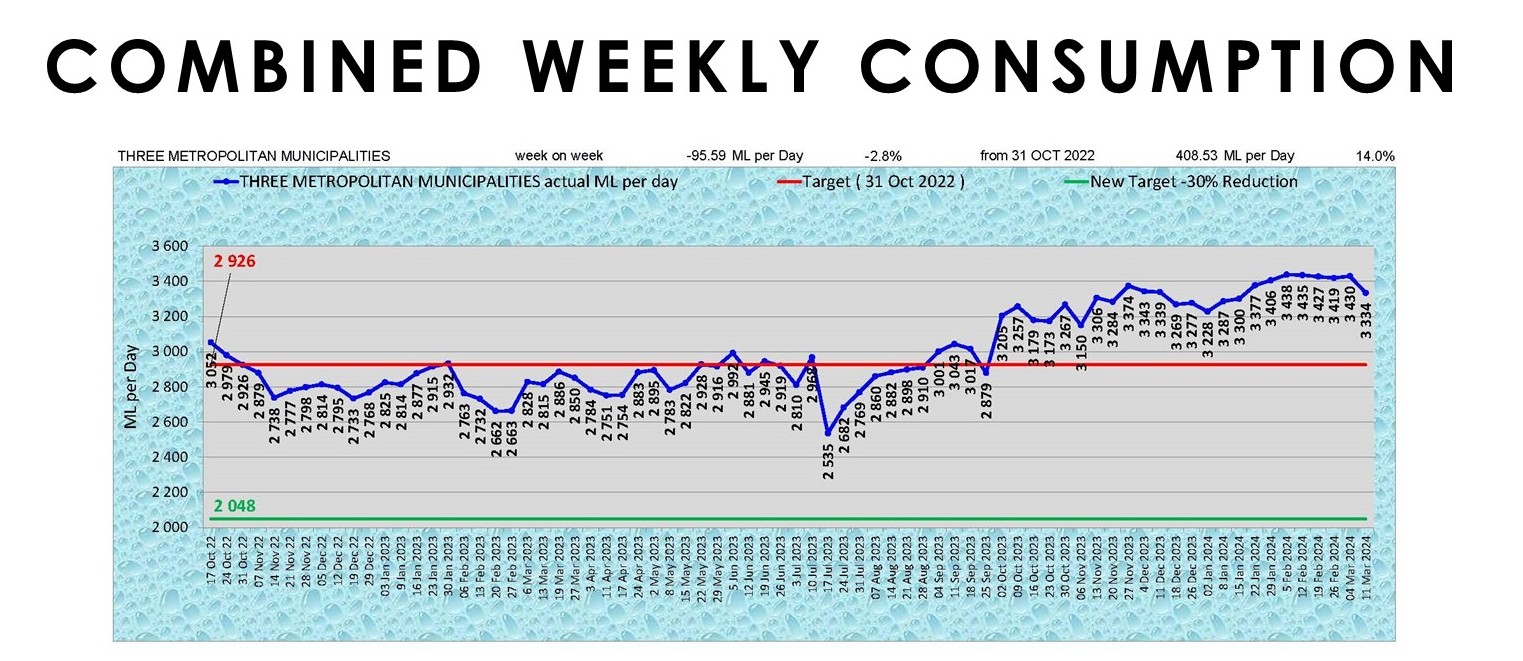
In the graphs below, shared by the group, the green line represents Rand Water’s consumption agreement with different Metros.
“When the graph falls below the green line, it indicates that the metro is effectively managing its water consumption and demand. However, if the graph exceeds the green line, it means that the metro is consuming more water than agreed upon,” it said.
As a result, Tshwane and Johannesburg announced water restrictions in hopes of curbing demand, with residents and businesses urged to use water sparingly. Ekurhuleni issued a similar alert earlier in the week.
Issues of water supply in Gauteng have been going on for a lot longer than the current heatwave. Experts have laid the blame on poor infrastructure, noting that it is not necessarily residents and businesses consuming too much water but rather water being lost to leaks.
The strain on the system “comes from the fact that Rand Water is unable to keep up with demand,” as approximately half of the water that goes into the system get lost to leaks and it currently does not have the additional capacity that would be needed, said water expert Professor Anthony Turton in an interview with Newzroom Afrika.
Countless supply systems and pipes across Gauteng have been plagued by issues for a lot longer than current crisis.
Systemic issues such as ailing infrastructure resulting in water leaks, lack of investment into upgrades and maintenance, vandalism, theft, and an increasing demand as a result of urbanisation are trends touted by experts as the perfect storm that is causing the crisis in the province (and across the country).
Looking at Johannesburg as an example, the 2023 “No Drop Report” (looking at 2021/22) by DWS highlights that the metro is facing serious issues relating water losses, losing around 44% of its water supply through non-revenue water that includes stolen water, non-billable water and leaks.
Leaks account for 25% of fresh drinking water that is being lost due to failing infrastructure.
“The fact that we are struggling to restore water in Joburg indicates that the entire water supply system (which we share) is under strain,” said Tshwane MMC, Themba Fosi.
To “avert a full-blown water crisis,” residents are urged to partake in water preservation and demand management initiatives, added Fosi.
Government response
The Department of Water and Sanitation (DWS) said that it is working to reduce water loss by employing water balance analysis, pressure control techniques, and implement appropriate infrastructure maintenance. In several areas across the province, supply points have already been shut off.
These developments are on the back of widespread (ongoing) outages in numerous areas across South Africa’s economic powerhouse, Johannesburg, since the beginning of March.
For weeks now, hundreds of thousands of residents living in areas of Johannesburg spanning from Soweto in the south to Randpark Ridge in the north, have seen their taps run dry.
Residents of the abovementioned areas were told that the water outages were caused by a power failure at one of Rand Water’s biggest pump stations, Eikenhof, following a lighting strike. Even more power outages followed, which impacted the filling of numerous reservoirs.
However, 10 days into the crisis, it was revealed that a valve on a pipeline that supplies more than 20 suburbs had been shut. Rand Water refuted claims that this had an impact on the issues of supply, with the entity saying that the heatwave is driving the water crisis in the province.
Rand Water has confirmed the meeting, and said that it is consistently engaging with its various stakeholders going forward.
Read: Some South Africans are literally paying the government for air














 Loading ...