

Ramaphosa signs two new laws for South Africa


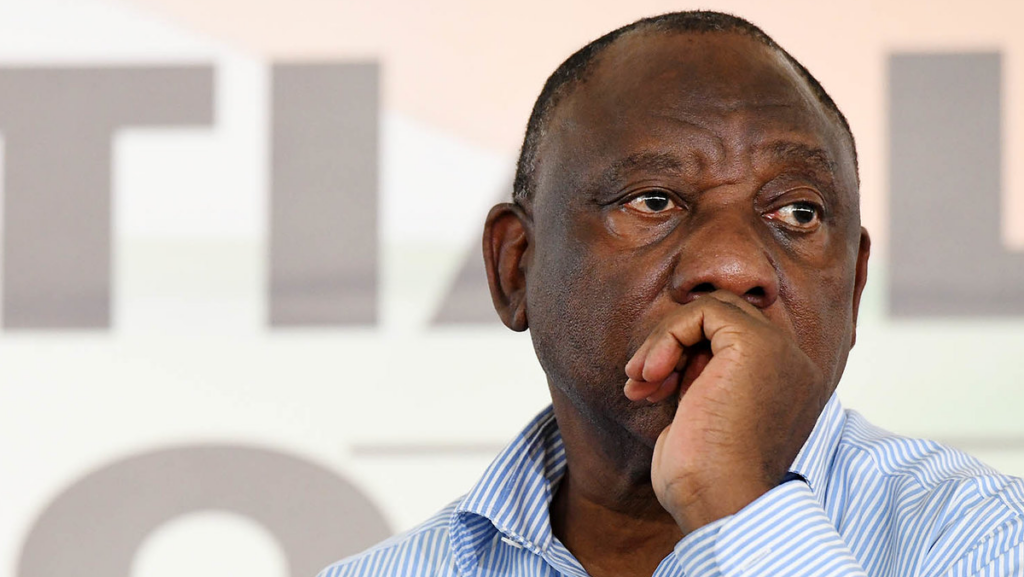
Two pieces of legislation have been signed into law by President Cyril Ramaphosa, with big changes for Eskom and public sector employees.
South Africa’s legislative process takes a long time, with approvals needed from the National Assembly, the National Council of Provinces and the President for bills to become law.
The current legislation on the president’s desk marks a significant decline since the start of the year, when Ramaphosa had 18 bills that still needed his signature on his desk.
Many of these bills were pushed through parliament ahead of the 2024 election, with many revived by the ninth administration.
Ramaphosa was busy during the first year of the government of national unity (GNU) and signed controversial legislation, including the Expropriation and Basic Education Laws Amendment Acts.
On top of these, several bills from the third attempt of the 2025 budget were pushed through parliament, including the two new laws.
Unlike other pieces of legislation, the new bills are effective immediately following Ramaphosa’s signature.
For instance, last week, the Presidency confirmed that the 2014 South African Language Practitioners’ Council Act had officially come into effect, over a decade after it was signed into law by former President Jacob Zuma.
The Eskom Debt Relief Act

The Eskom Debt Relief Act reduces the amount required by Eskom for the 2025/2026 financial year as part of its bailout.
In 2023, Finance Minister Enoch Godongana announced the Eskom Debt Relief Act.
The original plan included a R254 billion debt relief package over three years for Eskom, and included several measures to improve Eskom’s financial performance after years mismanagement.
At the time, the utility was subjecting South Africa to its worst-ever load shedding, with stage 6 load shedding a regular occurrence.
Although the group was gripped by high levels of debt and was not profitable, the tide appears to be turning, with the group having posted an interim profit of R17 billion in the 2024/25 financial year.
On top of its improved financial performance, the utility has kept the lights on for most of 2024 and 2025.
Eskom also predicts no load shedding during the 2025/26 summer, which is a huge win for South Africa as load shedding usually picks up in summer amid higher maintenance.
Amid the improvements, the government decided to simplify the final phase of the debt relief package.
The last R70 billion debt takeover will be replaced with R40 billion in 2025/26 and R10 billion in 2028/29, saving South Africa’s coffers R20 billion.
SA Legal Academy also noted that the new law treats the whole amount for that year as a loan convertible into equity, subject to specific conditions.
The Public Sector Pension & Related Payments Act
The Public Sector Pension & Related Payments Act makes specific government employee benefits direct charges to the National Revenue Fund.
This includes certain public sector pension, post-retirement medical and other pension-related benefits under legislation and collective agreements.
The National Revenue Fund is a central pool of all money received by the national government, mainly through taxes, fines and donations.

















 Loading ...