

SABC threatened with a switch-off date in South Africa


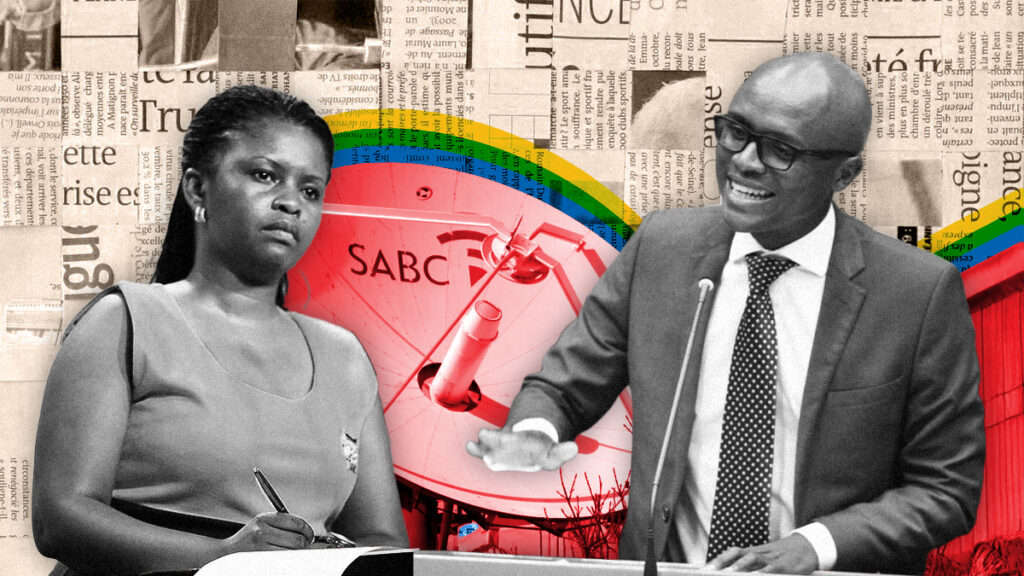
Khusela Diko, chairperson of Parliament’s Portfolio Committee on Communications and Digital Technologies, has warned that the South African Broadcasting Corporation’s (SABC) broadcasting signal could be switched off before the end of the year.
This comes after Sentech, the state-owned company responsible for transmitting the SABC’s signal, threatened to cut off services due to the broadcaster’s ballooning debt of over R1 billion.
Diko said on Monday during a presentation by the Chairpersons of the Economic Cluster, that urgent steps were needed to stabilise the situation.
“When we spoke to both Sentech and the SABC, they indicated that they don’t think they can continue with their operations in the current state beyond December this year,” she said.
“Sentech has threatened to cut off the SABC signal distribution because they cannot carry the SABC anymore.”
The dispute between the two state-owned companies centres on the cost of transmission tariffs.
The disagreement began in the 2020/21 financial year, when the SABC lodged a complaint with the Competition Commission, arguing that Sentech was charging excessive fees.
The commission, however, found no evidence of this. The broadcaster then referred the matter to the Competition Tribunal, but has since sought to resolve the issue directly with Sentech.
Earlier this year, communications minister Solly Malatsi called for mediation to break the deadlock.
His department issued a tender to appoint a mediator whose role will be to help the two parties reach a settlement and agree on how tariffs will be structured in the future.
According to a departmental briefing, this step was intended to avoid protracted legal battles and provide certainty for both entities.
However, Diko said this week that Sentech, which relies heavily on the SABC as its main client, is losing more than R70 million a month by covering the broadcaster’s unpaid signal distribution costs.
She described this arrangement as “unsustainable” and emphasised that it places pressure on both companies.
Financial challenges mounting over years

The wider challenge facing the SABC goes beyond its relationship with Sentech. Diko highlighted issues of outdated infrastructure, rising debt, and an unreliable funding model as key risks to the broadcaster’s future.
The SABC Bill, which was expected to address some of these matters, has been delayed in Parliament.
Introduced in October 2023, the bill was meant to provide for a new funding model to replace the current TV licence system, which has suffered from poor compliance.
Instead, the bill only set a three-year deadline for the development of a replacement model, leaving the SABC’s immediate funding challenges unresolved.
In November 2024, Malatsi withdrew the bill, calling it “flawed,” a move that has drawn criticism from Parliament’s portfolio committee.
“The SABC is burdened by unsustainable debt, outdated infrastructure, and a broken funding model. The withdrawal of the SABC Bill has left the broadcaster without the reforms it urgently needs,” Diko said.
In August 2025, Diko wrote to Malatsi calling for clarity. “The Bill has now been delayed for more than six months, with no clear urgency from the department to resolve the matter,” she said.
“This delay has left the Bill stuck in Parliament while the SABC’s financial and operational crisis continues to worsen.”
Separately, Malatsi has confirmed that his department is pursuing another process to develop a funding model.
Three bids have been received through a tender, and a provider is expected to be appointed soon. Once selected, the provider will need about three months to complete the work.
However, the SABC remains under strain. Its funding partly depends on TV licences, but non-payment has grown, contributing to its ongoing financial shortfalls.
Bailouts and debt have kept the broadcaster afloat in recent years, but Diko stressed that this approach cannot continue.
“Jobs, livelihoods, and the sustainability of both the public and the community broadcasting sector are at risk,” she said.















 Loading ...