

The new areas getting a Gautrain station in South Africa


Gauteng Premier Panyaza Lesufi has reaffirmed plans to expand the Gautrain network, with several new areas set to receive stations.
Lesufi recently confirmed that the provincial government will soon announce a contractor to drive the project forward.
This follows earlier commitments made during his State of the Province Address, where he outlined both the timeline and the areas earmarked for inclusion in the expanded network.
“The new Gautrain will go to Soweto, Mamelodi, Springs, Atteridgeville, Fourways, and parts of the West Rand,” Lesufi said.
He added that there are also longer-term ambitions to extend the system further. “Later, we will want to expand it to Sedibeng in the Vaal.”
On Monday, 16 March, He reiterated that some of the first areas expected to benefit from the rollout include Springs, Atteridgeville, and Fourways, as well as other key economic hubs in Gauteng.
Lesufi noted that the original public-private partnership that delivered the system is nearing a transition point, with ownership set to shift fully to the province.
“By the end of March this year, this private sector investment will now become due, and all the trains, the stock, the station, the system will be formally handed over to the people of Gauteng,” he said.
He added that the Gautrain, initially built at a cost of around R27 billion, has grown into a R52-billion asset over the past 14 years.
However, despite the ambitious plans, Dr Megan Bruwer from Stellenbosch University’s Department of Civil Engineering, said implementation will be complex due to the fragmented nature of South Africa’s transport governance.
Rail is managed nationally through entities such as the Passenger Rail Agency of South Africa, which operates Metrorail, while buses fall under provincial control, and bus rapid transit systems are run by municipalities.
“You’ve got three different levels of government all trying to work together, and then, of course, you’ve got the private service providers as well, which will be a challenge,” she said.
Gautrain shouldn’t be judged on its current form
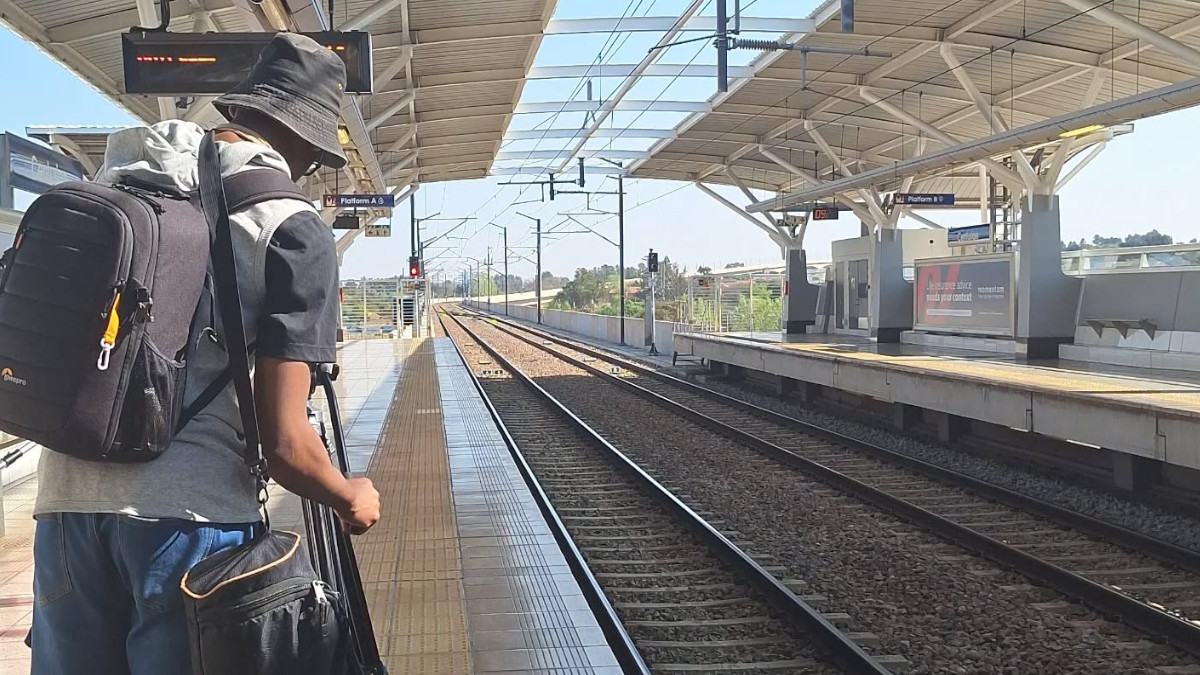
On the question of demand, despite the drop in ridership levels since the Covid-19 pandemic, Bruwer believes the expansion is necessary.
“You don’t wait for a system to get to optimal before you expand it. You expand it so that you can get everything to optimal.”
She also said that the Gautrain’s value should not be judged purely on cost. While not the cheapest option, it plays an important role in reducing congestion and improving mobility.
Encouraging higher-income commuters to shift from private cars to rail can ease pressure on roads and benefit the broader transport system.
A central goal of the expansion is improved integration, particularly with existing rail services.
“A lot of the extension is to actually link up with existing services and Metrorail lines,” Bruwer said, explaining that the Gautrain’s role as an express service complements commuter rail rather than duplicating it.
The expansion also aims to extend rail access to underserved communities. “The Gautrain is going to serve areas which have not been served very extensively by rail,” Bruwer said.
She added that this will help establish rail as the “backbone” of Gauteng’s public transport network.
Despite its potential, Bruwer stressed the importance of including all stakeholders—particularly the minibus taxi industry, which accounts for the majority of commuter trips.
“We need to talk with everybody who is in the transport space together to ensure collaboration.”
















 Loading ...