

Two towns in South Africa where war is brewing


The Department of Sports, Arts and Culture (DSAC) has received over 38,000 objections to changing the names of historic towns and metros in the country, including Graaff-Reinet and East London.
The department gazetted official changes to towns and cities in February 2026, renaming Graaff-Reinet to Robert Sobukwe Town and East London to KuGompo City.
Other name changes gazetted were Aberdeen to Xamdebo, Adendorp to Bishop Limba and Barkly East to Ekhephini.
The changes came after years of delays and backlash from the affected communities, but were pushed through despite the challenges.
Following the changes, however, the affected communities did not relent.
This was especially true in Graaff-Reinet, which is the fourth-oldest town in the country, dating back to 1786.
The town was named after Cornelis Jacob van de Graaff, a Dutch governor of the Cape Colony under the VOC, and his wife, Cornelia Reynet.
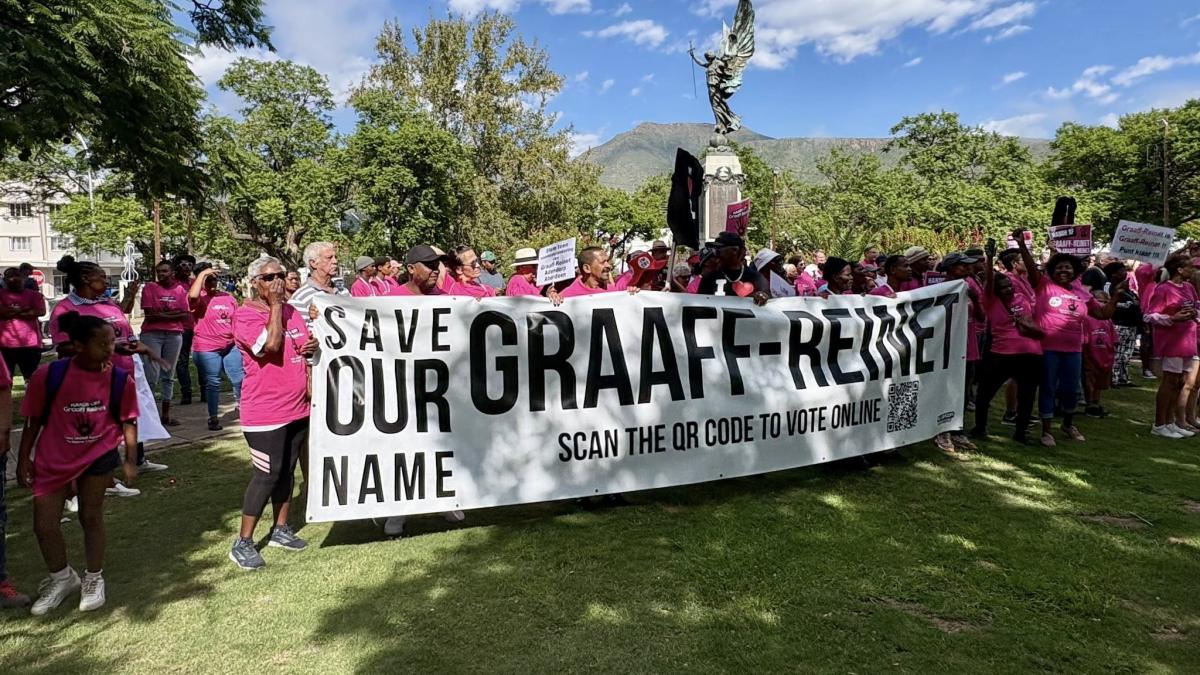
Residents of the town have been fighting against the name change, with many outright refusing to adopt it and implement it in the town itself.
Local attorneys and representatives of political parties also filed legal action against the changes.
More broadly, Parliament has revealed that over 38,000 objections have been submitted against the renaming of the towns.
This stands in stark contrast to the fewer than 300 people who were consulted when deciding on the changes to East London, and under 600 for the changes to Graaff-Reinet.
Responding to a parliamentary Q&A on the objections, DSAC Minister Gayton Mackenzie said the department was still processing all the inputs.
He said the tens of thousands of objections were submitted within the prescribed one-month objection period, which closed on 6 March 2026.
But due to the unprecedented volume, complexity, and varied formats of the objections received, the department is still busy recording, consolidating, analysing, and considering all valid objections.
Notably, he said the department will communicate the outcomes of the objection consideration process, together with reasons for its decisions, once the consideration process has been finalised.
This could include withdrawing the changes—but the changes could also be fully upheld.
“Any decision to confirm, amend, vary, or withdraw the original approvals will be taken in accordance with the applicable legislative and constitutional requirements governing lawful, reasonable, and procedurally fair administrative action,” he said.
“Upon completion of the current administrative processing phase, the matter may be referred to the SAGNC for consideration and recommendations to the Minister regarding whether the approved geographical names should be upheld, amended, or withdrawn.”
Promising a better process
Mackenzie said that the department had “learned lessons” from the current process, and said these would be carried forward to strengthen future compliance.
“The Department continues to improve its public participation mechanisms, including broader and earlier consultations through provincial structures, clear public notices, and accessible platforms for public input, in line with PAJA and best practice,” he said.
This comes as the department moves to improve the name-changing process in the country through the Draft South African Geographical Names Council Amendment Bill.
South Africa has seen over 1,500 name changes processed since the council was established. Whenever these name changes occur, there is often a huge public outcry and allegations of a lack of consultation.
Many claim to have never been aware of any name change processes underway, and that, if any, public hearings are not communicated efficiently.
Opposition parties, in particular, have hit back at the processes, saying that the changes are often pushed through despite opposition, with no way to appeal them.
The new laws aim to address this.
The Draft Bill seeks to amend the South African Geographical Names Council Act by more clearly defining consultation processes involved with name changes and creating an appeal process, among other changes.
According to the department, one key change is the establishment of an appeal tribunal.
This is a critical feature, as people who are unsatisfied with name changes currently raise their objections directly with the minister, such as the 38,000-plus now being processed.
With the tribunal, anyone who is not satisfied with the decision to change a name will have 30 days to object to that change.
The department added that, even after the objection process has been finalised, objectors can then still go to court to challenge the changes.


















 Loading ...