

Ramaphosa doubles down on the NHI in South Africa


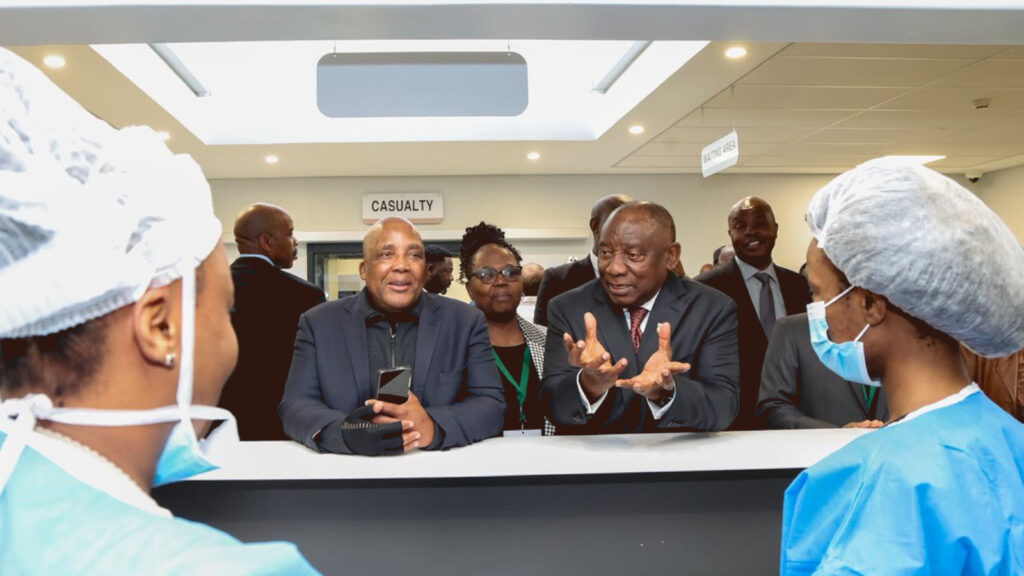
President Cyril Ramaphosa has shown no signs of backing down on the National Health Insurance (NHI) scheme in South Africa, promising that foundational work will continue.
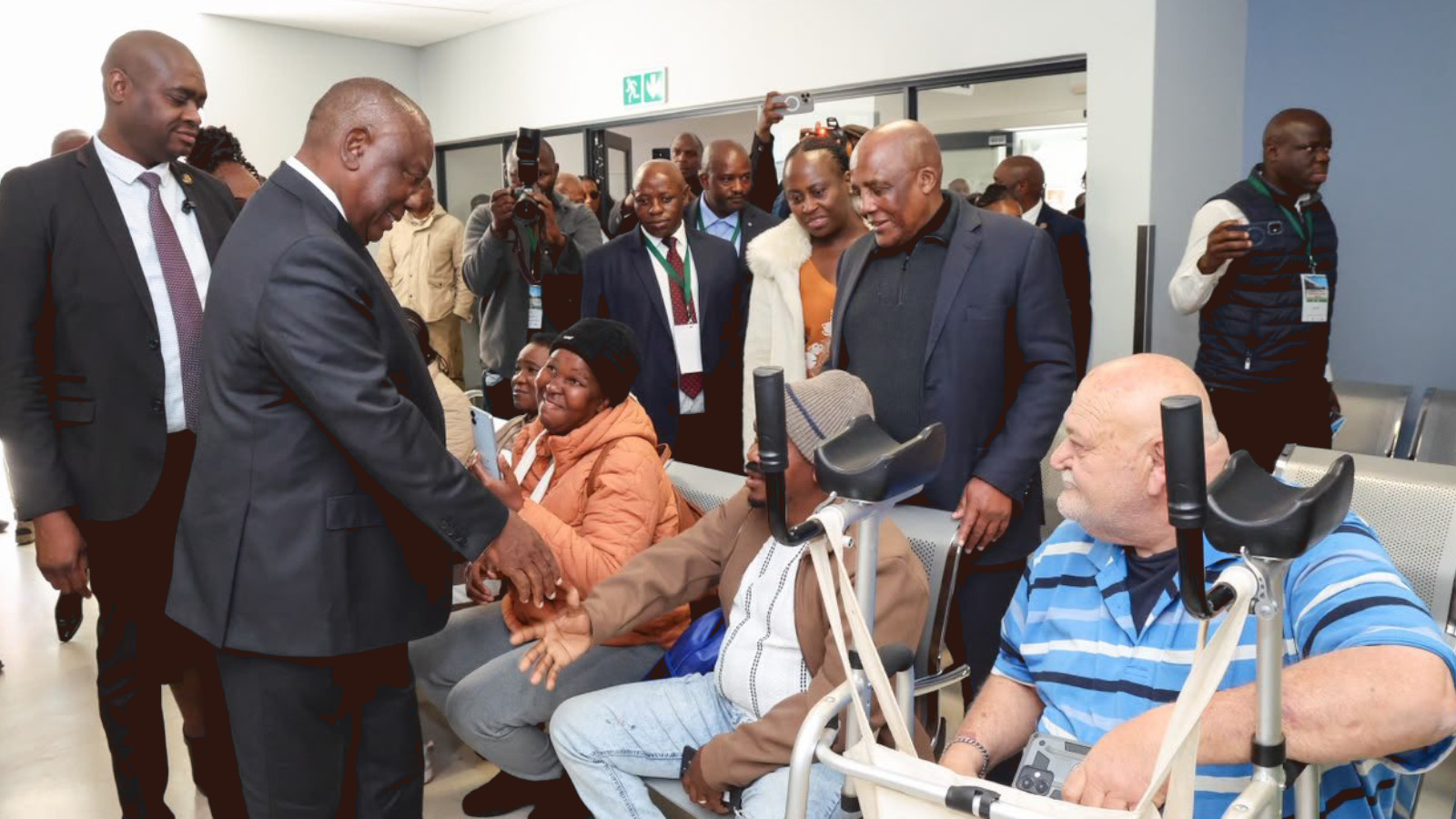
Speaking at the opening of the King Nyabela Hospital in Mpumalanga this week, the president said the new hospital underpinned the government’s goal of providing access to quality healthcare for all.
He said that the government would continue to improve healthcare services by refurbishing facilities, building new hospitals, and expanding primary healthcare platforms.
This would be achieved as part of the state’s rollout of the NHI.
“We are working to put in place the critical building blocks of the National Health Insurance, or NHI,” he said.
“At its heart, the NHI is about fulfilling the constitutional right of access to healthcare, without this being dependent on where one lives or one’s ability to pay.”
Ramaphosa said the NHI will ensure that “all people can access the full range of quality health services they need, where and when they need them, without experiencing financial hardship”.
The president’s comments and push for the NHI are carefully worded in the context of the outstanding legal challenges against the system.
He has repeatedly doubled and tripled down on the system, but only on the angle that the government is proceeding to lay its “foundations”.
In February 2026, Ramaphosa put a moratorium on the rollout of the NHI, pending the outcome of a May 2026 Constitutional Court challenge against the drafting of the NHI Act.
As part of the hold, the president agreed to stay the promulgation of any provisions of the NHI Act until the court had ruled on the matter.
In return, litigants against other aspects of the NHI would pause their court action.
However, in follow-up comments, Ramaphosa has been adamant that the NHI rollout timelines would not be affected and that the government would not abandon the scheme.
Not backing down
The NHI Act was signed into law in May 2024, but it was not commenced. However, several legislative and regulatory changes have been made over the years to enable the overall scheme.
In addition, the NHI was allocated R9.3 billion in the 2026 budget over the medium term.
This includes close to R1.5 billion in direct NHI grants over the next three years, as well as over R7.8 billion in “indirect” NHI funding.
The direct funding—provincial NHI grants—are relatively small, amounting to R475 million, R497 million and R513 million over the medium term (2026-2028).
This is in line with the spending on NHI grants in 2025, which totalled R467 million, reflecting an upward trend.
Similarly, indirect funding is also escalating, from R2.56 billion to R2.6 billion, then to R2.7 billion, between 2026 and 2028. Over R3.3 billion was spent in 2025.
The direct grant generally relates to the National Department of Health’s preparations for implementing the NHI at the provincial level.
This includes testing reforms, improving the services of primary healthcare facilities, and aligning infrastructure with national and provincial policy directives.
The indirect financing, meanwhile, is usually more focused on background public healthcare improvements that are part of the general NHI project, but not related to direct NHI healthcare services.
This includes infrastructure upgrades and the modernisation of healthcare systems, with a strong focus on digital.
While both these types of spending are tied to the implementation of the NHI, they are not necessarily tied to the scheme’s operations.
Ramaphosa has long held that the NHI is the ultimate solution for bridging South Africa’s private and public healthcare sectors, which operate in parallel.
The belief is that, under a unified NHI scheme, all South Africans will have access to all the healthcare resources in the country.
“For the NHI to succeed, we need a healthcare sector that is properly governed and well-led,” he said.
“We need a skilled workforce, high standards of service delivery and uninterrupted access to the medicines that people need.”
“To build a health system that meets the needs of all our people, [we] require the involvement, the resources and the capabilities of all sectors of society,” he said.

















 Loading ...