

National shutdown chases domestic workers, waiters and delivery drivers out of South Africa


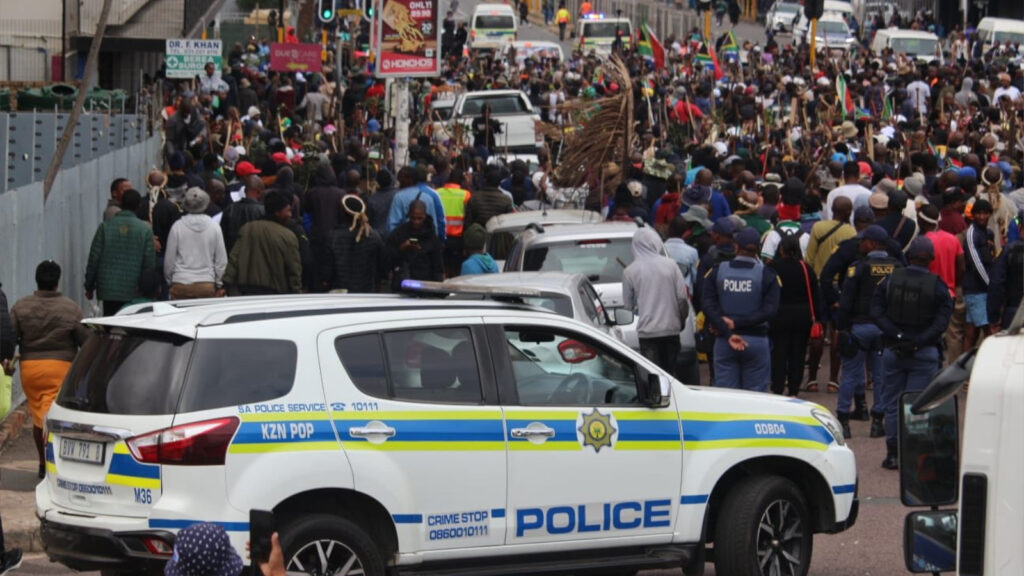
As Iweni Pachulu got off the bus at a soccer stadium in eastern Malawi, he sank to his knees and raised his hands in prayer.
After a three-day journey along with 60 others fleeing a wave of anti-migrant protests in South Africa, he had made it home.
Beside him were the only belongings he’d brought with him after four years in the continent’s largest economy—a plastic bag and a backpack full of clothes.
The 26-year-old shop-worker underwent a health screening and received transport money to Machinga, a village 170 kilometres away.
“I am going home literally with nothing. I don’t know where I will start from, but at least I still have my life,” he said.
“The things I was buying in South Africa, hoping that I would send them home and make some money, have been left. There was no time to assemble everything. All that was paramount was to save my life.”
Pachulu is one of tens of thousands of Black Africans who have been driven from South Africa—either deported or fleeing in fear—in recent months as mobs of protesters marched through cities, and in some cases have gone door-to-door demanding migrants leave.
They blame the foreigners for high unemployment and poor government services.
In response to the protests, the government has stepped up its enforcement against undocumented migrants, and while repeatedly warning citizens not to take matters into their own hands, has struggled to stop instances of violence and looting.
At least four people have been killed.
South Africa, with its large and diversified economy, has long been a magnet for migrants from poor and conflict-ridden nations.
Zimbabweans have been flooding over the border since 2000, when a failed land reform program triggered an economic crisis that’s persisted to this day.
Poverty rates in Malawi are among the world’s highest.
While xenophobic unrest, primarily directed against Black African migrants, resurfaces every few years, this time the protests have been more sustained and organised.
Waiters, drivers, domestic workers
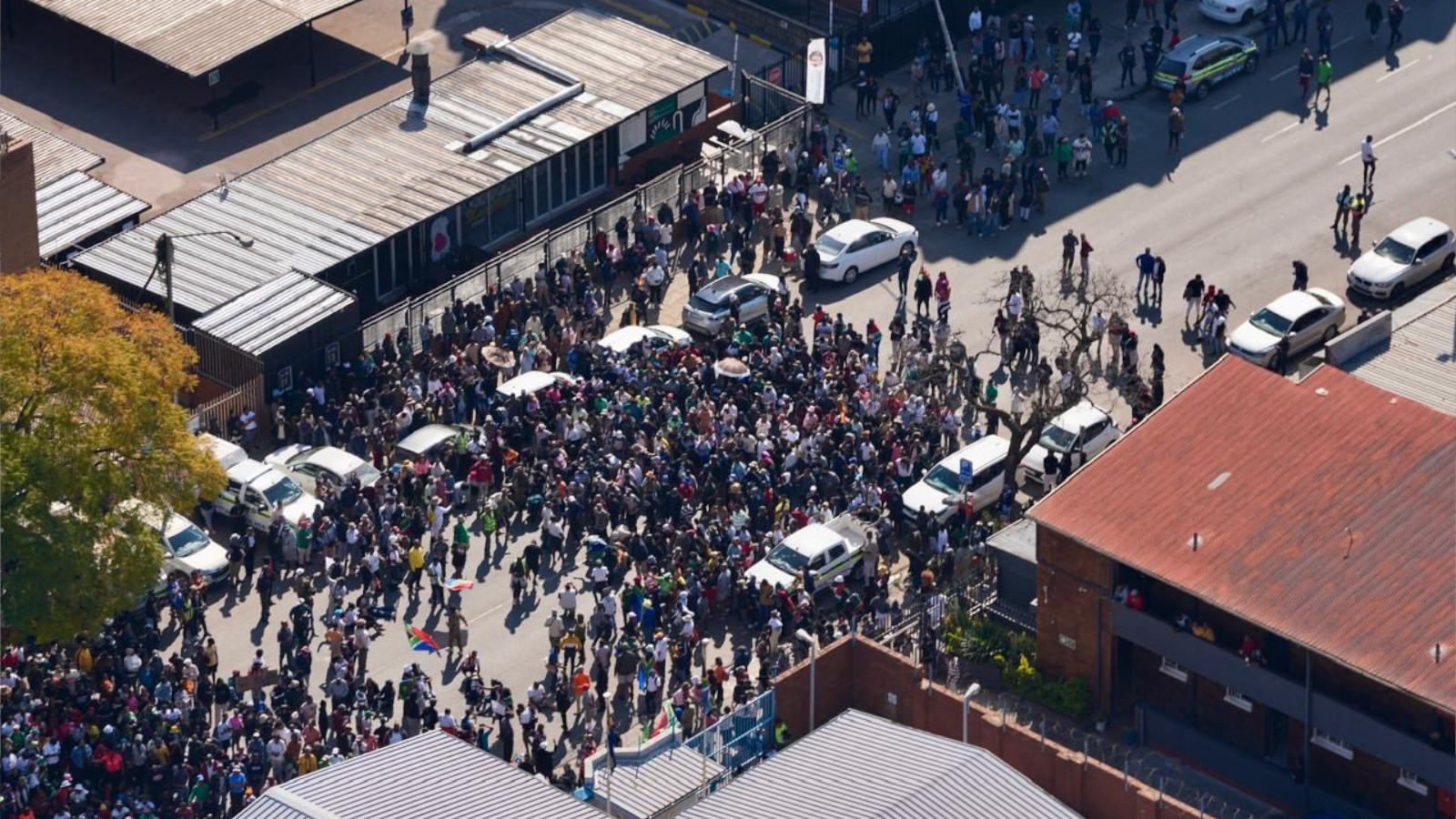
Demonstrators argue the government hasn’t done enough to create jobs in a country where one in three people is unemployed and have objected to the high number of undocumented migrants working as waiters, delivery drivers, domestic workers and in construction.
They’ve also complained about limited school places and overburdened state health clinics.
Organisations such as March and March set an arbitrary deadline of June 30 for all of the country’s undocumented migrants to leave, culminating in country-wide protests that day.
Rallies have continued every Thursday, albeit at a smaller scale.
While the last census estimated there were 2.4 million foreign-born people in the country of 63 million, the government has said it has no accurate figures for the number of undocumented migrants and that it may be considerably higher.
Zimbabwe has said more than 100,000 of its citizens have returned, while over 53,000 Malawians have also left South Africa.
Mozambique, Uganda, Nigeria and Ghana also helped repatriate their citizens by bus or plane. Many of those people sent money back to relatives at home, to countries where there are far fewer work opportunities and widespread poverty.
On 7 August, the European Union released a statement that it was donating R5.6 billion in humanitarian aid “to contribute to the support of the increased number of Zimbabwean returnees fleeing violence in South Africa” and a cholera outbreak.
In the first six months of this year, Zimbabweans working in South Africa sent R6.8 billion home, government statistics show.
According to South Africa’s central bank, Malawians repatriated about R2.1 billion in 2024, though exchange controls mean that much of the money flow remains untracked.
Malawi’s government doesn’t release statistics on remittances.
Shattered Dreams
Now many of those who have returned face the choice of trying to return to South Africa or facing little chance of making a living at home.
In Malawi, 47% of the population of about 22 million live under the government poverty rate of 1,563 kwacha a day.
That’s less than a dollar at the official exchange rate, and half that at the more commonly used parallel-market rate.
“I was working as a domestic servant, and I have been sending money back home. My plan was to construct a house,” said Grace Magombo after she got off the bus, explaining that she’d stopped selling vegetables in Malawi to join her husband in South Africa in early 2025.
“That plan has been shattered. I am back with nothing, no house of my own. I don’t have anywhere to start from,” said the mother of three boys.
Anti-immigrant sentiment has been rising in South Africa, and with crucial local elections set for November, political groups such as ActionSA, the uMkhonto weSizwe Party and the Patriotic Alliance have openly supported increased deportations.
The African National Congress, the country’s biggest political party, has largely been quiet in its criticism of the protests.
President Cyril Ramaphosa said in a national address that he understands the frustration of citizens.
Justice Minister Mmamoloko Kubayi said that foreign workers are often exploited by unscrupulous employers while cautioning against vigilantism.
Speaking on the issue late last month, she stressed that some South Africans who had looted the property of foreign investors had been arrested.
“The government has not at all condoned citizens taking matters into their own hands,” said Chrispin Phiri, spokesman for South Africa’s Department of International Relations and Cooperation.
“We have stated at all times that this is the work of Home Affairs,” he said, adding that instances of violence were “very unfortunate.”
A May study by South Africa’s Human Sciences Research Council showed a marked increase in anti-migrant sentiment since the late 2010s among all but the richest South Africans.
In a 5 August survey by Afrobarometer, the percentage of South Africans who want foreign job seekers to be kept out of the country at 32% was second only to Madagascar in a survey of people in 38 African nations.
Still, while their prospects are limited in Malawi, for many returnees, the hostility directed against them means they are unlikely to take their chances again.
“It has been two wasted years in South Africa. I will never ever set foot in that country,” Pichesi Pachulu, who travelled back on the bus with his brother Iweni, said.
“As a country, South Africa is good and full of opportunities. However, the people are bad.”
Some are less adamant.
“If things improve, I will try my luck again. My boss in South Africa asked me to leave at least briefly, and when the storm calms, I will give it another try,” said shop-worker James Wahela, who said he’d been sending money back to his wife in a district near Malawi’s commercial capital, Blantyre.
“The reality is there are more opportunities in South Africa than in Malawi. I think I will go back there one day, for the sake of the well-being of my family.”
















 Loading ...