

United States hits South Africa with visa restrictions over BEE and land expropriation


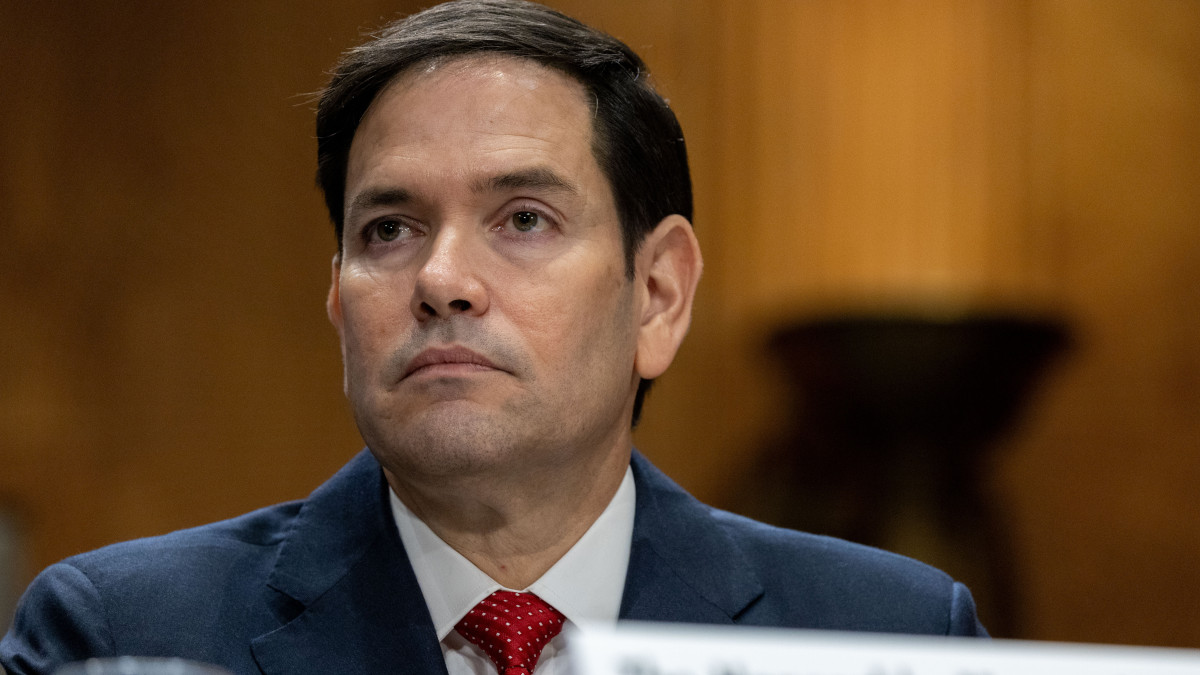
United States Secretary of State Marco Rubio has announced new visa restrictions on South Africans over the country’s black economic empowerment and expropriation laws.
The visa restrictions are not a blanket policy shift, but rather target individual “foreign nationals who are responsible for, or complicit in, the enactment or implementation of” these laws or policies
The restrictions specifically focus on uncompensated land seizures, race-based discrimination, and the incitement of imminent violence against “members of minority ethnic or racial groups in South Africa”.
Rubio said that the move is part of US President Donald Trump’s executive order “Addressing Egregious Actions of the Republic of South Africa.”
“The United States remains gravely concerned about racially motivated crime and government-sponsored discrimination occurring against the Afrikaners and other minority populations in South Africa,” he said.
This includes:
- Race-based discriminatory legislation,
- Threats of land expropriation without compensation, and
- Incitement of racial violence through dehumanising chants and slogans.
The policies mentioned by Rubio align with the key issues raised by the United States since mid-2025 and were specifically flagged by US Ambassador to South Africa Brent Bozell earlier this year.
They form part of “five asks” delivered to the South African government to address and respond to in order to secure a trade deal with the world’s biggest economy.
“The South African government has not adequately addressed the previously laid out concerns, and so today, I am announcing a new visa restriction policy under Section 212(a)(3)(C) of the Immigration and Nationality Act,” Rubio said.
“The United States will not allow such behaviour to go unchecked. These actions directly undermine peace, economic stability, and the rule of law, and they are incompatible with the pillars of America’s foreign policy.”
Rubio strongly urged the South African government to quickly address these egregious actions
This visa restriction under Section 212(a)(3)(C) of the Immigration and Nationality Act authorises the Secretary of State to render individuals as inadmissible.
These individuals are deemed to “have potentially serious adverse foreign policy consequences for the United States.”
Certain family members of those deemed inadmissible may also be covered by these restrictions.
A long time coming
The new visa restrictions, as well as their specific targets, also bear a striking resemblance to sanctions long called for by US lawmakers.
Two bills tabled before the US House of Representatives and US Senate in 2025 called for a full review of bilateral relations between South Africa and the United States.
The first bill, the US-South Africa Bilateral Relations Review Act (H.R.2633) was tabled in the House of Representatives April 2025 by Ronnie Jackson.
A second bill, called the US-South Africa Bilateral Relations Review Act (S.2752), was tabled in the US Senate in September 2025 by Senator John Kennedy.
Both bills call for a comprehensive review of the bilateral US-South Africa relationship and a certification from the president on whether South Africa undermines US national security interests.
Notably, both also call for a classified list of South African government officials and members of the African National Congress to be sanctioned.
Neither bill has made any progress since being tabled and is unlikely to be pushed through.
However, with the new visa restrictions targeting individuals, and specifically those involved with implementing the policies in question, the same outcome is at least partly achieved.
The impact may even be broader. While the bills specifically target government officials, the wording of the new restrictions has no such caveat. This could extend the reach beyond lawmakers.
“Those responsible for these injustices have no place in the United States,” Rubio said.
















 Loading ...