

R4,400 a month social grant for 8.2 million people in South Africa


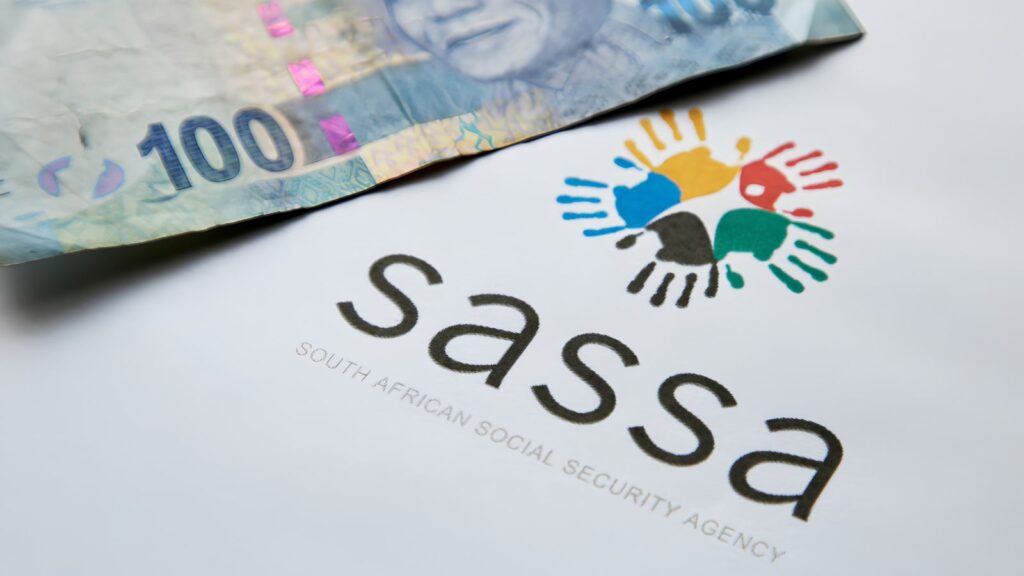
The Economic Freedom Fighters (EFF) is pushing for a proposed increase in social grants in South Africa to a minimum of R4,400 per month.
However, experts warn that this would significantly increase government spending and place further pressure on the country’s already constrained public finances.
In September, EFF leader Julius Malema said the party was working on a proposal to raise grant payments to R4,400.
This proposal comes at a time when the government has been considering a basic income grant (BIG) in South Africa for several years.
Supporters of the move said it would provide regular financial support to people who are unemployed or do not earn enough to support themselves.
In June 2026, the Department of Social Development (DSD) said it had made significant progress towards developing a BIG for the country.
The department indicated that the proposed grant would be modelled on the Social Relief of Distress (SRD) grant, which was introduced as a temporary measure during the Covid-19 pandemic but has since been extended every year.
The DSD said the SRD grant had proved successful in addressing poverty and that it had therefore been directed to repurpose the programme into a more permanent form of income support.
A draft policy has been developed, and the department indicated that the legislative process could begin during the 2027/28 financial year.
However, the proposal to increase grants to R4,400 has raised questions about how much additional support the government can afford.
Chief economist at the Efficient Group, Dawie Roodt, warned that implementing such an increase would place an unsustainable burden on the national budget.
“So if we increase the grants to R4,400, then that’s going to break the bank without any doubt,” he said in an interview with Truth Report.
Roodt argued that South Africa’s tax base was too small to finance such a substantial increase, particularly given the country’s weak economic performance.
An alternative could work

“It’s going to break the bank because the fiscal account simply will not be able to support this, and the tax base in South Africa is just too small to support this,” he said.
Roodt also argued that the scale of the existing social grant system is already a big challenge for the fiscus.
South Africa already has approximately 28 million grant recipients, including child support grants, older people receiving old-age grants, and people receiving disability and other forms of assistance.
Around 8.2 million people receive the SRD grant, which provides approximately R370 per month.
Increasing this group’s payments to R4,400 would represent a substantial change in government expenditure.
Roodt explained that each recipient would receive R4,400 per month, totalling R52,800 annually.
Applied to 8.2 million beneficiaries, this would cost approximately R433 billion per year, before accounting for administrative expenses or changes in the number of qualifying recipients.
Roodt also highlighted the concentration of personal income tax revenue among a relatively small group of taxpayers. He stressed that the country has limited room to increase taxes to finance additional social spending.
He warned that higher taxes on wealthy individuals could discourage investment, encourage capital to leave the country, and weaken tax compliance, which would reduce the revenue available to the government.
However, while he rejected a blanket increase to R4,400, Roodt said the discussion raised an important question about whether South Africa should introduce a permanent basic income grant.
Rather than simply increasing all existing payments, he suggested consolidating different forms of assistance, including child, disability, and other grants, into a single basic income grant for people below a specified income threshold.
He also proposed considering a voucher-based system for services such as education and healthcare.
He argued that this would give beneficiaries greater choice over how certain forms of government assistance are used.















 Loading ...