

New year, new training budget: The skills decisions that will matter most this year


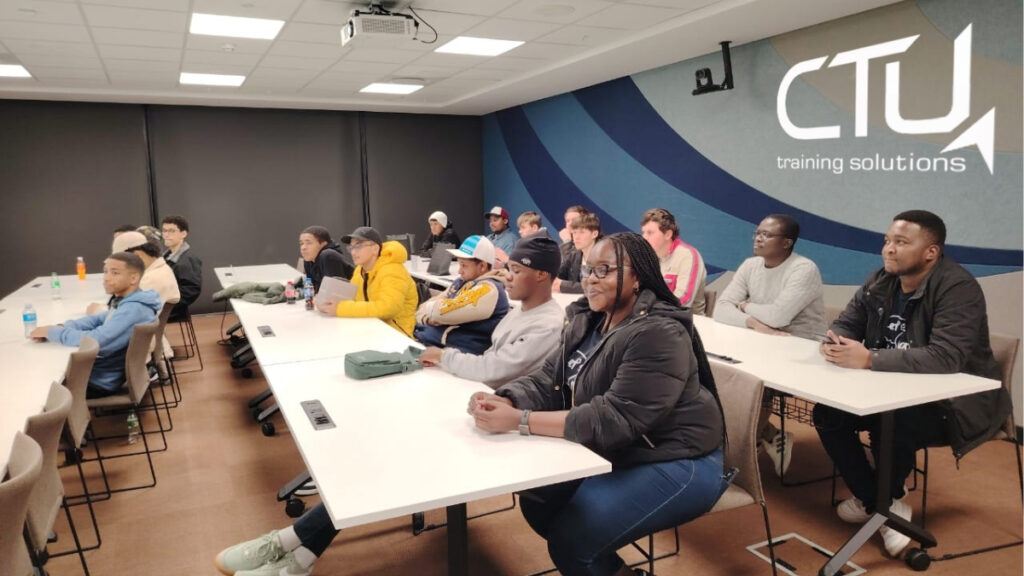
For many South African organisations, the new year brings renewed pressure to justify every line item, including training budgets.
But while skills development is often treated as a compliance exercise, forward-thinking businesses are using their annual training spend to solve far more practical problems: skills shortages, digital capability gaps, and succession risk.
According to CTU Training Solutions, organisations that approach skills development strategically at the start of the year gain a measurable advantage, not just in compliance, but in operational resilience.
Emmarentia Booysen, Skills Development Manager at CTU, says the biggest mistake employers make is assuming that training must be generic to be compliant.

Emmarentia Booysen, Skills Development Manager at CTU
“One of the most persistent myths is that skills development has to be disconnected from real business needs,” Booysen explains.
“In reality, the strongest skills strategies are the ones that solve immediate operational challenges while still meeting learnership and WSP requirements.”
The Skills Gap Is No Longer Abstract
South African businesses are no longer talking about skills shortages in theory, they are experiencing them daily.
Cybersecurity incidents, cloud migration challenges, data capability gaps, and inexperienced junior managers are placing pressure on teams that are already stretched.
“What we’re seeing is that companies don’t necessarily need more training, they need the right training,” says Booysen.
“That’s where occupational certificates and structured learnerships become extremely powerful.”
Unlike short courses, occupational qualifications are designed around real job roles, making them ideal for organisations looking to build capability internally rather than recruit scarce skills externally.
Occupational Certificates That Align With Real Roles
CTU has seen growing demand for occupational qualifications that directly support priority business functions, particularly in technology and management. Among the most popular learnership-aligned programmes are:
- Occupational Certificate: Cybersecurity Analyst (NQF 5)
Ideal for organisations needing internal security monitoring, risk awareness, and incident response capability. - Occupational Certificate: Cloud Administrator (NQF 4)
Supports businesses transitioning to cloud-based environments or managing Microsoft and hybrid infrastructure. - Occupational Certificate: Artificial Intelligence Software Developer (NQF 5)
Designed for organisations exploring automation, AI-driven solutions, and data-led innovation. - Higher Certificate in Management (NQF 5)
Frequently used to upskill junior managers, supervisors, and team leads — a critical but often overlooked risk area.
These qualifications are practical, structured, and highly applicable.
They allow businesses to invest in people who already understand their organisation, rather than constantly trying to hire from a shrinking talent pool.
“When training is aligned to an actual role, the return on investment becomes far easier to see,” says Booysen.
This approach also simplifies WSP reporting and creates clearer links between training activity and business performance.
Watch this space: Annual WSP Online Event
CTU’s Corporate Division will be hosting an online awareness session in March focused on Workplace Skills Planning, annual training spend, and practical skills development strategy.
The session will unpack how organisations can make smarter use of their training budgets, navigate WSP requirements with confidence, and align skills development with real workforce needs.
Further details will be shared closer to the event.

















 Loading ...