

Amazon commits R24 million to job creation and climate resilience in South Africa


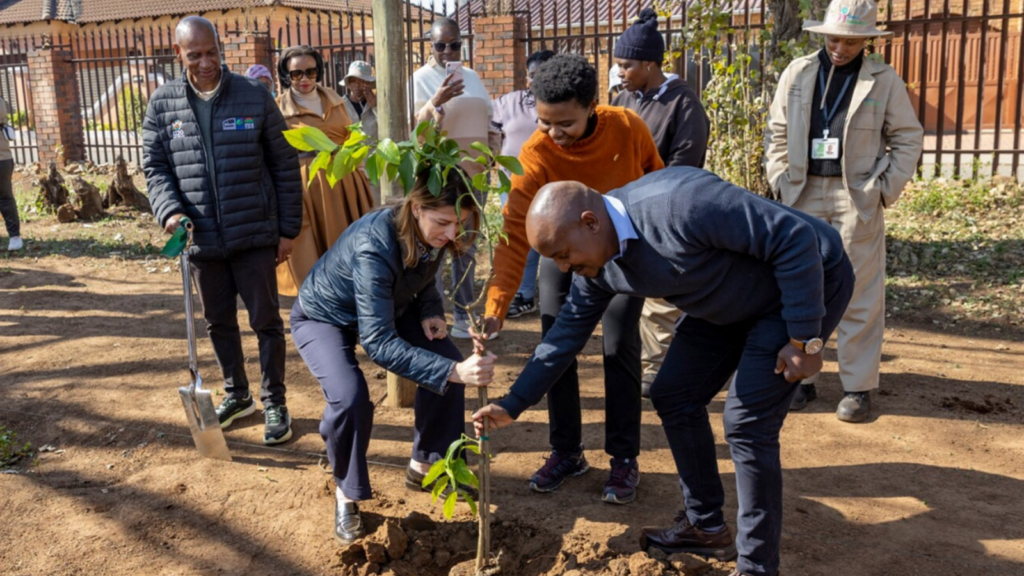
Image Caption: Kara Hurst, Amazon Chief Sustainability Officer; Amanda Gcanga, Cities Country Lead, World Resources Institute (WRI), Siyabonga, City of Johannesburg
Amazon is investing R24 million through its Right Now Climate Fund to support a transformative nature restoration and community resilience project in Soweto, Johannesburg.
Delivered by World Resources Institute (WRI), in collaboration with the International Institute for Sustainable Development (IISD), City of Johannesburg, Johannesburg City Parks and Zoo, and GenderCC Southern Africa, the project is expected to restore degraded river landscapes, create hundreds of jobs, and train more than 1,000 women to turn restoration work into income-generating enterprises.
It centres on the restoration of 130 hectares of the Klip River corridor – a critical water source for Johannesburg and surrounding areas – and will be implemented by local communities.
The restoration will involve removing invasive species and solid waste, reintroducing indigenous vegetation, and stabilising riverbanks to enhance water quality, reduce flooding, and preserve local biodiversity.
The project will also plant 20,000 trees across Soweto’s neighbourhoods.
“At Amazon, we believe that meaningful climate action must go hand-in-hand with economic opportunity for the communities most affected by climate change,” said Kara Hurst, Chief Sustainability Officer at Amazon.
“This investment in Soweto demonstrates that nature restoration projects don’t just boost ecosystems – they create jobs, empower women, and build resilience.”
“At its core, the initiative is designed to create lasting economic opportunity for Soweto’s residents. This is what integrated climate action looks like – and it’s exactly the kind of work the Right Now Climate Fund was designed to support,” said Hurst.
Supporting local livelihoods and communities
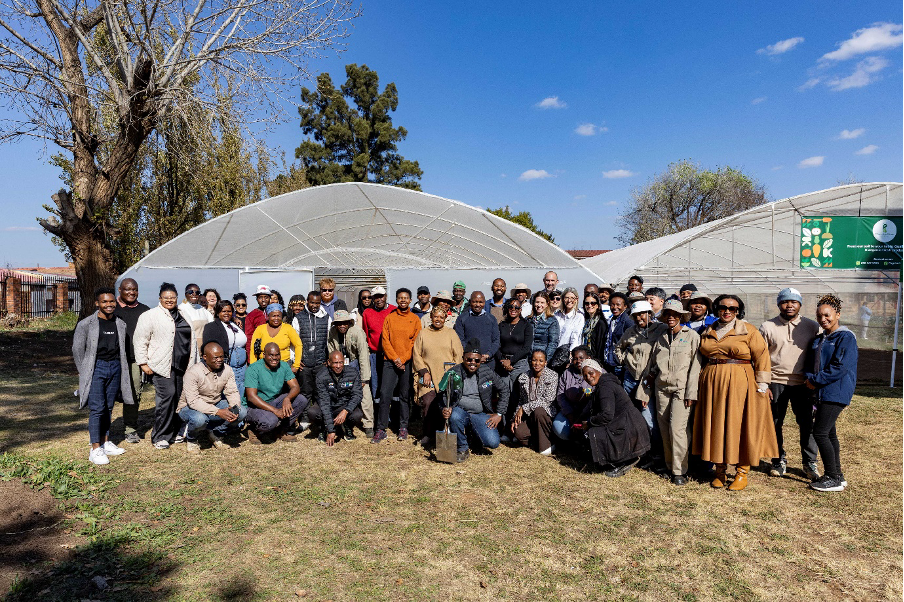
The project is expected to create approximately 300 jobs in nature restoration, including nursery businesses, urban forestry, and native plant propagation.
It will also provide training to equip more than 1,000 women from the community with technical skills and business know-how to turn restoration work into income-generating enterprises.
Four urban farms and 20 school clubs will be established to extend these opportunities to broader communities and youth.
In total, the project is estimated to engage more than 2,000 people directly – of whom over 50% are women – and will benefit an area of more than 200,000 people through improved food security, reduced heat stress, and flood mitigation.
“Soweto’s communities have long understood the connection between a healthy environment and a thriving community,” said Amanda Gcanga, South Africa Country Lead for World Resources Institute.
“With Amazon’s support, we’re helping them restore the Klip River corridor, starting school clubs to foster the next generation of environmental stewards, and supporting local women with the tools and skills to build sustainable businesses.”
“This project belongs to the people of Soweto — they will own it, operate it, and benefit from it for generations to come,” said Gcanga.
Mapping urban heat with AWS technology
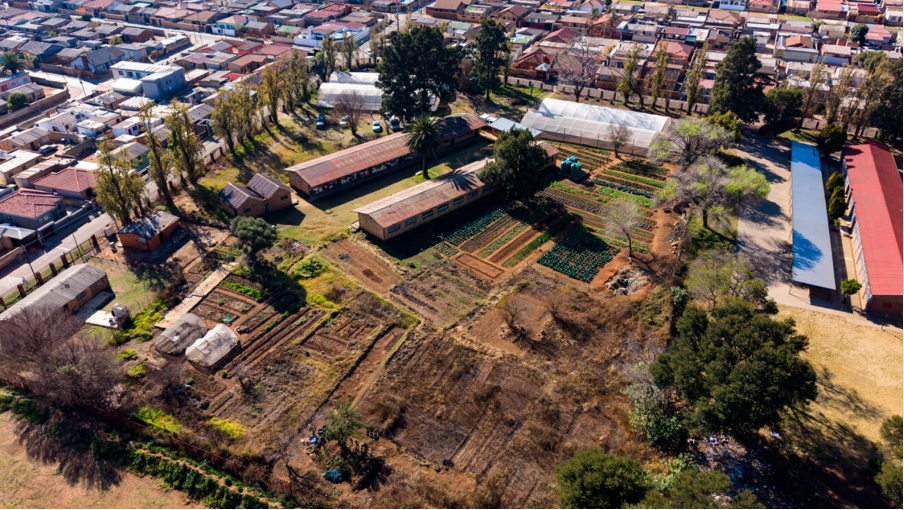
Restoring natural ecosystems has a direct cooling effect on urban neighbourhoods, which will be further supported by the development of city-scale heat stress mapping in Johannesburg.
WRI’s Cool Cities Lab data platform equips city officials with heat data accurate to the square meter to deploy cooling techniques such as trees, cool roofs and shade structures to the neighbourhoods that need them most.
AWS is providing the computing power, machine learning technology, and engineering support to expand the platform’s reach and scale – making it faster, more powerful, and easily accessible to non-technical users such as planners and community leaders.
This includes building an AI assistant prototype that allows officials to ask plain-language questions about local heat conditions.
It will strengthen Cool Cities Lab’s ability to help cities accelerate the heat-resilience infrastructure their communities urgently need and enable greater impact in Soweto.
A restoration model proven across three cities
The project builds on the Scaling Urban Nature-Based Solutions for Climate Adaptation in Sub-Saharan Africa (SUNCASA) project, jointly managed by IISD and WRI, which pioneered community-led river restoration and women-led enterprise development across Johannesburg, Kigali and Dire Dawa.
“Climate adaptation must be locally led to be truly effective,” said Janina Schnick, Lead for the SUNCASA Project at the International Institute for Sustainable Development.
“We have seen first-hand how investing in community nature-based solutions creates a multiplier effect – restoring ecosystems while generating livelihoods and unlocking sustainable economic pathways for those who need them most.”
“This project allows us to deepen that impact by scaling proven approaches to river restoration, urban greening, and women-led enterprise development.”
“When communities have ownership over the solutions, the results are not only more sustainable – they are transformative,” said Schnick.
About Amazon’s Right Now Climate Fund
In 2019, Amazon created the Right Now Climate Fund, a $100 million initiative supporting climate resilience and nature conservation in communities around the world.
Since its launch, the fund has supported more than 20 projects across 17 countries, restoring more than 72,500 hectares of land and safeguarding more than 2,200 species.
The Soweto urban greening project is the fund’s first investment in Sub-Saharan Africa.
The project aligns with South Africa’s Just Energy Transition Investment Plan (JET IP 2023–2027), the City of Johannesburg’s Climate Action Plan (2022), and the National Climate Change Act (2024) – all of which prioritise job creation, community development, and environmental rehabilitation.
Click here to learn more about Amazon’s Soweto Urban Green project.















 Loading ...