

Too small to be a target? Cybercriminals are counting on you thinking that


Imagine opening your laptop on a Monday morning to find your business website has been defaced, customer data stolen, and your email accounts hacked.
You call your hosting provider, and nobody answers. This sounds like something that happens to large corporations with complex IT systems. The truth is that it’s happening to small South African businesses every single day.
Cyberattacks cost South Africa an estimated R2.2 billion in 2025 at roughly 577 attacks every hour. South Africa is the sixth most targeted nation worldwide for cyberattacks, yet only 19% of South African firms are adequately prepared to defend against them.
The businesses most exposed are the ones that never thought they needed to worry.
More than 70% of SMEs report at least one attempted attack and small businesses are the target. The reason being: small businesses tend to have thinner defences, less training, and consumer grade security software making them easier targets.
How attacks happen?
Common attack methods targeting South African businesses are not sophisticated. They exploit basic vulnerabilities that are preventable.
- Phishing emails are mostly to blame for digital banking fraud in South Africa. Compromised passwords give attackers easy access to business accounts and websites.
- Unpatched software that contains known security vulnerabilities.
- Websites without SSL that expose customer data in transit and signal to attackers that basic security has been neglected.
What are the consequences?
The financial consequences of a successful attack go beyond disruption. For small businesses, this can mean ransom payments, cybercriminals encrypt your data and demand payment. Or you would need to restore systems, rebuild your website and lose productivity.
Clients who discover their data was compromised can lead to reputational damage. Businesses are under the South African Protection of Personal Information Act (POPIA) and are legally obligated to protect client data.
60% of small businesses that suffer a significant cyberattack cease trading within six months. For most small businesses, a serious cyberattack is not only a setback but rather a business ending event.
Furthermore, an unsecured website can expose your clients’ personal and payment data and give cybercriminals a foothold into your systems and damage your Google search rankings.
Google actively flags websites without SSL certificates as insecure, which directly impacts your visibility on search results, and your clients’ trust in your business.
The good news is that you can secure your website by choosing a hosting provider that makes security a standard feature and not an optional extra.
What your hosting provider should be doing for you
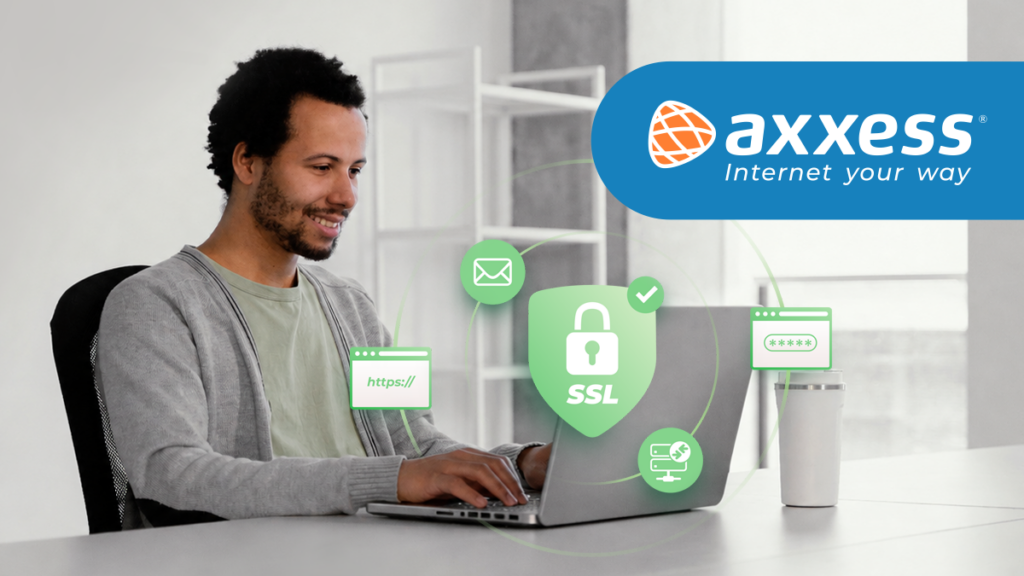
- Auto SSL, which encrypts the connection between your website and your visitors
- Firewall protection filters malicious traffic before it reaches your website
- Malware detection scans your website continuously for malicious code and flags threats
All of these are standard across Axxess hosting plans because hosting your business online should not be something you have to think about separately from your hosting.
What can you do about it?
Weak hosting means leaving customer data exposed, no firewall leaving your site open to attacks, and no malware screening. On top of that, outdated software creates vulnerabilities.
ALL Axxess hosting packages provide Auto SSL, firewall protection, malware detection, and automatic vulnerability patching.
Cybercrime in South Africa is not a distant threat. It is happening at 577 attacks per hour, and small businesses are in the crosshairs. The businesses that survive are not the ones that were never targeted. They are the ones that were prepared.
Your hosting provider is your first line of defence. Make sure it’s up to the job.


















 Loading ...