

Automotive aftermarket key to keeping South Africa moving


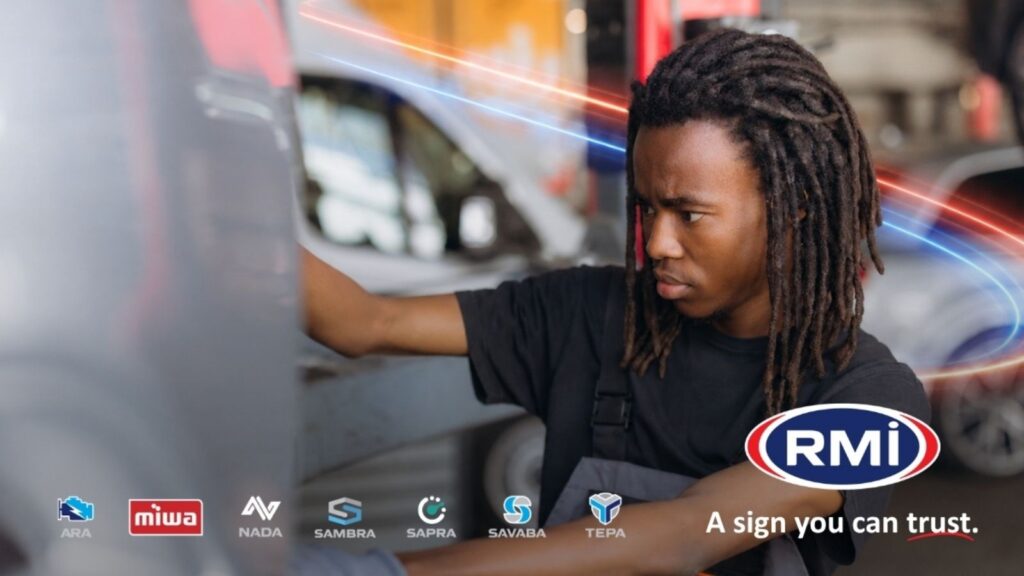
South Africa’s daily mobility depends on the businesses and people who keep the country’s vehicles safe, roadworthy and on the road throughout their working lives.
According to Jeanne Esterhuizen, President of the Retail Motor Industry Organisation (RMI), the automotive retail and aftermarket sector is a critical part of the country’s economic infrastructure and a key enabler of affordable mobility.
“The aftermarket reaches into virtually every district and household in South Africa. It encompasses dealerships, workshops, parts and tyre businesses, body repairers, vehicle testing stations, fuel providers and remanufacturers – all of which play a role in keeping people moving, getting goods to market and enabling businesses to remain productive,” she says.
The sector also contributes significantly to the economy.
More than half of South Africa’s automotive value-add comes from retail and aftermarket activity, while the segment accounts for around 70% of employment across the automotive value chain.
It comprises more than 23 000 businesses, around 80% of which are small and medium-sized enterprises (SMEs). “In a country focused on inclusive growth, job creation and sustainable small-business development, this footprint deserves sustained attention,” says Esterhuizen.
Resilience under pressure
The aftermarket has shown considerable resilience in a difficult operating environment.
Employment grew at an average annual rate of 1.2% between 2020 and 2024, despite weak economic growth, rising operating costs and changing consumer behaviour.
However, Esterhuizen cautions that this resilience cannot be taken for granted.
“One of the most pressing issues facing the sector is the shortage of skilled artisans. The number of qualified artisans has declined by almost 27% since 2014, even as apprentice numbers have more than doubled,” she says.
RMI’s analysis of the Motor Industry Bargaining Council (MIBCO) occupational data skills trends across 14 automotive aftermarket trades shows that the number of apprentices in these trades increased from 1 764 in 2014 to 4 254 by May 2026, a rise of more than 140%.
Over the same period, the number of recorded qualified artisans fell from 15 936 to 11 646, a reduction of almost 27%.
“At face value this tells us that we need to look at the entire skills pipeline – from recruitment and training through to qualification, workplace placement and long-term retention in sustainable employment,” she adds.
The skills shortage has consequences beyond the workshop floor.
Fewer qualified artisans mean longer repair times, higher costs for motorists and less capacity to maintain the country’s vehicle parc to a safe standard.
It also leaves apprentices in a precarious position.
Apprentices must complete their workplace training under the supervision of qualified artisans, so every artisan who leaves the trade removes training capacity and can leave apprentices with no one to qualify under.
This threatens one of the clearest paths to economic participation for young South Africans: from apprentice to qualified artisan and, ultimately, to owning and running a business.
When apprentices cannot complete their training, or qualified artisans leave the sector, that path is broken – and with it, the pipeline of future workshop owners and employers.
“The automotive aftermarket remains one of the country’s most accessible routes into skilled employment and entrepreneurship, particularly when practical aptitude is supported by structured training, workplace exposure and mentoring,” says Esterhuizen.

Road safety and the new-energy transition
The skills challenge is also closely linked to road safety.
According to preliminary Department of Transport figures, South Africa recorded 11 418 road fatalities from 9 674 crashes in 2025.
While crashes have multiple causes, vehicle condition remains an important part of the road-safety equation.
Periodic vehicle testing, accredited workshops, certified parts and effective diagnostics can all improve roadworthiness, protect consumers and make roads safer.
“At the same time, we need a modern, risk-based approach to compliance that maintains high standards while giving smaller businesses practical pathways into safe, formal and accredited operations,” says Esterhuizen.
The industry is also undergoing rapid technological change as workshops prepare for growing numbers of electric and hybrid vehicles, advanced diagnostic systems, battery technology and connected vehicle systems.
“This transition presents both a challenge and an opportunity. We need to build the capabilities required for emerging vehicle technologies while continuing to strengthen the skills and systems that underpin the existing vehicle parc,” she says.
Collaboration is key
South Africa has an opportunity to build capability in emerging areas while strengthening remanufacturing, green-parts activity and responsible vehicle lifecycle management.
Achieving this will require greater collaboration between business, government, organised labour and training institutions in order to create opportunities for commercial partnerships and meaningful conversations that connect policy with the day-to-day realities of the industry.
“South Africa’s mobility future will ultimately be shaped in the places where vehicles are maintained, repaired, tested and safely returned to the road. Keeping that ecosystem strong is essential to keeping South Africa moving,” concludes Esterhuizen.
Learn more about the Retail Motor Industry Organisation (RMI).


















 Loading ...