

Your First Car: How to Make the Most of Every Rand [26/11]



It can mean more independence, an easier commute, more flexibility to visit family and the freedom to plan your time around your own schedule.
Making the most of that first car starts with choosing one that works for your lifestyle and your budget beyond the monthly instalment.
The 2026 Cars.co.za Industry Report indicates that first-time car buyers make up 37.6% of shoppers on its platform, making them its largest single buyer category. Price remains an important consideration for 70.8% of shoppers, while 52.5% point to fuel efficiency.
TransUnion data also shows younger consumers are playing a major role in car finance. Gen Z and Millennials accounted for 66% of car-finance originations in Q1 2026, while overall use of financing increased 11.6% year-on-year.
For a first-time buyer, getting more value from every rand means looking at the complete ownership picture before choosing the car.
Compare running costs, not only purchase prices
Two cars with similar price tags can work very differently in the monthly budget.
For example, if you are considering a Toyota Starlet or Suzuki Swift, compare more than the showroom price.
Look at:
- the finance instalment
- fuel consumption
- the cost and size of replacement tyres
- service intervals and servicing costs
- common replacement parts
- insurance quotes
- expected resale value
A car that is slightly cheaper to buy is not automatically the better-value option if it costs considerably more to fuel, insure or maintain.
The best-value first car is the one that gives you the right combination of purchase price, running costs, reliability and everyday usefulness.
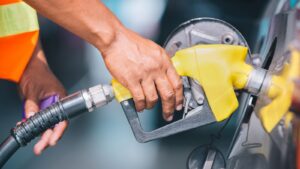
Fuel efficiency is a key consideration
A simple fuel calculation can make the difference easier to see.
If you drive 1,500 km a month and your car uses 6.5L/100 km, you would use approximately 97.5 litres of fuel per month.
Using the November 2026 Gauteng price of R30.24 per litre for 95 unleaded petrol, that works out to approximately:
97.5 litres × R30.24 = R2,948 per month
A car using 8.5L/100 km over the same distance would use about 127.5 litres, costing approximately:
127.5 litres × R30.24 = R3,856 per month
That is a difference of about R907 a month, or roughly R10,886 over a year.
This shows why choosing a more fuel-efficient car can create meaningful value long after the purchase is complete.
Consider whether new or slightly used works better for you
Buying new can offer the appeal of being the first owner, full manufacturer support and the latest specification.
A slightly used car can offer a different kind of value.
Depending on the car, buying one that is a year or two old may allow you to access a higher specification or more expensive model while staying within the same budget.
The important thing is to compare the complete deal.
Check the remaining warranty or service plan, mileage, condition, ownership history and finance terms before deciding.
Neither option is automatically better. The right choice is the one that gives you the most useful car for the total amount you plan to spend.
Get an insurance quote before choosing the car
Insurance can differ between two cars with similar purchase prices.
The make and model, repair costs, theft risk, where the car is kept and the regular driver’s profile can all influence the premium.
Two cars costing R200,000 may therefore attract noticeably different insurance premiums because claims costs, theft trends and repair pricing can vary between models.
Getting quotes before committing to the car lets you include insurance in the monthly calculation while you still have the option to compare different cars.
Prime offers three levels of car insurance to fit every budget: Comprehensive, Customised and Third-Party PLUS, allowing motorists to choose cover according to their car, budget and preferred level of protection.
Get a Prime car insurance quote and compare your options
Understand the premium and the excess
The premium is what you pay regularly to keep the car insured.
The excess is the amount you may need to contribute towards an approved claim.
Both matter when comparing insurance.
One policy may offer a lower monthly premium with a higher excess. Another may cost slightly more each month but have a lower excess.
The better fit depends on what works comfortably for your circumstances.
Prime clients can choose a reducing basic excess option. When selected, the basic excess reduces every claim-free month until it reaches zero, subject to the applicable policy terms.
Prime also offers a 24-Month Fixed Premium Guarantee. Once an accepted premium is in place, it remains fixed for 24 months while the client remains claim-free, subject to the applicable policy terms and conditions.
These features work separately:
- the fixed premium provides greater certainty around the monthly insurance cost
- the reducing basic excess can lower the basic excess over time while the client remains claim-free
For a first-time owner, understanding both can make insurance easier to include in the longer-term budget.
Be selective about dealer extras
A first-car purchase can come with several optional extras.
These might include cosmetic treatments, accessories, extended plans or other dealer-added products.
Some may genuinely add value for the way you plan to use the car.
The useful approach is to consider each one separately rather than automatically adding everything to the finance agreement.
Ask:
- What does this add-on do?
- Will I actually use it?
- Is something similar already included elsewhere?
- What does it cost in total if financed over the full loan term?
Choosing only the extras that are genuinely useful can help keep the overall finance amount focused on what matters most to you.
Build maintenance into the budget from day one
A little forward planning can make routine car ownership much easier.
Servicing, tyres, batteries and licence renewals do not happen every month, but setting aside money regularly helps spread those costs across the year.
For example:
- R500 a month = R6,000 a year
- R750 a month = R9,000 a year
- R1,000 a month = R12,000 a year
That creates a maintenance reserve for expected ownership costs.
Good maintenance can also help the car remain reliable, efficient and easier to enjoy over the longer term.
Make sure the cover fits how you will use the car
Think about what everyday life with the car will actually look like.
Will you use it mainly for commuting? Will you regularly travel long distances? Will another family member sometimes drive it? Where will it normally be parked?
Those details can affect what type of insurance is most appropriate.
Understanding the driver rules, excesses, cover limits and included benefits before selecting the policy means the insurance can form part of the ownership plan from the beginning.
Use rewards where they match your normal spending
Making the most of every Rand does not always mean spending less. It can also mean getting more value from spending that was going to happen anyway.
Prime clients can add Prime Advantage for R40 a month, giving access to rewards across groceries, transport, travel, car hire and online shopping.
Current benefits include up to R4,500 in monthly savings on groceries, 15% off two Bolt rides per month, 15% off qualifying Avis and Woodford car hire, and travel savings of up to R2,000 a month, subject to applicable reward allowances and programme rules.
A Bolt benefit may be useful when the car is being serviced. A car-hire discount may add value while travelling. Grocery or travel rewards can support parts of the household budget that already exist.
For a first-time car owner, those benefits can fit naturally into everyday life and help stretch the budget further.
Reduce the total cost over time
The best value from a first car often comes from several small decisions working together:
- choosing a fuel-efficient car can lower monthly running costs
- getting insurance quotes before buying can help you compare cars more accurately
- selecting only useful dealer extras can keep the finance amount limited
- putting money aside for maintenance can make servicing and tyres easier to manage
- keeping the car properly maintained can reduce breakdown costs, support reliability and long-term value
- using rewards strategically can stretch the budget further
None of these choices needs to transform the budget on its own. Together, they can make the cost of owning the car more manageable over several years.
Build good habits from the first month
A good first-car experience starts with simple habits.
Keep the car licence up to date. Budget for servicing before it is due. Check tyre pressure, tread and oil regularly. Keep insurance information accessible and review your motoring costs from time to time.
Most importantly, keep looking at the car as a complete monthly cost rather than only a finance instalment.
Your first car should bring independence, convenience and enjoyment.
Making thoughtful choices from the beginning can help you get more value from every rand and enjoy that freedom for much longer.
Disclaimer
T&Cs apply.
Prime Advantage membership savings are based on monthly reward allowances and administered by Advantage Rewards. Potential savings depend on the qualifying benefits used and are not guaranteed.
Car insurance benefits are underwritten by Santam Structured Insurance Ltd, a licensed non-life insurer and authorised FSP 1027. Prime South Africa is an authorised FSP 41040.

















 Loading ...