

Standard Bank warning to unmarried couples in South Africa


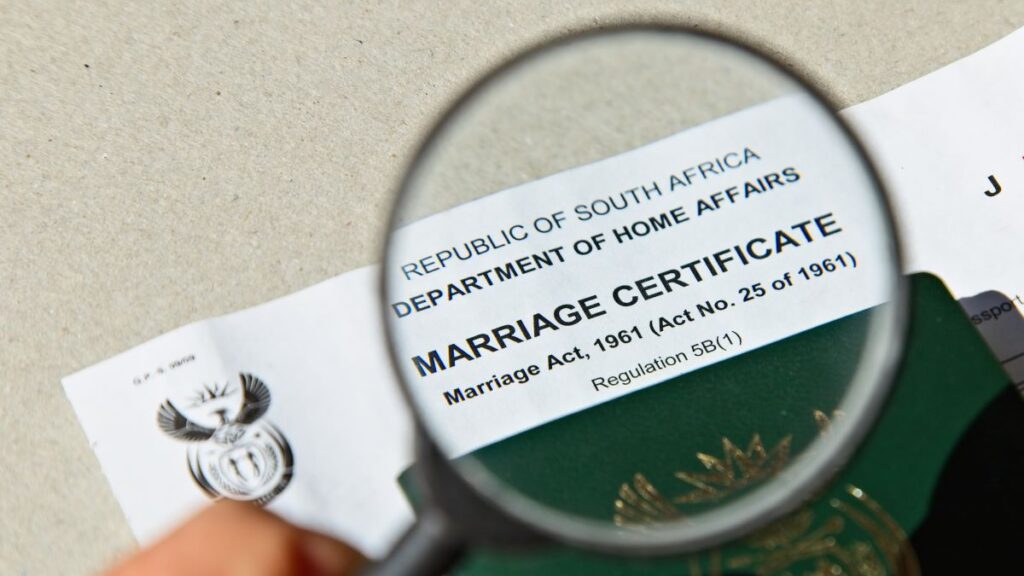
Finance group Standard Bank has warned that unmarried couples living together in South Africa risk great uncertainty or lengthy legal battles if they don’t have their affairs in order.
The bank noted that even if couples have been living together for a very long time, South African law does not automatically recognise these partnerships as a legal union.
This means that couples are not afforded the same protections and rights as married couples when it comes to matters like estates and inheritance.
While there is case law that shows that unmarried couples can claim certain protections after the fact, this usually comes through legal processes that have to be pursued—not automatic rights given.
“Family disputes over assets are common after a death, and for unmarried couples, the stakes can be even higher,” said Shaka Zwane, Head of Insurance and Fiduciary at Standard Bank.
Zwane said that living together before marriage has become common in South Africa for several reasons,” ranging from interpersonal—ie, “getting to know each other’s habits”—to pooling resources to manage finances.
According to the 2022 Census Survey Report, around 8 in every 100 couples live together before marriage.
Some buy property together, some find a new neutral residence, while in many cases, one partner moves into the other’s home.
Regardless of the arrangement, Zwane warned that things can become complicated if one partner dies, especially if there is no valid will in place.
“Unlike married couples, cohabiting partners are not automatically protected by laws such as the Maintenance of Surviving Spouses Act,” he said.
“Many people assume that the longer they’ve lived together, the more likely the law will recognise them as a ‘surviving spouse.’ But that’s a difficult and uncertain legal route.”
In the landmark 2021 case Bwanya v Master of the High Court, the Constitutional Court ruled that partners in permanent life partnerships where there is a reciprocal duty of support can inherit and claim maintenance from a deceased partner’s estate.
This ruling led to legislative changes through the Judicial Matters Amendment Act 15 of 2023.
It now allows both same-sex and opposite-sex life partners to claim inheritance and maintenance, provided they can prove that the reciprocal duty of support existed in the relationship.
However, Zwane reiterated that these rights are not automatic.
“The process still requires legal action to prove the reciprocal duty of support. The best decision couples can make is to document their wishes in a Last Will and Testament and to sign a cohabitation agreement.”
A cohabitation agreement is a legal document that helps define rights and protect contributions to avoid confusion and messy legalities if long-term relationships end in separation or death.
“Without these documents, conflicts can escalate, leading to financial strain and emotional distress,” Zwane said.
Married couples should also take note

While unmarried couples and life partners without formal agreements are at the biggest risk, coming changes to South African marriage laws mean that even married couples should reassess and affirm their current standings.
Justice Minister Mmamoloko Kubayi is preparing to introduce new divorce laws in South Africa by presenting the General Laws Amendment Bill, 2025, to Parliament.
Even though the laws are presented as changes to South Africa’s divorce laws, they apply to all terminations of a union, including through death.
The main changes in the laws are for how spouses married out of community of property without accrual are treated, allowing them to make fair claims on their partner’s estate when marriages end in death or divorce.
Under the current laws, these spouses are left with nothing despite years of non-financial contributions to the marriage.
While the proposed legal changes will bring fairness to the process, they come with two big caveats: the first is that it will not be applied retroactively, so those who are already divorced will still lose out.
The second, bigger caveat, is that the courts may have the power to overrule standing antenuptial agreements (aka prenups).
While the new law will not invalidate antenuptial contracts, it does overlay a statutory power for courts to intervene, notwithstanding what the contract states.
In other words, even if spouses agreed to complete separation of property, a court can still order a redistribution if one spouse would otherwise face serious inequity.
Because of these coming changes, various advisors and experts have urged couples to examine their current marriage arrangements and consider where they stand.


















 Loading ...