

Criminals have a new target in South Africa


Criminals are increasingly targeting e-hailing drivers in South Africa with the aim of stealing the driver’s cellphone, vehicle, and any cash on hand.
E-hailing targets are lured through ordering a lift on the respective apps, and at late hours in the evening and early mornings, making them easy targets.
As a result, Tella Masakale, national spokesperson for the National E-hailers Federation of South Africa (NEFSA), said the country’s e-hailing sector is facing a surge in violent crime.
Speaking in an interview with radio station 702, Masakale said drivers are increasingly being attacked, robbed and even killed while working.
After a string of incidents across the country, Masakale said the reality for drivers has become deeply worrying.
Recent cases include a driver assaulted and extorted after a passenger drop-off at Phoenix Plaza.
A suspect appeared in court in Pretoria West after a driver was brutally murdered following a ride request, while another driver in Cape Town was stabbed to death.
According to Masakale, these attacks are no longer isolated events but part of a pattern affecting drivers nationwide.
“What would actually assist is what we’ve been advocating for,” she explained, pointing to safety measures that some platforms have begun implementing.
“One specific app, Bolt, has actually come to the party. We’re still engaging with Uber, which has not yet come to the party.”
Masakale said some companies have attempted partial solutions, but they remain inadequate without comprehensive rider verification.
“InDrive has tried at least with a picture of a passenger on the app, but at the moment they still don’t have what we call a rider verification process where they have biometric systems,” he said.
He believes proper passenger verification would significantly reduce crime against drivers.
“There are SIM cards used specifically just to register members where ID documents are scanned to make sure that the passenger is actually on a system.”
“This ensures we are actually transporting people that have been verified and checked instead of just carrying criminals like in this incident,” Masakale said.
New regulations have a cost problem
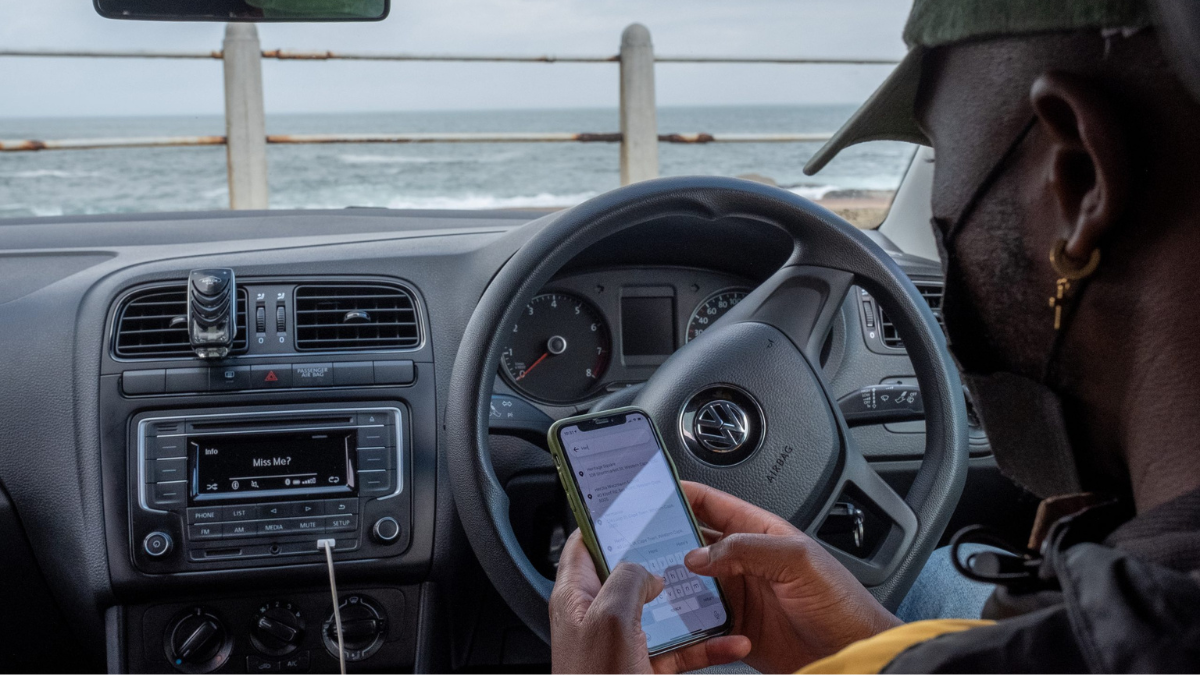
New regulations for the industry are set to take effect on 11 March, including mandatory safety features such as panic buttons in vehicles and visible branding to identify e-hailing cars.
However, Masakale warned that implementation presents challenges for drivers.
He explained that the panic button issue—we have found it to be a cost to the driver. Most of our drivers cannot even afford to shoulder that cost,” he said.
Private security companies have stepped in to offer response services, but this has created another financial burden for drivers.
“Private response companies have come to us that have eventually offered their services at a cost to the driver,” she explained.
Instead, NEFSA wants law enforcement directly involved in the response system. “We demand that SAPS intervene,” Masakale said.
“We’ve identified all hotspot zones, which we request that they station rapid response units specifically for e-hailing drivers.”
He added that linking panic buttons directly to police response units—rather than private firms—would drastically reduce response times and help prevent attacks.
“These panic buttons [should be] linked to law enforcement agencies, whereby they can then mitigate the response time and mitigate these incidents from happening.”
For Masakale, the solution is a combination of stricter platform verification, affordable safety requirements, and direct policing support—without which drivers will remain exposed.


















 Loading ...