

Goodbye Australia, UK, and Canada – reverse emigration trend hitting South Africa


A growing number of skilled South Africans are returning home after building careers overseas in countries such as Australia, Canada, and the United Kingdom (UK).
The return migration is increasingly being driven by lifestyle, family, purchasing power, and retirement planning.
This is according to the TEFL Academy’s Reverse Emigration Among South Africans report, which surveyed 173 South Africans who have lived abroad and either already returned or are planning to do so.
The report suggested that there is a pattern emerging where South Africans are no longer necessarily leaving for good.
Instead, many are spending a few years abroad to gain experience and save money before coming back with new skills, global networks and a different perspective.
Survey respondents indicated that living abroad increased their confidence and adaptability, with an average score of 4.41 out of 5.
Half of the respondents also strongly agreed that their international experience had given them a global perspective that is now a valuable professional asset in South Africa.
However, while working abroad may boost careers, the reasons for returning are also more personal.
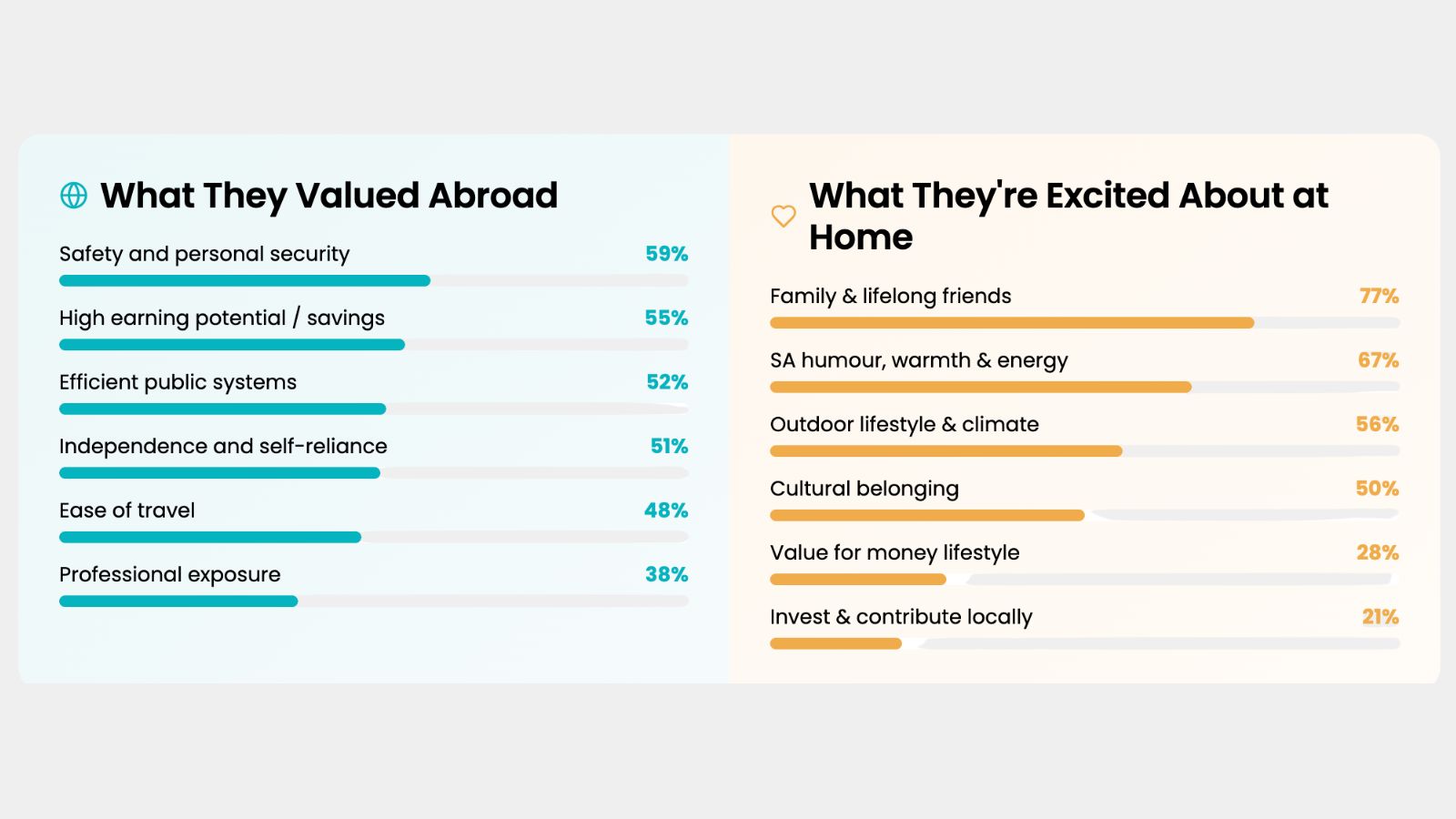
When asked what they were most excited to regain in South Africa, 77.46% of respondents said they missed time with family and lifelong friends.
Another 66.9% said they longed for South Africa’s humour, warmth and social culture, while 55.63% pointed to the country’s outdoor lifestyle and climate.
Half of the respondents said they also missed the strong sense of cultural belonging that comes with being home.
The report also found that many returnees feel a noticeable improvement in their social and emotional well-being after coming back.
Respondents rated their sense of social connectedness in South Africa at an average of 3.56 out of 5, while mental and emotional well-being scored slightly higher at 3.62.
Lifestyle and affordability in South Africa also played a significant role in their decision to come home.
Respondents gave an average score of 3.42 out of 5 to the statement that their lifestyle feels more comfortable in South Africa, even if their salary had changed.
Remote work is changing the game
Overall life satisfaction in South Africa came in at 3.41, which suggested that many returnees see value in quality of life beyond paycheques alone.
Industry data has indicated that recruitment firms have recorded as much as a 70% increase in enquiries from South Africans abroad exploring return migration.
Most of these inquiries are coming from professionals based in the United Kingdom, Australia and Canada.
The trend is also being supported by changes in the global workplace, with remote and hybrid work becoming more common.
Many South Africans are now able to return home while still working for employers abroad or earning international income.
This means South African professionals can earn in pounds, euros, Canadian dollars or Australian dollars while spending in rands.
This gives them access to South Africa’s lower cost of living without necessarily sacrificing international career opportunities.
The model of “geographic arbitrage” is making it easier for people to come home without taking the kind of financial hit that may once have discouraged a return.
However, the transition is not always seamless. When asked whether their international skills are being fully utilised in South Africa, respondents highlighted challenges in re-integrating into the local labour market.
Rhyan O’Sullivan, Managing Director at The TEFL Academy, said the findings reflect a broader change in how South Africans think about opportunity and mobility.
“What we often see is that people spend a few years overseas building confidence, saving money and developing global skills before returning home,” said O’Sullivan.
He added that more individuals are now able to work online with international clients and companies while living in South Africa, which is becoming a preferred option.


















 Loading ...