

Automatically adding a 10% tip to restaurant bills outlawed in South Africa


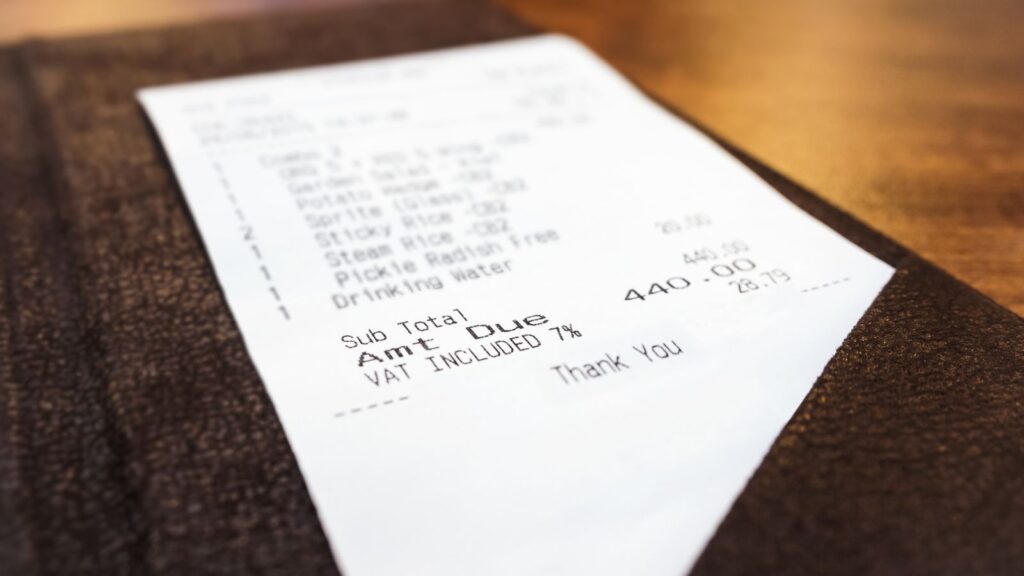
A popular Pretoria restaurant has been found guilty of prohibited conduct for automatically adding a 10% service charge to customers’ bills.
This is despite the restaurant describing the fee as discretionary and allowing diners to request its removal.
The National Consumer Tribunal ruled that the restaurant’s practice was unlawful and found that customers should not have to challenge an automatically added charge to avoid paying it.
In an interview with the Money Show, consumer rights expert Wendy Knowler said the ruling was important for the restaurant industry, as complaints about automatically added service charges had become increasingly common.
She explained that while customers are accustomed to restaurants adding service fees to larger tables, some establishments had started applying a blanket 10% charge to all bills, sometimes without properly informing diners.
“A lot of people just are used to looking for the bottom figure and then adding their tip onto that,” she said.
The Pretoria restaurant’s menu stated that “a discretionary charge of 10% will be added to your bill. Please notify management if the service you received is not up to standard. Management will gladly remove it from your bill.”
The charge was automatically applied to all bills, with the restaurant telling the National Consumer Commission that it processed approximately 200 service-charge transactions a day.
This led the commission to regard the practice as a systemic issue rather than an isolated incident.
The restaurant defended its policy by arguing that the charge was disclosed on its menu, was discretionary, and could be removed at a customer’s request.
It also maintained that all the money went to waiters as tips and that no diner had come forward to complain that a request to remove the charge had been refused.
However, Knowler said the central legal issue was that consumers could not be compelled to pay more than the displayed price.
“Section 23 of the Consumer Protection Act says that a supplier cannot make you pay more than the displayed price. And paying for service has always got to be voluntary and not mandatory,” she said.
The restaurant avoided a R1 million fine

The tribunal also found that the restaurant’s approach effectively required customers to pay extra for good service or negotiate a lower price if the service was unsatisfactory.
Knowler highlighted that consumers already have a legal right to good-quality service under the Consumer Protection Act (CPA).
By requiring customers to challenge the additional charge when service was poor, the restaurant was effectively expecting them to give up that right, she explained.
The tribunal made clear that the CPA does not prevent restaurants from charging for services.
However, establishments must specify what those services entail and display the full price upfront, allowing customers to decide whether to accept the offer before ordering.
“A discretionary 10% for services that nobody has described or itemised for you doesn’t give you any certainty,” Knowler said.
She highlighted the tribunal’s description of a genuinely voluntary gratuity as one that a consumer freely elects to pay.
“It is not an amount automatically added to a bill and removed only if a consumer challenges it,” she said.
The National Consumer Commission had asked the tribunal to impose a R1 million fine on the restaurant. However, the tribunal declared the conduct prohibited without imposing a fine or making a costs order.
Knowler said several factors worked in the restaurant’s favour, including that it had not acted in bad faith, that the money had genuinely been paid to waiters, and that there was no evidence that the restaurant had profited from the charges.
There was also no specific financial loss presented to the tribunal, while the restaurant cooperated with the investigation and removed the wording from its menu.
Knowler said restaurants should distinguish between a properly disclosed, voluntary gratuity and an automatically applied charge.
While she understood why restaurants might want to charge larger groups, where one waiter could spend much of an evening attending to a single table, she said blanket charges were particularly problematic.
She added that customers should be clearly informed about any service charge, rather than discovering it when the bill arrives.
“When none of that is happening, then that’s obviously quite sneaky and not in the consumer’s interest,” she said.















 Loading ...