

Massive work-from-home shift on the cards for South Africa


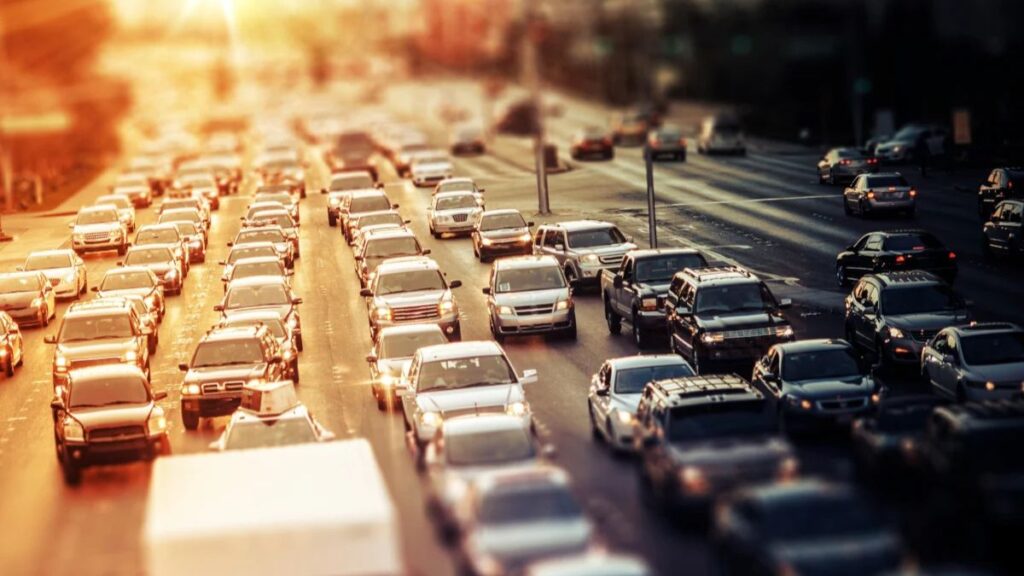
The government raised the idea of work-from-home as a practical way to mitigate what is shaping up to be a massive fuel price shock next month.
A cabinet committee has also been established to discuss what can be done about the rising fuel prices.
Officials from the Department of Mineral and Petroleum Resources (DMPR) suggested working from home as one way for households to cut transport costs and reduce fuel demand.
Robert Maake, director of the Fuel Pricing Mechanism at the DMPR, said that, for now, without direct state intervention, consumers may need to find their own ways to absorb the impact.
However, the DMPR stressed that the proposal is merely a suggestion and not a directive.
It said that working from home is simply one of several possible options individuals or organisations might consider to mitigate transport-related costs.
It is not “an official position or policy proposal of the department of government”, nor “a directive, recommendation or policy intervention”, but rather part of a broader discussion, it added.
“Government continues to engage on matters relating to fuel supply, fuel pricing and the broader cost of living pressures affecting South Africans,” it said.
The latest daily snapshot from the Central Energy Fund, released on 25 March, points to possible hikes of R9.67 per litre for 500ppm diesel and R9.81 per litre for cleaner 50ppm diesel.
Petrol prices are pointing to an increase of between R5.20 and R5.70 per litre.
These increases would significantly raise transport and logistics costs, with likely knock-on effects for food, goods, and household budgets across the country.
The pressure has now escalated to Cabinet level.
Finance Minister Enoch Godongwana revealed in the National Assembly on Wednesday, 25 March, that a Cabinet committee has been established to consider what the government can do in response to rising fuel costs.
Godongwana raised the matter while responding to questions in Parliament, initially during a discussion about a separate issue.
When asked by the Democratic Alliance’s Matt Burke whether he would support the party’s proposal to cut fuel levies by 50%, Godongwana avoided committing to the idea.
The DA’s proposal comes after the minister increased the general fuel levy by 21 cents per litre in February’s Budget, effective 1 April 2026.
After further questioning from the Economic Freedom Fighters’ Sam Matiase, Godongwana confirmed that the Cabinet committee is specifically looking at the broader impact of the Middle East war, including what the government can do about fuel prices.
“Among its terms of reference is to say what it suggests the government do on the fuel price,” he said.
The committee includes Godongwana, the Minister of Mineral and Petroleum Resources, Gwede Mantashe, and the Electricity Minister, Kgosientsho Ramokgopa.
Despite the political pressure, the National Treasury has already warned that there is little fiscal room to provide meaningful relief.
Treasury director-general Duncan Pieterse told Bloomberg that cushioning the impact of higher fuel prices would cost the government tens of millions of rand—money it simply does not have readily available.
“Unless you have those kinds of resources, which currently we do not have available as part of our fiscal buffers, you are either looking at no relief, or you’re looking at a very small amount of relief,” Pieterse said at a Stanlib Asset Management conference in Johannesburg on Wednesday.
He added that if relief is eventually granted, it would likely follow the same model used in 2022, when South Africa temporarily cut the general fuel levy by R1.50 a litre after Russia’s invasion of Ukraine sent global oil prices soaring.
Any new intervention, however, would likely be temporary, limited, and funded within the existing fiscal framework.














 Loading ...