

Tiny rural municipality in South Africa where the average resident makes over R41,000 a month


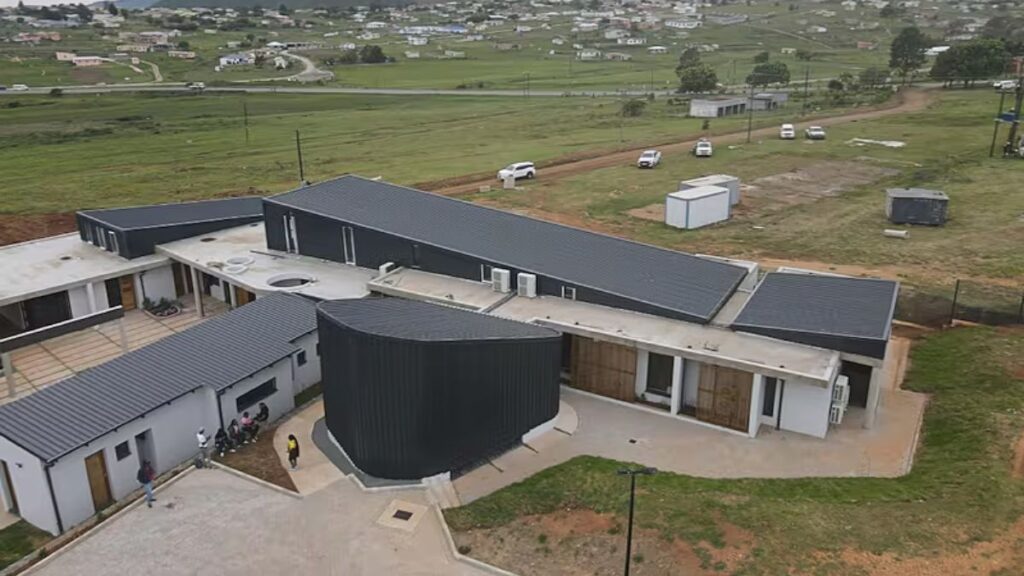
Taxpayers living in the small rural Ntabankulu Local Municipality earn more on average than residents in some of the country’s biggest and wealthiest cities.
This is according to the latest tax statistics released by the South African Revenue Service (SARS).
The report showed that residents of the Ntabankulu Local Municipality have the highest average taxable income in the Eastern Cape.
The data shows that the municipality has 2,358 registered taxpayers with an average taxable income of R494,156 a year—working out to roughly R41,180 per month.
This places the small municipality ahead of major economic hubs such as Johannesburg, Cape Town and Stellenbosch in terms of average income per taxpayer, despite its rural setting and relatively small population.
The figures were published as part of SARS’ 2025 Tax Statistics, which are compiled using data from taxpayer registers and submitted tax returns.
The statistics are designed to provide deeper insight into South Africa’s tax base, the sources of government revenue, and broader economic trends across the country.
SARS also uses this data to inform policymakers, including the National Treasury, when making decisions related to taxation and economic policy.
The tax authority’s latest figures once again highlight how concentrated South Africa’s tax base is, with a relatively small group of taxpayers contributing a significant share of the country’s personal and corporate income tax revenue.
The tax stats also provided a breakdown of average taxable income by province and municipality, giving a clearer picture of which areas have the highest-earning taxpayers.
Provincially, Gauteng remained the wealthiest in terms of average taxable income, with taxpayers earning an average of about R414,000 a year.
This is followed by the Western Cape, where the average taxable income is approximately R348,000.
After these two economic powerhouses come several smaller provinces in terms of population, including North West, Limpopo and Mpumalanga.
These provinces often benefit from lucrative mining operations combined with smaller populations, which can push up the average taxable income figures.

The outlier in the Eastern Cape
Within the Eastern Cape, however, the standout municipality is Ntabankulu.
Located within the Alfred Nzo District Municipality, Ntabankulu is the smallest of the district’s four local municipalities and accounts for about 13% of its total geographical area.
The municipality spans roughly 1,385 square kilometres. It was previously part of the OR Tambo District Municipality before being moved to the Alfred Nzo District following the 2011 municipal elections.
Despite its high average taxable income, the municipality is primarily rural, and its economy is largely based on agriculture, sand and quarry mining, forestry and tourism.
The name Ntabankulu comes from isiXhosa and means “great” or “big mountain”, which reflects the mountainous terrain that characterises the area.
The village itself was formally laid out in 1909, although a general store had already been operating on the site as early as 1894.
Like much of the Eastern Cape, the area has a long and complex history shaped by interactions and conflicts between indigenous groups and European settlers.
Along with interesting local outliers such as Ntabankulu, SARS’ tax stats also provided a snapshot of the country’s overall tax performance.
In the 2024/25 fiscal year, growth in net personal income tax collections was largely driven by above-inflation wage increases across several sectors.
This included financial intermediation, insurance, real estate, and business services, as well as community and social services.
Additional revenue also came from withdrawals under South Africa’s two-pot retirement system, which exceeded expectations.
SARS reported that its compliance programme secured R304 billion in additional revenue during the year, compared with R260.5 billion in the previous financial year—a 16.7% increase. Of this, R156.1 billion was attributed to cash-collection initiatives.
The tax authority said it remains determined to make it difficult and costly for taxpayers who deliberately fail to meet their obligations, as it continues efforts to strengthen compliance and protect South Africa’s revenue base.















 Loading ...