

End of an era for Cell C in South Africa


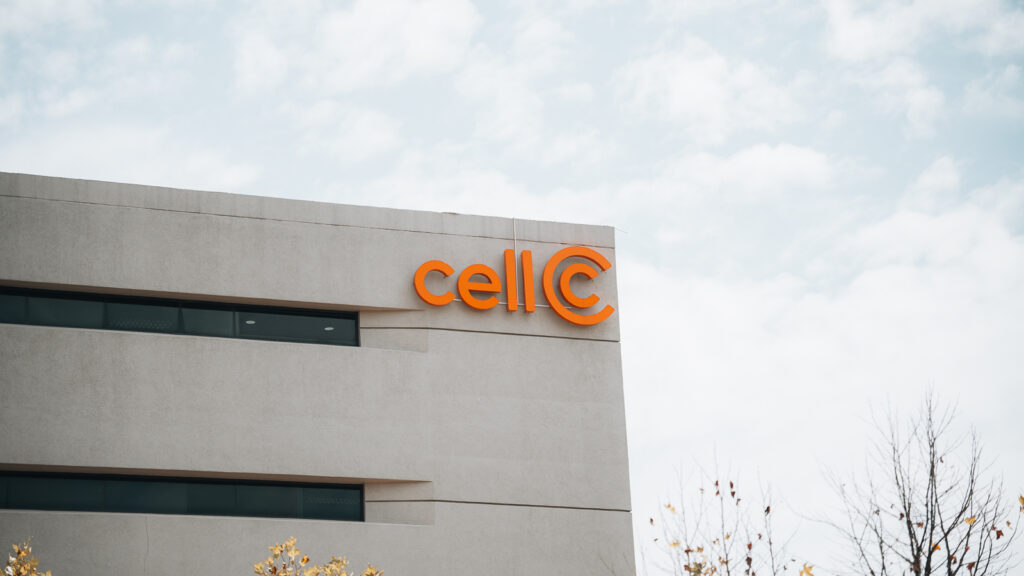
Cell C has officially exited technical insolvency after years of financial distress, with a major balance sheet restructuring during its 2026 financial year helping the group’s equity position shift from deeply negative to positive.
The turnaround marks a significant change for the South African telecommunications company, which had been technically insolvent for several years, with accumulated losses leaving its liabilities greater than its assets.
At the end of the 2025 financial year, Cell C reported a negative total equity of R8.30 billion. This followed the company’s 2019 financial crisis, when it recorded a net loss of more than R8 billion.
At the time, total liabilities of R23.2 billion exceeded assets of R18.4 billion. The company subsequently defaulted on debt payments.
A major recapitalisation followed in 2022, led by parent company Blu Label.
While the restructuring reduced short-term debt, Cell C remained technically insolvent, with negative equity of R9.294 billion by December 2022.
The company then adopted an asset-light strategy, shutting down its own radio access network and moving customers onto MTN and Vodacom infrastructure.
This reduced its infrastructure costs and improved operational efficiency, but the balance sheet remained under pressure. By the middle of 2024, liabilities still exceeded assets by about R3.2 billion.
In May 2025, the negative equity position had narrowed to roughly R1 billion.
The notable shift came during the 2026 financial year through a series of pre-listing transactions and Cell C’s listing on the Johannesburg Stock Exchange on 27 November 2025.
The company ended the latest reporting period with positive equity of R3.35 billion.
The directors and auditors said the improvement was “primarily attributable to the accounting entries arising from the IPO transaction”.
One of the most significant steps involved the waiver of debt owed to TPC, a subsidiary of Blue Label Telecoms.
TPC waived R4.1 billion of debt, while a further R0.5 million was converted into Cell C shares. The transaction resulted in a non-cash gain of R3.53 billion from the derecognition of loans.
No dividend declared

Cell C also repurchased airtime previously held by TPC. The airtime had a face value of R8 billion, with the repurchase price of R7.37 billion settled through the issue of Cell C shares.
This reduced contract liabilities by R2.42 billion, with the balance falling from R2.59 billion in 2025 to R173.95 million in 2026.
The company said the restructuring involved “extensive engagement with lenders, lessors, and shareholders” and resulted in a significantly deleveraged balance sheet. It ended the year with what it described as “only trading-level debt”.
Net debt fell by 64%, from R5.69 billion to R2.02 billion, while net debt to adjusted EBITDA improved from 4.29 times to 1.56 times.
Adjusted EBITDA, excluding listing and restructuring costs, increased by 17% to R2.38 billion.
However, the turnaround does not mean Cell C is free of financial pressure.
The company still had a working capital deficit of R1.40 billion, with current liabilities of R4.78 billion exceeding current assets of R3.40 billion.
Management acknowledged that “while the Group continues to face liquidity pressures, its overall financial position has improved significantly”.
The reported net profit of R4.16 billion also needs to be viewed in context.
It was boosted substantially by once-off, non-cash gains, including the R3.53 billion loan write-off and R474 million in lease termination gains.
Operationally, Cell C reported growth in several areas. Prepaid net revenue increased by 9.7% to R5.81 billion, while prepaid subscribers rose by 1.3 million to 8.1 million.
Wholesale revenue increased 20% to R1.76 billion, while MVNO subscribers grew by 27.3% and data traffic increased by 131%.
Cell C also acquired 100% of Comm Equipment Company for R2.02 billion, restoring control over postpaid device financing and procurement.
CEC contributed R907 million in revenue and R273 million in adjusted EBITDA during the second half of the year.
Despite the improved financial position, Cell C faces further challenges.
Regulated mobile termination rates reduced incoming revenue, while new data rollover regulations due to take effect in January 2027 could affect future revenue growth.
Operating expenses also increased by 17%, partly because of listing costs, supplier debt cancellation fees, the CEC acquisition and higher IT costs during the transition.
No dividend was declared for the year, with cash being retained to support liquidity and the company’s ongoing financial restructuring.
Key Financials (2025 vs. 2026)
All figures are presented in R’000 (unless otherwise specified) to preserve the exact precision of the Group’s financial statements:
| Financial Metric | FY2025 (R’000) | FY2026 (R’000) | YoY Change (%) |
|---|---|---|---|
| Total IFRS Revenue | R11,138,167 | R12,641,318 | +13.5% |
| Other Income | R1,319,077 | R4,875,215 | +269.6% |
| Direct Expenses | (R7,720,889) | (R7,707,297) | -0.2% |
| Adjusted EBITDA | R2,037,000 | R2,381,000 | +16.9% |
| Reported IFRS EBITDA | R2,104,402 | R5,508,516 | +161.8% |
| Net Profit for the Year | R2,217,052 | R4,160,285 | +87.6% |
| Basic Earnings Per Share | 148,537 cents | 2,341 cents | — |
| Basic Headline EPS (HEPS) | 148,507 cents | 2,338 cents | — |
| Total Assets | R5,073,578 | R10,238,736 | +101.8% |
| Total Liabilities | R13,378,325 | R6,889,117 | -48.5% |
| Total Equity | (R8,304,747) | R3,349,619 | +140.3% |
| Current Assets | R1,216,532 | R3,395,368 | +179.1% |
| Current Liabilities | R10,267,502 | R4,784,195 | -53.4% |
| Working Capital Deficit | (R9,050,970) | (R1,388,827) | -84.7% |
| Net Borrowings (Net Debt) | R5,691,217 | R2,020,385 | -64.5% |
| Net Debt / EBITDA Ratio | 4.29x | 1.56x | -63.6% |

















 Loading ...