

SA will not meet digital TV deadline: study


Ovum, the technology research and advisory firm, says that most sub-Saharan countries – notably Nigeria and South Africa – will not achieve the ITU-mandated 2015 deadline to switch off their analog terrestrial TV signals.
The International Telecommunication Union (ITU) has said that, after June 2015, countries will no longer be protected against disruptions of the radio waves that are used for analog television broadcasts.
Ovum pointed to a lack of awareness amongst the public that analog switch-off is impending; inadequate funds being made available by governments to roll out digital TV infrastructure; and insufficient supplies of set-top boxes.
“This is despite the mindset, prevalent among many governments and regulators in the region, that the deadline must be met at all costs,” it said.
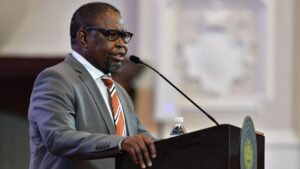
Ovum’s research findings come a week after the Minister of Telecommunications and Postal Services, Siyabonga Cwele, set himself two new deadlines involving South Africa’s migration from analogue to digital terrestrial television (DTT).
“By the end of the month, the final [broadcasting digital migration] policy, which had been subject to public consultation, will be gazetted,” Cwele said in his budget vote speech.
“Within three months we will designate the date of the start of the digital switch-on,” he added.
“The June 2015 deadline [which South Africa agreed upon with the ITU] looms before us and we dare not let our people down,” he added.
Ovum, however, said that numerous sub-Saharan TV markets are considering switching off analog TV signals before the audience has transitioned to digital.
This, it stressed, would mean many homes will lose TV reception, leading to advertisers switching away from TV and, in turn, a decline in TV advertising revenue.
Adam Thomas, Ovum’s lead analyst for global TV markets said: “In Tanzania, the switchover process was pushed through recklessly, with damaging results.”
“Thousands of homes lost their ability to watch TV and advertising revenue suffered as a result. But this mentality to rush the process persists, not least in Kenya which seems intent on repeating the same mistakes.”
Ovum research also found an eagerness among regulators to raise revenue from the sale of the spectrum that will become available following analog switch-off and which will, most likely, be snapped up by mobile operators.
“This is another factor behind the rushed switchover,” it said.
Ovum’s Ismail Patel, who tracks media and entertainment across the Asian, Middle Eastern, and African regions, said: “While the sale of spectrum will benefit the mobile sector, regulators could harm the TV business if they act with undue haste to get their hands on potentially lucrative spectrum.
“African governments and regulators need to accept that the 2015 deadline will be missed and shift their focus on to getting the process completed as quickly and efficiently as possible. Ovum believes that forcing through analog switch-off is ultimately counter-productive.”
Ovum also found that initial digital terrestrial TV (DTT) launches are dominated by the pay-DTT services of the operators StarTimes and MultiChoice.
This has created a sector where the paid-DTT option represents an artificially high percentage of total homes using DTT to receive TV – an issue because people will be less willing to transition from analog to digital TV if they believe this will mean they have to start paying for TV.
The result is that more than 90% of terrestrial TV was still analog at end-2013, Ovum said.
According to Thomas: “This early focus on pay DTT has created a misconception among the sub-Saharan audience that DTT is intrinsically a paid service.”
“Once there is awareness that DTT can be received without payment then free-to-air DTT will be the overwhelming choice for most homes and the transition from analog to digital will be better placed to proceed.”
“This may mean StarTimes and Multichoice will be disappointed with the number of pay DTT subscribers that they can ultimately attract,” he said.
More on digital TV
Digital TV in SA: “We dare not let our people down,” says minister















 Loading ...