

Ramaphosa’s best bet could be two-tier cities – here’s how it works


ANC president elect, Cyril Ramaphosa and his team, have their work cut out for them to restore confidence and boost investment in the local economy.
Leon Greyling and Lesiba Mothata of Alexander Forbes Investments believe that the immediate challenge facing the incoming ANC leadership is to remedy cyclical and structural weakness in the economy, swiftly and decisively.
“President Jacob Zuma has committed the fiscus to an unsustainable free education plan, which requires urgent attention,” the economists from Alexander Forbes Investments said.
“Clearly South Africa cannot commit itself indefinitely to free education when it does not have sufficient capital to continue with its growth plans without the need to borrow. South African Airways and the Post Office were bailed out on borrowed funds. How does the country sustain free education without borrowing?”
The economists also raised concerns regarding Ramaphosa’s “new deal” which is aimed at accelerating radical transformation in the country. Among other issues the “deal” includes creating jobs, focusing on recovering the economy, land redistribution, and distribution of wealth.
“While it is admirable to focus on re-industrialising South Africa and boosting the economy via small- and medium-sized companies, Ramaphosa’s plan lacked detail of how he intends to shift the economy away from the four major cities,” the economists said.
“Even after 23 years of democracy, South Africa’s economic structure is little changed. Data from Statistics South Africa show that about 65% of the economy is generated in three provinces, which in turn suggests it comes from four cities — Pretoria, Johannesburg, Cape Town and Durban.”
Developing a two-tier city economic model
According to the economists, one of the best prospects for stimulating growth comes from chief economics commentator at the Financial Times, Martin Wolf’s suggestion that South Africa should turn parts of the country into free economic zones.
Wolf suggests that South African authorities should consider running a two-tier city economic development strategy by creating special economic zones (SEZs). The intention would be to improve tier-1 cities, as it currently is envisaged in the new plan, but also to nurture existing and build new tier-2 cities.
Tier-1 cities are the traditional hubs — Pretoria, Johannesburg, Cape Town and Durban, while tier-2 cities include smaller hubs such as Nelspruit, Kimberley, Rustenburg, Port Elizabeth, Bloemfontein and Polokwane.
South Africa can easily come up with half a dozen economic themes that can be expressed in tier-2 cities, with the exception of one — an International Finance Centre that could be established in Hillbrow, they said.
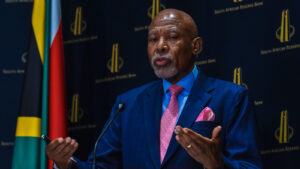
“During his inaugural speech as a professor of economics at the University of the Witwatersrand, former South African Reserve Bank governor, Tito Mboweni, suggested South Africa should pursue setting up an International Finance Centre in the Hillbrow area, to harness the country’s deep financial market infrastructure and attract investment,” the economists said.
“Mauritius seems to have taken the pole position as a finance centre for doing business in Africa, and South Africa needs to challenge this. Since positioning itself as a financial services hub of Africa, Mauritius has achieved average GDP growth of 4% in the past 10 years.”
Below is a table of economic themes dominant in different tier-2 cities which can be nurtured to turn the cities into environments with vibrant investment according to Alexander Forbes Investments. In these zones, a favourable tax structure and reduced regulatory requirements should be implemented to attract investment.
| Province | Population size (millions) | Unemployment rate | 5-year average growth | City | Economic Theme |
|---|---|---|---|---|---|
| Gauteng | 13.4 | 30.2% | 2.6% | Hillbrow | International Global Finance Centre – a global city, designated as a special economic zone, to attract global firms to set up business within the predetermined radius |
| Eastern Cape | 7 | 35.5% | 1.8% | Port Elizabeth | Automotive industry to create a full production capacity along every layer of the value chain |
| Limpopo, Free State, and Eastern Cape | L = 5.8; FS = 2.8; EC = Unavailable | L = 19.1%; FS = 31.8%; EC = Unavailable | L = 1.8% ; FS = 1.7%; EC = Unavailable | Polkwane, Blemfontein and Mthatha | Agro-processing – taking the raw commodity from a farm, adding value by processing it into manufactured products |
| Mpumalanga | 4.3 | 30.7% | 1.8% | Nelspruit | Sub-Sahara African retail and agricultural export hub. Make it the ‘Dubai of Africa’ |
| North West | 3.7 | 26.2% | 0.9% | Rustenburg | Central to South Africa’s Platinum Belt, raw primary materials should be transformed to finished products by adding value through beneficiation |
| Northern Cape | 1.2 | 29.9% | 2.3% | Kimberly | Innovative hub for energy and science research and development |
Benefits of a two-tier city model
This two-tier city model is transformative in nature and will ultimately bring the economy ‘to the people’, the economists said.
“South Africa’s wealth cannot indefinitely be hosted in the big cities, to the exclusion of the majority. Building mega-city projects in Nelspruit, Kimberley, Rustenburg, Port Elizabeth, Bloemfontein and Polokwane brings economic prosperity to where it is most needed.
“In addition, a two-tier city strategy will accelerate collaboration between private and public funders. The blending of private and public capital to support infrastructure spending in mega-city projects will unlock opportunities for growth and development,” they said.
“In a nutshell, if a Ramaphosa-led ANC were to augment the plans put down in the ‘new deal’ with a two-tier city strategy – the envisaged 3% GDP growth could be sustainably achieved.”
Read: 7 problems with the ANC’s new plans for land expropriation without compensation
















 Loading ...