

How the pound has reacted to the rand and the ‘Ramaphosa effect’ – and where it’s heading


Despite weakening on the announcement that parliament was considering land expropriation without compensation, the rand’s strength against the dollar has continued to make headlines following the election of ANC president Cyril Ramaphosa in December, with the currency hitting three year highs against the greenback at the start of the week.
And while the local unit slipped to R11.75 to the dollar in the afternoon session on Wednesday (28 February), it is still just over a rand away from reversing Zuma’s second term, when it traded at around R10.50 in 2014.
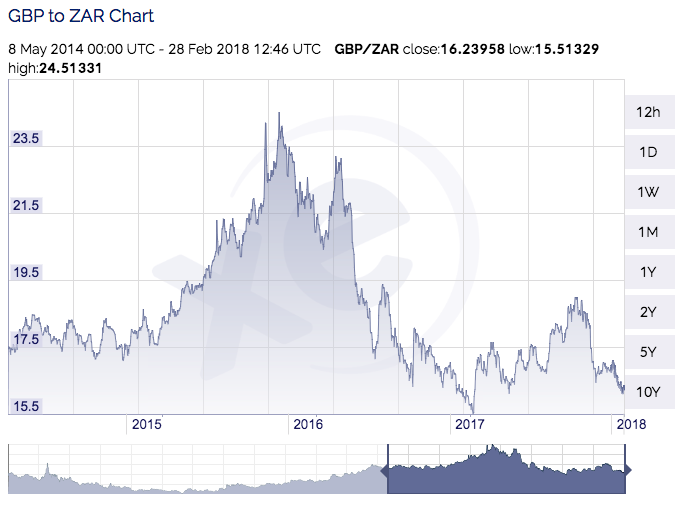
Unsurprisingly, the pound too has seen similar fluctuations since the start of the Zuma’s second tenure, with the currency reaching a worst level of R25.21 in January 2016 – but has since strengthened substantially, trading at four year highs against the pound this week.
This includes strengthening from R17.45 against the British currency since Ramaphosa’s ANC December election alone – meaning the pound has seen similar weakening as the dollar over the same time period.
Forex specialists, PoundSterlingLive, said that it expects this trend to continue with the rand expected to hit around R15.50 to the pound within the coming weeks. In afternoon trade on Wednesday the rand was up 0.20% against the pound, at R16.23.
This is lower than the rand was trading versus the pound at the start of Zuma’s second term as president in May 2014, when it was trading at R17.45.
“There is a lot of scope for volatility from South African politics and economics which suggests the downside target at R15.50 is not far-fetched,” it said.
“The fall of president Zuma and his replacement by the market’s favourite Cyril Ramaphosa will help provide a more favourable outlook for the economy.
“Ramaphosa might find that his honeymoon period with investors and financial markets might not last as long as he hopes – the time for action is fast approaching and any disappointment could see the Ramaphosa effect on the rand fade.”
It added that the key event to look forward to will be credit-rating agency Moody’s decision on whether to downgrade South African debt to sub-investment grade status, in March.
“Last year the agency put the country’s rating on review pending a final decision in March 2018,” it said.
“It is the last of the big three agencies to keep SA’s rating at investment grade, both S&P and Fitch have downgraded the country’s debt to below investment grade.
“If Moody’s follows suit next month it would be a catastrophe for the rand as the country would become immediately less attractive as an investment destination for foreign lenders, reducing inflows of capital substantially.”

















 Loading ...