

Ramaphosa’s plan for load shedding after a week of emergency meetings


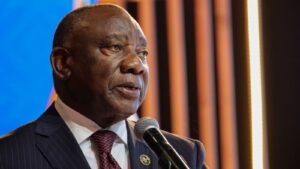
After cancelling his trip to Davos and holding emergency meetings with various stakeholders all week, president Cyril Ramaphosa and Eskom have no silver bullet to ease the burden of load shedding in South Africa.
Citing attendees of the meetings, the Sunday Times and City Press report that no new plans or strategies have emerged from the meetings, with the presidency sticking to the general plan announced in 2022, as well as adopting the strategies revealed earlier this week.
According to the reports, the emergency meetings held this week were unable to come up with any new quick-fix solutions to the load shedding crisis, instead leaning on previous long-term plans to boost grid capacity over time.
Response from the meetings was that the president’s plans would only be useful now if they had been announced three years ago. Broadly, the new plan – which is the old plan – is three phases:
- Do urgent maintenance to coal-powered power stations
- Build new capacity
- Remove regulatory hurdles
The only thing that can be done in the near term is to provide Eskom with more diesel for its open-cycle gas turbines and take on the criminal syndicates, which are exacerbating, if not directly causing, the energy crisis through vandalism, theft and acts of sabotage.
According to the Sunday Times, it’s the latter that will be getting attention, with a special meeting of the National Security Council set for the coming week to discuss operations at power stations and ways to step up the protections for critical infrastructure.
The government has made no guarantees to help Eskom with diesel.
Ramaphosa previously announced a plan to tackle load shedding during his State of the Nation address in 2022 which reflected this in slightly more detail. Aspects of the plan have already been implemented, while others have taken longer than expected.
Ramaphosa’s big plan to end load shedding – where we are now
Fundamentally, however, the plan to end load shedding is a long-term one, with many points – like building new generation capacity – needing time to become reality.
There are also aspects of the plan, such as bid windows five and six of the renewable energy programme, which have already failed.
The National Energy Crisis Committee (Necom), a body run by Ramaphosa’s office, this week announced an emergency plan to try and tackle load shedding in the short term – but even this is rooted in the long-term plan, and will still require at least a year to come into effect.
Other aspects of the plan, like introducing new laws to speed up the development of power plants, are also vague and will need time to process.
The measures that Necom said may ease the crisis include:
- The first of more than 100 privately owned power plants being developed will connect to the grid by the end of this year. In total, the planned projects could produce 9,000 megawatts, much of it for the companies’ own use.
- Emergency legislation is being developed to allow the faster approval and development of power plants.
- Contracts for the construction of plants that will produce 2,800 megawatts of renewable energy for the grid have been signed and construction will soon begin.
- As much as 1,000 megawatts may be imported this year from neighbouring countries, and Eskom will buy 1,000 megawatts of excess energy from private producers who already have facilities.
- Six of Eskom’s 14 coal-fired power plants have been “identified for particular focus” in a bid to get them to perform more reliably.
- Efforts to finish incomplete plants and maintenance of other major units are being made.
- The time to complete regulatory processes for new plants has been reduced.
Analysts and economists, speaking to the City Press, said that there isn’t really anything immediate that can be done about the energy crisis without causing damage to the ANC, and it was clear that Ramaphosa has no idea what to do about it.
Economist Dawie Roodt said that measures like declaring a state of disaster or putting Eskom into business rescue would lead to job losses and other politically damaging eventualities, which, ahead of an election year, are simply not going to happen.
As such, the short-term outlook for load shedding – and the economy – remains “bad to horrible”, he said.
Read: South Africa is in crisis and heading for disaster: economist














 Loading ...