

R5.8 billion mega-bridges in South Africa taking shape


After numerous obstacles, the South African National Roads Agency Limited (Sanral) has restarted works on the Mtentu and Msikaba bridges in the Eastern Cape – with progress said to have been made since.
The mega-bridges are part of the N2 Wild Coast Road Project that connects four provinces, namely the Western Cape, Eastern Cape, KwaZulu-Natal and Mpumalanga.
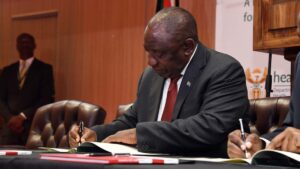
In September 2021, President Cyril Ramaphosa announced that the project, including the construction of the two bridges, would create around 21,000 to 28,000 indirect jobs during construction and 8,000 full-time jobs when completed.
“Limited environmental disturbance, aesthetics and climate resilience were among the prime factors taken into account when the bridges were designed during the concept stage” said Sanral southern region manager Mbulelo Peterson.
Both bridges were designed by Denmark-based architecture company Dissing+Weitling.
Mtentu Bridge

The bridge will run across the Mtentu River in Mbizana in the Winnie Madikizela-Mandela Municipality, Eastern Cape.
Once completed, it will be the highest in Africa and one of the longest main-span balanced cantilever bridges in the world, with a main span of 260 meters and a maximum height of around 223 metres.
The Mtentu Bridge has faced various difficulties since its announcement. The company responsible for building the then R1.6-billion structure, Aveng Strabag joint venture (JV), walked out on the project in early 2019 following months of violent community protests.
The contract, now worth R4.05 billion, was then awarded to the China Communications Construction Company and Mota-Engil Construction South Africa in a joint venture back in November 2022, and construction began in 2023.
The construction started on August 5, 2023, and has an expected conclusion date of the end of 2027.
The contract has a local labour contract participation goal of 4%, which should see around R141 million (excluding VAT) being paid to local labour in wages and salaries, creating approximately 1,080 full-time employment jobs for local skilled and unskilled persons during the contract period.
Msikaba Bridge
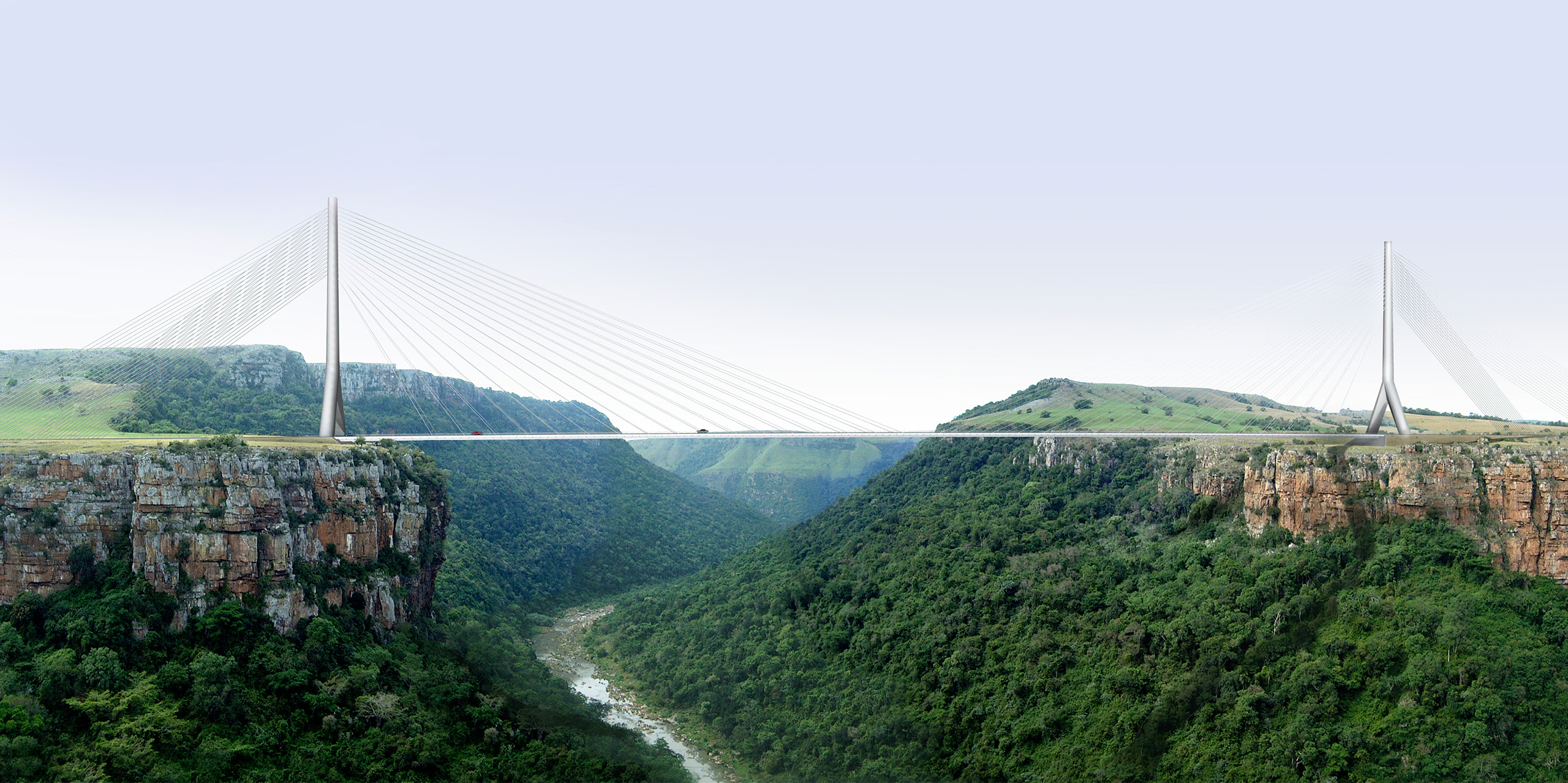
This cable-stayed bridge is currently under construction, and will span the Msikaba River, near Lusikisiki in the Eastern Cape.
The Msikaba bridge project is worth R1.75 billion, and a portion of the contract value has been allocated for local labour and subcontracting to targeted enterprises.
So far, R553 million has been spent on 157 targeted enterprises, including suppliers, service providers, and subcontractors. The project has also generated 453 full-time-equivalent jobs, out of which 391 have been occupied by locals. In addition, roughly R93 million has been spent on wages for local labour, apart from the allocated spend.
The Msikaba bridge – which will have a 580-metre deck span and will span over the 198-meter-deep Msikaba river gorge – is being constructed by the Concor-Mota Engil joint venture as the main contractor.
The structure will be the longest cable-stayed bridge on the continent, in terms of main span. It will have the second-longest main span of any bridge in Africa.
Currently, it also ranks as one of the highest bridges in Africa, only exceeded by the Bloukrans bridge, also in South Africa, and will soon be surpassed by the Mtentu bridge.
The bridge features two inverted Y-shaped concrete pylons, each with a tall cylindrical spire. The pylons are 127 meters tall and have 17 pairs of main stay cables and back stay cables anchored to them.
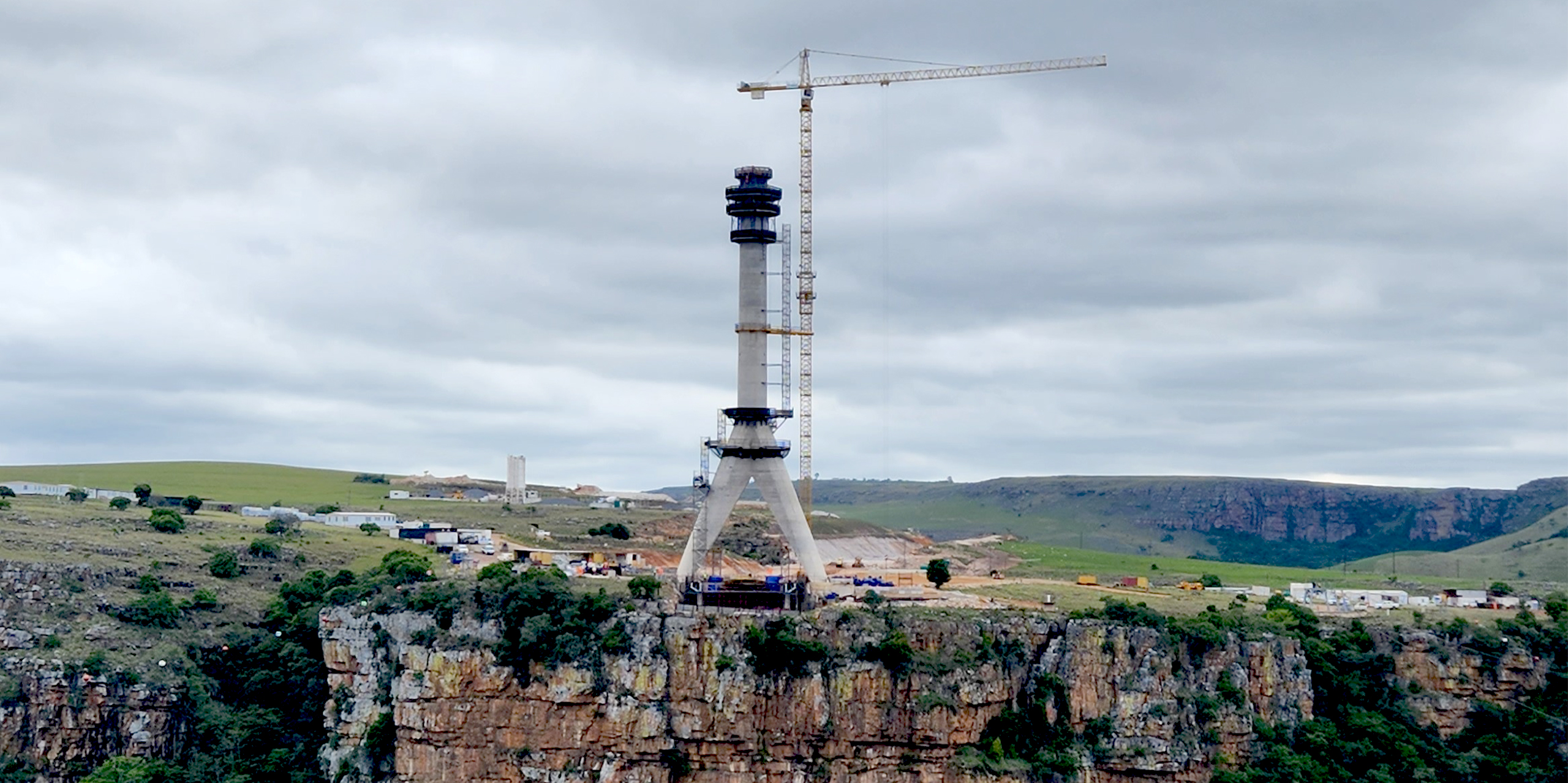
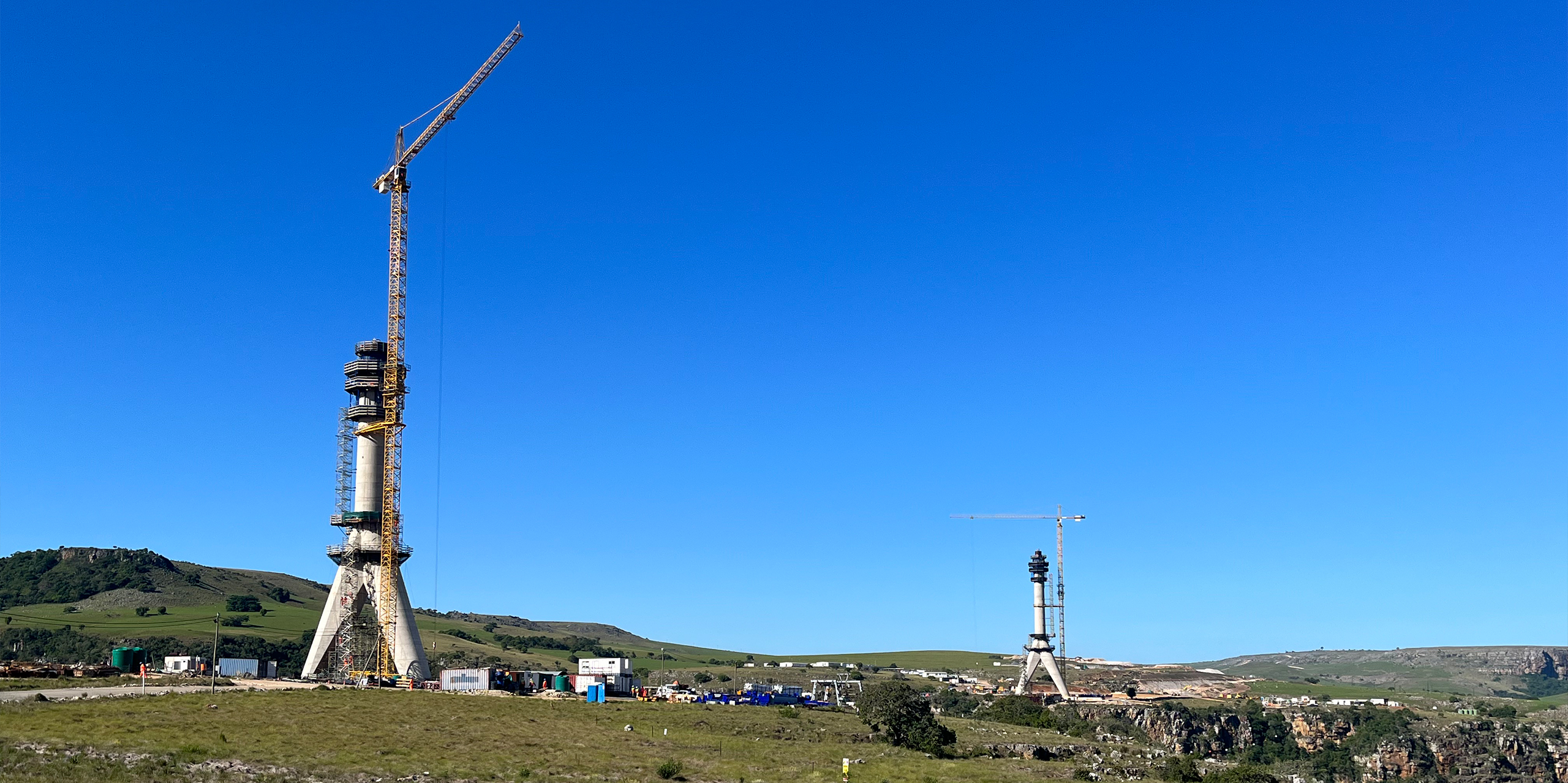
Msikaba project director Laurence Savage regards the bridge as possibly the most complex structure of its type ever to be built in Africa.
The new route will be 69km and 85km shorter than the current N2 and R61 routes respectively, and due to its shorter and flatter path, it will save between 1.5 to 3 hours of travel time for light and heavy freight vehicles.
Although initially predicted by Ramaphosa to be finished by the end of 2023, the completion date is expected to be at the end of this year 2024.
Read: New R4 billion bridge coming to South Africa – set to be the tallest on the continent














 Loading ...