

Cost of living crisis in South Africa laid bare in 8 graphs


The Competition Commission has published its inaugural Cost of Living Report, which assesses the affordability of basic goods and services in South Africa.
The report stems from the commission’s Essential Food Price Monitoring (EFPM) Report, launched in 2020, which observed and tracked the prices of selected essential food items in the country.
The expanded Cost of Living assessments incorporate various non-food items that exert pressure on household budgets.
These include electricity, water supply, rentals for housing, primary healthcare services, minibus taxi fares and petrol, funeral policies, education and internet usage costs.
The report also assesses the role of interest rates in the rising cost of living.
According to the commission, its broader aim is to identify the economic pressures experienced by various socio-economic groups, particularly low-income households, in a time of fluctuating prices and growing inequality.
“While the prices of some of the items in the COL Report are administered prices that are set or influenced by government, such as electricity and water supply, it is important to understand the impact of rising costs for these services on households’ budgets, particularly low-income households,” it said.
The report covers the relevant categories over the period 2020 to 2025 March, tracking the various costs versus inflation over the same period.
The non-food categories revealed the following trends:
- Utility costs: electricity prices increased by 68% and water prices went up by 50% which is a much higher rate than general inflation, which increased by 28%.
- Rent costs: Cost of rent for houses and flats in South Africa increased moderately over the period and remain below overall inflation.
- Health costs: The cost of GP services in 2025 is substantially higher than increases in previous years. This is concerning as only 16% of the population in South Africa is covered by a medical scheme.
- Transport costs: Minibus taxi fares generally tend to increase only when there is a major spike in petrol prices. However, once prices are increased, they are ‘sticky-downwards’ insofar as those price increases are permanent and are not reversed once petrol prices decreased later.
- Insurance costs: The cost of funeral policies remains significantly below overall inflation, and this is encouraging given the importance of funeral policies among low-income households.
- Education costs: Primary education inflation increased by 37% while secondary education inflation increased by 42%, both outpacing overall headline inflation, which increased by 28%.
- Internet costs: Internet usage costs for wired and wireless connections remain below general inflation. The cost of mobile data decreased following the Commission’s Data Services Market Inquiry in 2019 and have remained stable since then.
In terms of food prices—which make up a significant portion of household budgets—the commission flagged worrying trends across essential food categories.
Notably, it pointed to certain times over the past five years where shelf prices for food items continued to increase while producer costs declined.
It previously flagged “rocket and feather” pricing elasticity in the market, where prices would surge in response to higher producer costs, but would take much longer to come down once those costs dropped.
However, it also noted various market events—avian flu, the egg crisis, etc—which impacted pricing. Generally, however, the commission noted price stickiness in the market.
While some staples like canned pilchards have shown signs of responsible pricing at the retail level, other essential food items, including eggs, individually quick frozen (IQF) chicken, brown bread, sunflower oil, and white maize meal, exhibit patterns of price stickiness and widening retail margins.
When considering the increases versus inflation, it is important to also note the changes in salaries over this time.
While the commission does not track this in its report, Stats SA’s salary data shows that the average salary in South Africa increased about 25% between 2020 and 2025, versus inflation of 28%.
This indicates that South Africans also got poorer at the same time as many of the categories went up. The graphs below show how various prices have increased relative to inflation over time.
Electricity and Water Costs
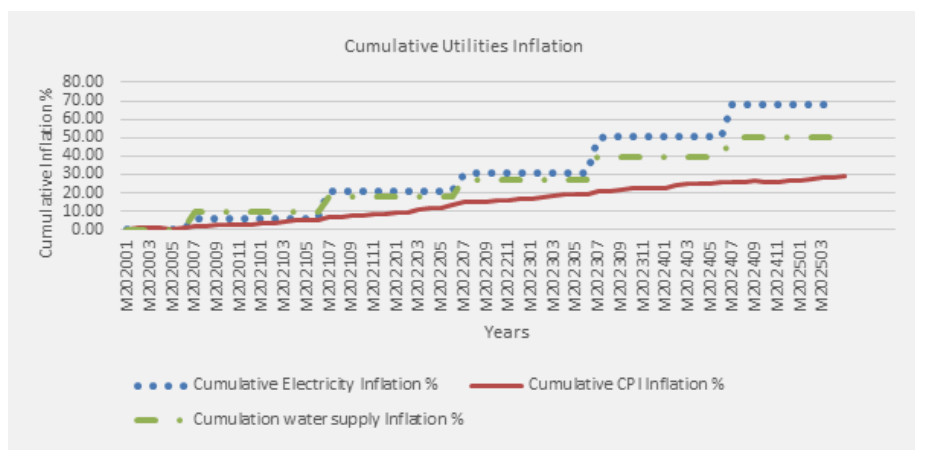
Water and electricity costs have far outstripped inflation, increasing by 68% and 50% since 2020, respectively. This is negatively affecting all households and businesses in South Africa.
Education Costs
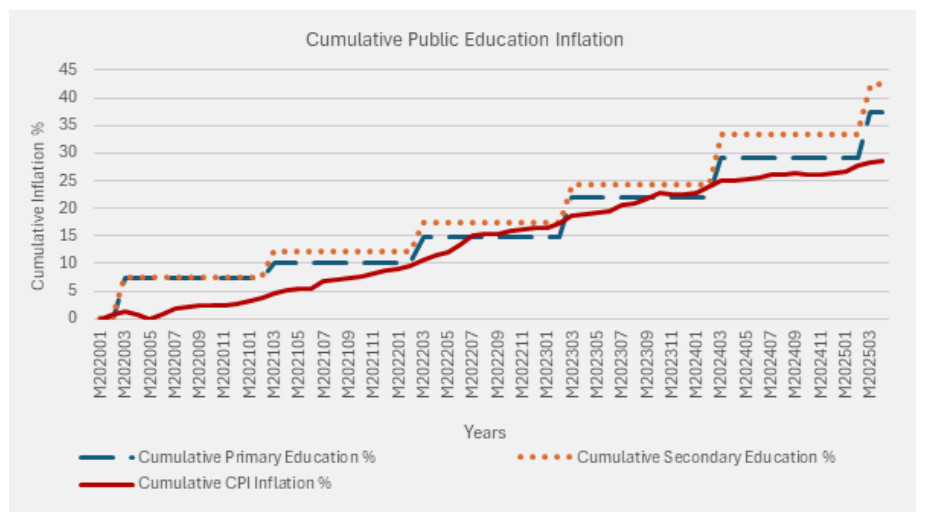
Between March 2020 and 2025, primary education inflation increased by 37%, while secondary education inflation increased by 42%, both outpacing overall headline inflation, which increased by 28%.
It appears that these increases may be due to an increase in financial constraints faced by schools as the number of exemption applications is on the rise.
Bond and Rent Costs
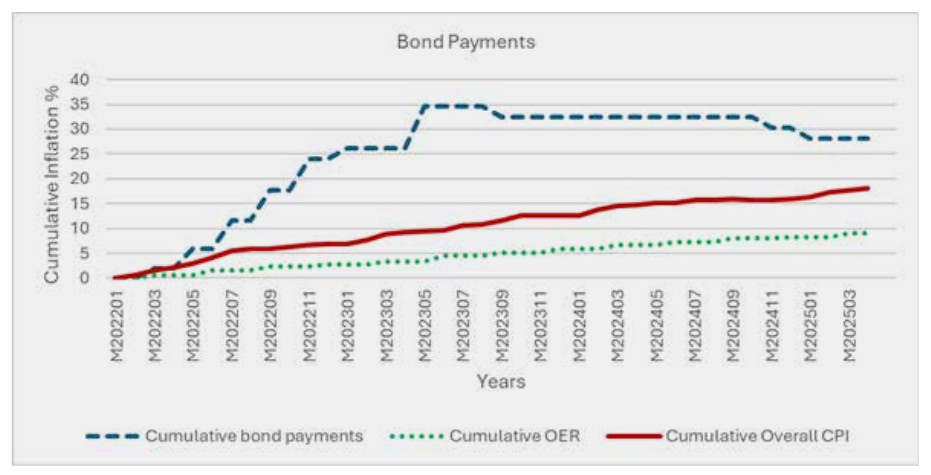
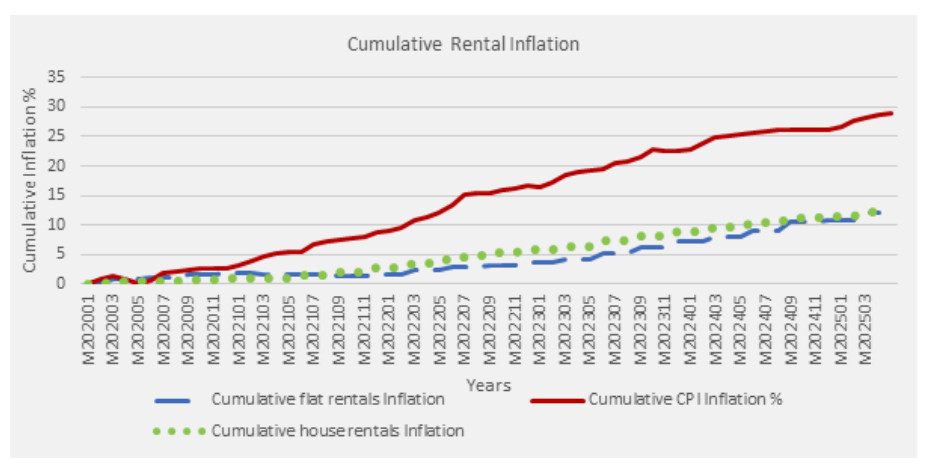
The cumulative change in bond repayments over time has increased significantly due to an increase in interest rates.
Owner’s equivalent rent (OER), on the other hand, shows a moderate increase over time and it remains below overall inflation as this is more closely linked to actual rentals which show a similar trend.
Medical Costs
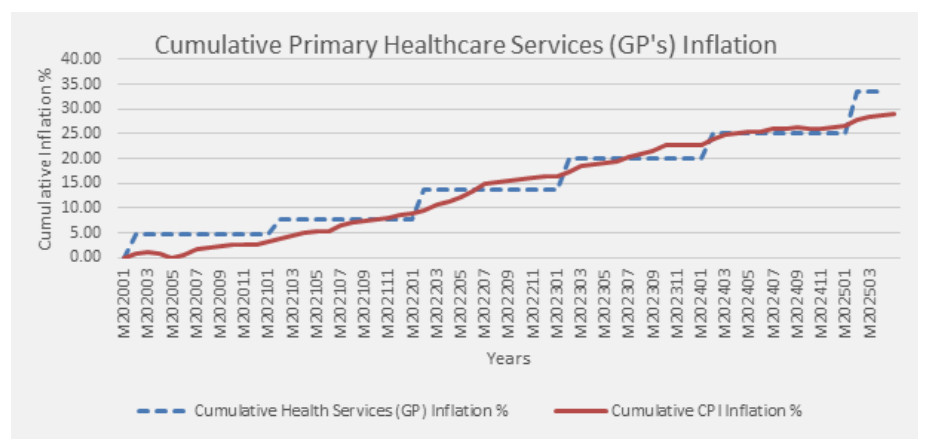
The total increase in GP costs over the period was 33%. While this has largely remained in line with overall inflation, the most recent increase of 6.6% is substantially higher than previous increases of around 4-5%.
This is in the context of slowing general inflation. As a result, it looks likely that primary care inflation will start to outstrip general inflation moving forward.
Transport Costs
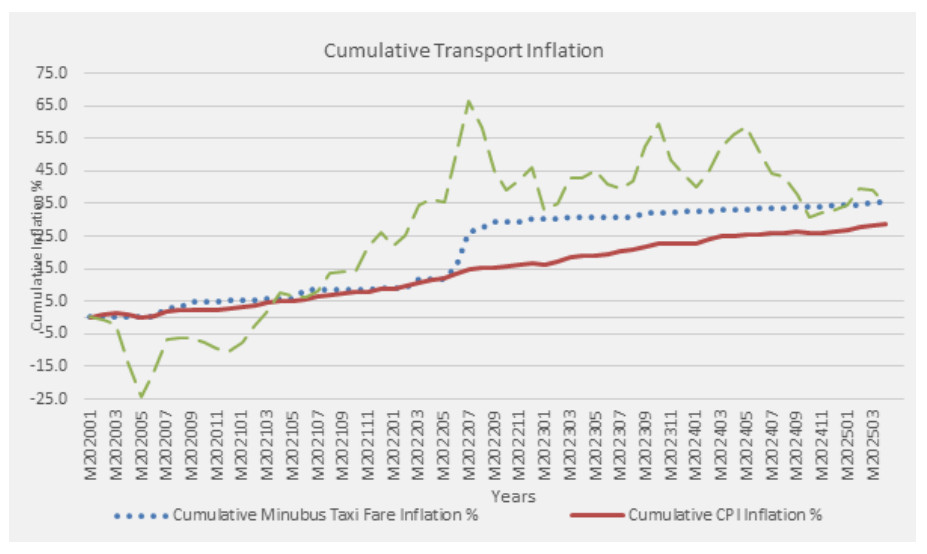
Petrol prices (in green) had been rising for a while before the taxi industry raised fares, opting to do so only in response to a major spike in petrol prices.
However, when prices are increased then they are ‘sticky-downwards’. Subsequent price increases have been below general inflation resulting in the taxi fares starting to converge again with the general inflation trend.
Insurance Costs
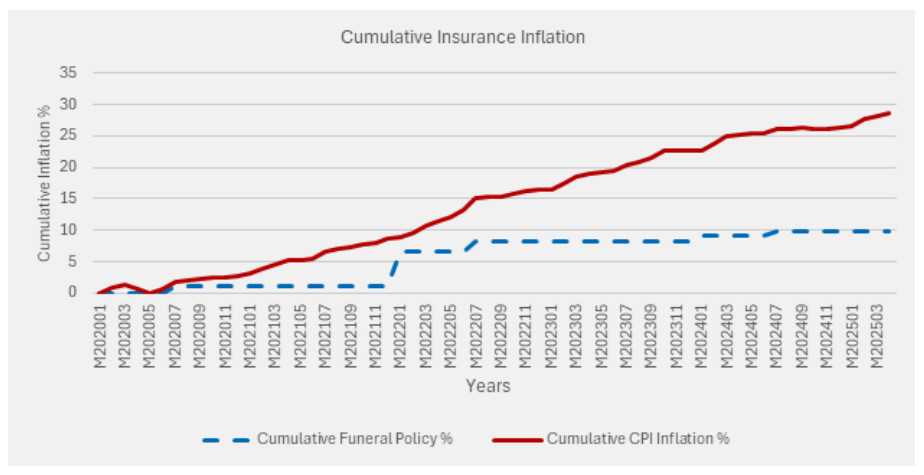
The figures indicate that funeral policies’ inflation increased by 9% over the period, significantly below overall inflation.
Internet Costs
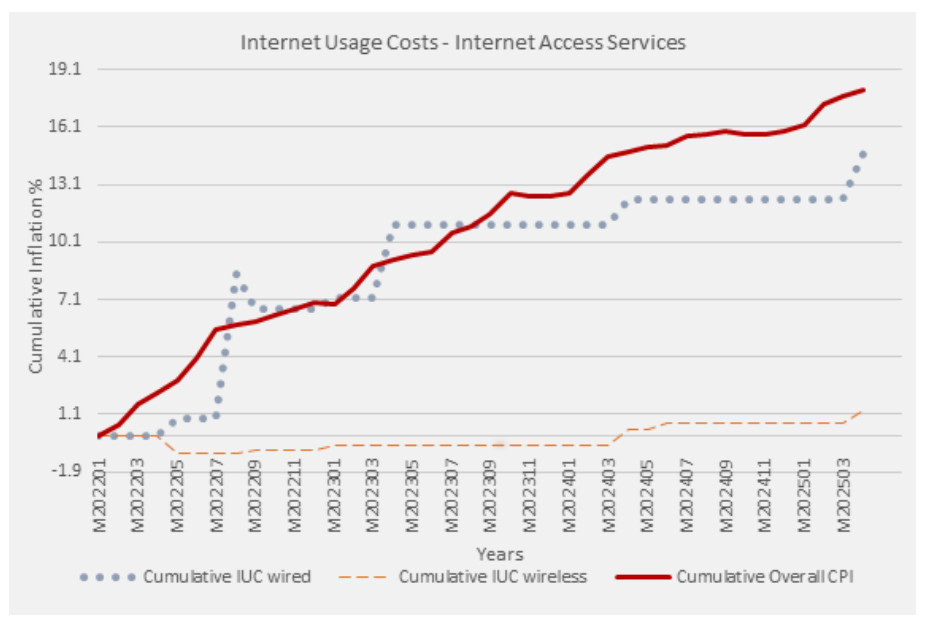
The data for this category is only available from 2022; as such, earlier analysis was not possible.
The cumulative internet usage costs (IUC) for both wired and wireless services between the period January 2022 to April 2025 illustrate that IUC wireless showed a modest CPI increase of 1% throughout the period.
In contrast, CPI for IUC wired increased by 14% throughout the period—still below inflation.















 Loading ...