

End of the only refinery of its kind in South Africa risks R10 billion and 24,900 jobs


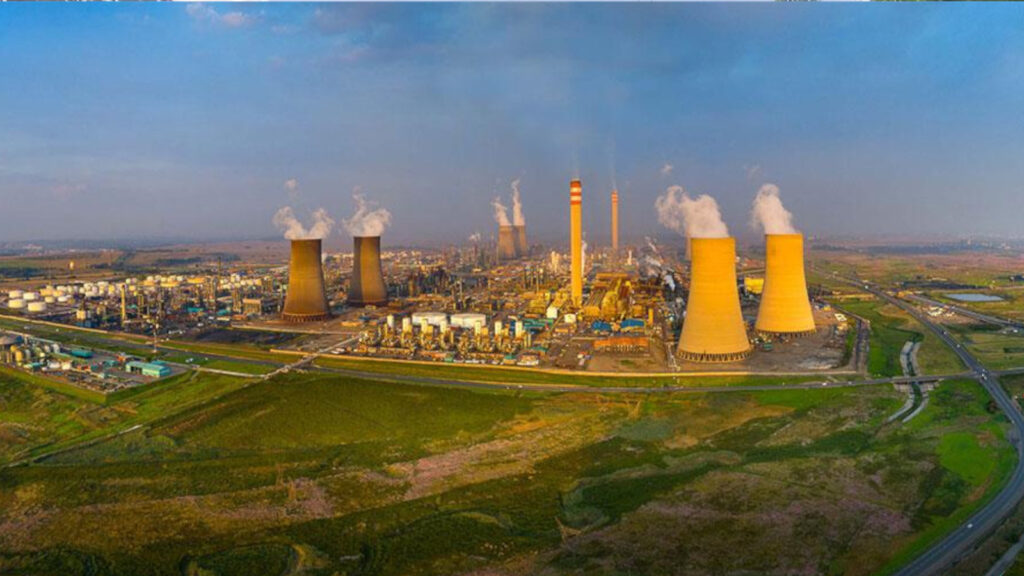
Sasol’s Secunda plant is a major contributor to South Africa’s GDP and fuel supply and is the world’s largest refinery producing fuel from coal.
Academics warn that a sudden end to its operations would strip billions from the economy and take thousands of jobs with it.
The facility was built in the 1980s in response to the 1973 oil crisis to reduce the country’s reliance on foreign fuel imports.
Today, Sasol remains the only inland oil producer in South Africa, with the Secunda facility being the only coal-to-liquid (CtL) operation.
The refinery is supplied by five coal mines surrounding it in Mpumalanga, and works using a process called Fischer–Tropsch.
This process involves heating the coal to approximately 1,300 degrees Celsius, turning it into a gas that can then be synthesised.
In a recent academic article, Nosaibeh Nosrati-Ghods and several colleagues at the University of Cape Town (UCT) noted that Secunda’s CtL operations have a significant economic impact.
The paper said an abrupt end to the CtL process in Secunda could remove almost R10 billion from South Africa’s GDP.
It also noted that if these operations were to end suddenly, roughly 24,900 jobs could be put at risk, and the country would be more reliant on imported fuels.
“Sasol estimates that a rapid/unplanned transition away from coal-to-liquids operations, rather than a phased transformation aligned with long-term climate targets, could reduce GDP by R9.9 billion and cost approximately 24,900 jobs, while increasing reliance on imported liquid fuels,” the paper said.
The paper’s authors said the Secunda facility could face challenges down the road, jeopardising its operations.
“Secunda faces growing structural and operational vulnerabilities, including ageing infrastructure,
declining coal reserves, and escalating exposure to regulatory and financial pressures,” they said.
“Without stricter policy enforcement, these pressures could erode the commercial viability of
CtL operations and precipitate early decommissioning or unplanned restructuring.”
This would pose a challenge to South Africa’s energy supply, since the Secunda facility is the only fuel-making facility in South Africa not reliant on imported oil.
While South Africa’s other two fuel producers, the Natref and Astron refineries, rely on imported crude oil to produce fuel products, Secunda is reliant on the country’s own natural resources.
The carbon footprint
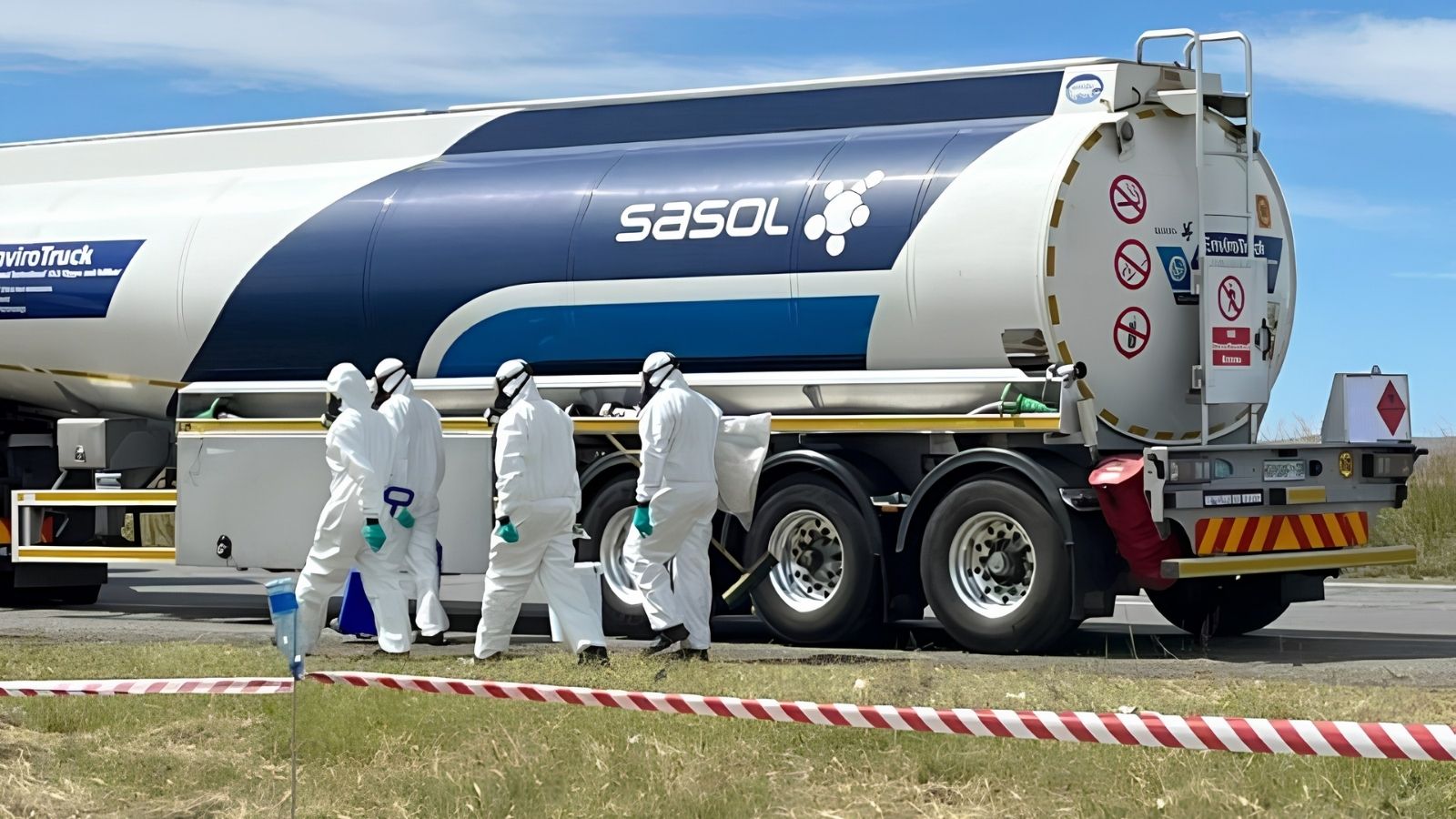
While the Secunda facility adds resilience to South Africa’s fuel supply, experts have warned about its environmental impact.
According to Nosrati-Ghods’ paper, the Secunda facility is a major source of air pollution, accounting for approximately 84% of Sasol’s total carbon dioxide emissions.
Sasol is already one of South Africa’s biggest contributors to air pollution, accounting for 14.7% of the country’s total carbon dioxide emissions.
Nosrati-Ghods and her peers highlighted this fact, calling Secunda “one of the largest single-point Greenhouse Gas (GHG) emitters globally”.
Despite this, the paper’s authors conceded that total decarbonisation of the facility was not realistic in the short term.
“The complex underpins national fuel security and industrial output, yet its dependence on coal-based
feedstock, coupled with high water and energy intensity, makes decarbonisation both technically complex and economically challenging,” they said.
The authors instead proposed that the Secunda plant undergo partial decarbonisation, which could help reduce the country’s overall greenhouse gas emissions.
“Partial decarbonisation strategies—including low-carbon feedstock substitution, electrification, and process integration—offer realistic near-term pathways,” they said.
The authors said that a move to low-carbon production practices could help the Secunda facility in the long-term.
“Low-carbon production can simultaneously reduce emissions and improve resource efficiency across value chains,” they said.
Sasol has faced several environmental challenges related to its facilities, including a planned lawsuit by the Department of Forestry, Fisheries and the Environment.
The lawsuit concerns the alleged dumping of chemicals into the Vaal River system, based on several witness statements and recent pollution studies.
The department initially withdrew its lawsuit on this subject in 2025, but has now chosen to renew legal action based on new information.












 Loading ...