

The man who created BEE in South Africa


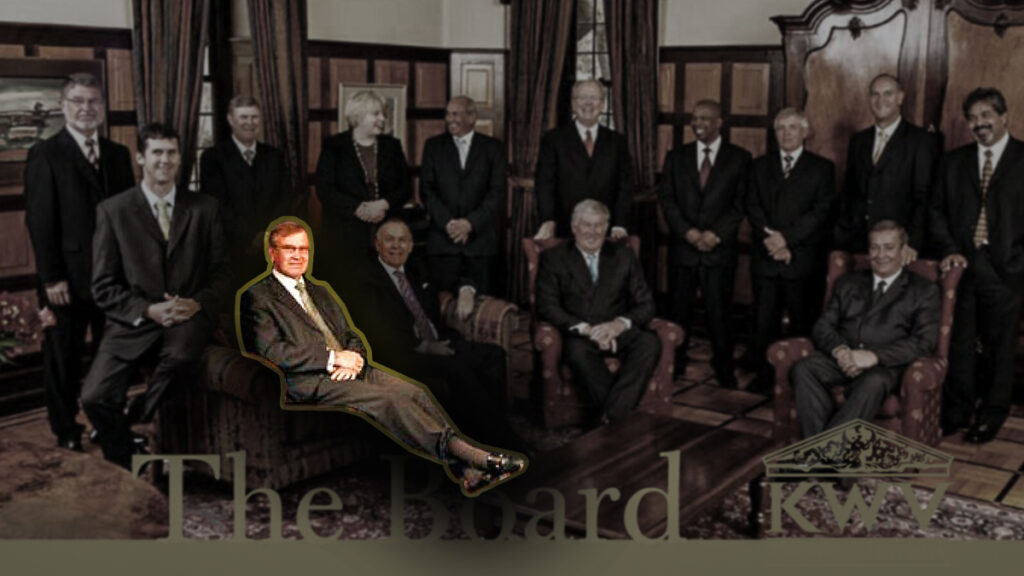
Renowned political economist Moeletsi Mbeki says it is a misconception that Black Economic Empowerment (BEE) was an invention of the ANC.
Instead, it was pioneered by Sanlam, with the mastermind behind BEE being the company’s former executive director, Attie du Plessis.
Attie du Plessis was born on 9 March 1944 in Boksburg. His father worked at the railway and later owned a butcher’s shop.
He attended Laerskool Baanbreker en Hoërskool Voortrekker, and completed numerous degrees and diplomas at Stellenbosch University, WITS, UNISA, and Harvard.
He began his career at Federale Volksbeleggings as an accountant, later advancing to executive director. He then took a job as a financial manager at Wesco.
His most significant work occurred between 1986 and 1997, when he served as the executive director of Sankorp, which was part of Sanlam.
He later moved to Sanlam as an executive director, and served as the chairperson of Business South Africa and president of the Afrikaanse Handelsinstituut.
He was also the chairperson of the Rand Afrikaans University (RAU) Council and a director at Absa and KWV Group.
Attie du Plessis was the brother of Barend du Plessis, a former National Party member who served as Minister of Finance from 1984 to 1992.
Attie du Plessis was one of the Sanlam leaders directly involved in talks with black leaders in exile in the eighties.
The first meeting was in Dakar, Senegal, in 1987. It soon became apparent that the ANC leadership wanted to talk specifically to Afrikaner business leaders.
Grietjie Verhoef wrote that Marinus Daling and Du Plessis were the two leaders from the Sanlam and Sankorp stable who assisted in the talks.
These talks facilitated communication between leaders inside and outside South Africa, leading to peaceful negotiations and democratic elections.
Sanlam and Sankorp created the first BEE deal

Moeletsi Mbeki said many people think BEE was an ANC invention. “However, it was actually invented by an Afrikaans man,” he said.
He said Attie Du Plessis, an executive director of Sanlam’s Sankorp, was the man behind the idea of black economic empowerment.
Sankorp, the strategic-investment arm of Sanlam, concluded what is cited as the first formal BEE transaction in South Africa.
In the 1990s, South Africa’s business sector was concerned about the future stability of the country’s political and economic well-being.
Sanlam executives suggested that helping black people share in the ownership of the mainstream economy would serve their aspirations.
In 1993, Sankorp concluded the first Black Economic Empowerment transaction in South Africa on behalf of Sanlam.
Sankorp sold a portion of its interest in its subsidiary, Metropolitan Life, to a new company, Corporate Africa, which black individuals owned.
A holding company of Metropolitan Life, Methold, was formed jointly with Sankorp and issued shares in Methold. The shares were only available to black buyers.
The transaction was concluded in August 1994, and the name of the holding company, Methold, was changed to New Africa Investments Limited (NAIL).
By the early 1990s NAIL was the largest black owned company listed on the Johannesburg Stock Exchange (JSE).
BEE did not help the South African economy

Mbeki stated that from the outset, he was opposed to Black Economic Empowerment because it did not generate economic value or create wealth.
He told Stef Naudé, then Director-General of Trade and Industry, that he did not think this was what the new South Africa should be doing.
“Transferring shares from white people to black people does not grow the South African economy,” Mbeki said.
“BEE did not contribute to the South African economy and did not create new wealth. They were distributing the existing wealth of metropolitan wealth,” he said.
However, some connected individuals, including Cyril Ramaphosa, were in favour of BEE and the benefits which came with it.
“Cyril Ramaphosa went off to persuade the new ANC government to discuss how it should adopt black economic empowerment policies,” Mbeki said.
The discussion was around how the ANC government should implement the policies which they learned from Sanlam.
“They informed the president about the steps they should take to advance Black people and Black businesses,” he said.
This resulted in the Broad-Based Black Economic Empowerment Act of 2003, which was published during Thabo Mbeki’s presidency.


















 Loading ...