

Storm brewing over Eskom’s threat to homeowners with rooftop solar


Energy expert Chris Yelland has warned that legal challenges loom over Eskom’s threat to cut off unregistered home solar users.
The power utility informed South Africans last week that up to 50kVA must be registered with either Eskom or municipalities and comply with grid code requirements in terms of the Electricity Regulation Act.
To encourage registration, Eskom has extended its “Solar PV registration legal compliance campaign update” until the end of March 2026.
The power utility extended its offer of up to R10,000 in assistance to cover registration and connection fees as well as a free smart meter.
However, Eskom has warned that unregistered, unsafe or non-compliant systems may be refused connection or disconnected in terms of the law.
Customers are urged to register their systems and submit all required documentation before switching on, or to regularise existing installations as soon as possible.
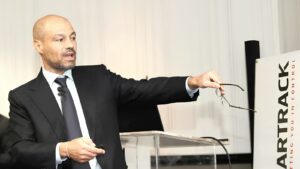
Speaking as an adviser to civil action group The Organisation Undoing Tax Abuse (OUTA), Independent energy expert Chris Yelland said Eskom’s increasingly aggressive registration campaign is already in “dispute territory” and may ultimately need to be tested in court.
He noted that there could be up to 80,000 unregistered electricity customers who have access to alternative energy, making the issue both widespread and legally significant.
He added that fewer than 10% of affected households or small businesses have registered or are likely to do so by the end of March because the requirement is seen as needlessly costly.
Yelland acknowledged that Eskom has launched a temporary concession, waiving a range of registration-related charges until the end of March, including fees for smart meters, tariff migration, connection, and quotations.
However, he questioned the underlying justification for Eskom’s threats, particularly its repeated emphasis on safety.
“This is not a question of safety because Eskom is not the safety regulator behind the meter on the customer’s premises,” Yelland said.
He stressed that safety oversight inside a home falls under the Department of Labour through the Occupational Health and Safety Act and its Electrical Installation Regulations.
According to Yelland, the law already provides a clear safety mechanism through the requirement for a valid Certificate of Compliance (CoC) issued by a registered and authorised electrician.
Legal challenges loom

In his view, this makes Eskom’s attempt to frame the registration drive as a safety imperative as “nothing more than a smoke screen”.
Yelland was particularly critical of Eskom’s reliance on Schedule 2 of the Electricity Regulation Act to justify compulsory registration and potential disconnections.
“I want to point out categorically that in the scope of the Electricity Regulation Act, residential households are specifically excluded from the Act,” he said.
As a result, he argued that any suggestion by Eskom that what it is doing is in compliance with the Electricity Regulation Act is simply not correct, because the Act does not cover residential installations.
While rejecting Eskom’s legal argument, Yelland said it was not unreasonable for the utility to be concerned about fairness and cost recovery.
He acknowledged that households with solar who still rely on the grid from time to time should contribute towards maintaining it.
“Traditionally, we recovered those costs through volumetric tariffs,” he said, adding that it would not be fair for embedded generation users to get “a free ride” while others carry the full infrastructure burden.
However, Yelland cautioned consumers against rushing to comply while the issue remains unresolved.
He said OUTA is currently in discussions with Eskom, but maintained that registration demands remain contested.
“It’s up to individual customers to decide whether they go ahead and register their systems,” he said, but warned that doing so may be premature.
Ultimately, Yelland suggested that the resolution of the current impasse may be for Eskom’s request to be tested in a court of law.
















 Loading ...