

Good news about e-tolls in South Africa



The government has written off the e-toll debt of Gauteng motorists, two years after its gantries were turned off.
South Africa’s cabinet approved SANRAL’s closure of the Gauteng Freeway Improvement Project’s (GFIP’s) historical debt.
The Minister of Transport, Barbara Creecy, and the Deputy Minister, Mkhuleko Hlengwa, welcomed the decision.
The move includes two things: the close-out of GFIP historical e-toll debt and the resolution of all outstanding litigation matters.
The Minister and Deputy Minister said that the decision is a long-awaited step to close the e-toll matter in an orderly and responsible manner.
While the controversial e-toll gantries were turned off in April 2024, motorists were still legally obligated to pay for any e-toll invoices incurred before the cutoff.
However, as was the case when the system was live, many South Africans still did not pay their e-toll debt.
Creecy and Hlengwa said that the move brings much-needed relief and lessens the financial burden to road users, who are currently facing high costs.
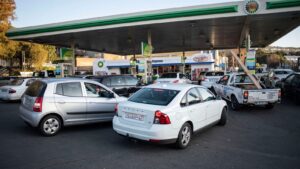
This includes high fuel costs due to the war in Iran and the closure of the Strait of Hormuz, which led to a rapid rise in fuel costs.
GFIP was implemented and operated by SANRAL and introduced as a funding mechanism for the upgraded Gauteng freeway network, going live in 2013.
With the cabinet’s approval, outstanding and unpaid e-toll debt owed by road users will be written off. SANRAL will thus not pursue any further collection of e-toll debt.
Road users who lawfully paid e-tolls when the system was in force will, however, not be refunded.
The no-refund position arises from lawful levies at the time they were paid, that is, before the toll declarations were withdrawn.
The government said that the write-off of outstanding debt gives finality to road users, SANRAL, and the fiscus.
Nevertheless, the government emphasised that the user-pay principle remains an important part of South Africa’s road infrastructure funding framework, provided users accept it after negotiation.
















 Loading ...