

Calm before the storm for South Africa


South Africa’s economy may have surprised on the upside in the first quarter of 2026, but the impacts of the Iran War are only likely to be felt in upcoming economic data releases.
The nation’s GDP rose by 0.5% quarter-on-quarter and moved closer to 2% year-on-year.
This was ahead of market expectations. A Bloomberg survey of economists showed a median expectation of 0.3% q-o-q growth.
Growth was relatively broad-based, with agriculture the standout performer, expanding 3.9%. The finance sector was also positive.
However, Citadel Chief Economist Maarten Ackerman warned that the data reflect conditions before the latest global and domestic headwinds intensified.
“SA’s first-quarter GDP number came in slightly ahead of expectations and confirms that the economy still has the underlying capacity to generate growth,” said Ackerman.
“However, it is important to recognise that this is largely a pre-geopolitical conflict number, supported by the continuation of favourable tailwinds from 2025.”
The US and Israel launched their attacks on Iran on the last day of February, with the Persian nation responding by closing the Strait of Hormuz.
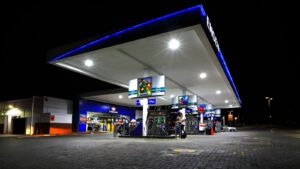
The impact of the war was directly felt by consumers in April, with petrol and diesel prices skyrocketing. These issues are likely to compound signs of fragility seen in the first quarter of the year.
“Household consumption, a key driver of SA’s consumer-led economy, slowed sharply to just 0.1% in the quarter, down from 1.2% in the previous quarter,” noted Ackerman.
“The sharp slowdown in household consumption is concerning; consumers were already under pressure before the latest geopolitical and inflationary risks emerged.”
The economist warned that households may find the coming quarters increasingly difficult.
On top of the household pressure, he added that gross fixed capital formation also declined. Without investment, the nation’s long-term growth potential remains limited.
The storm is coming

“The outlook for the remainder of 2026 is expected to be more challenging,” said Ackerman. The higher energy prices are expected to drive inflation higher, with the Reserve Bank already hiking rates in May.
This will only lead to further pressure on consumers and businesses and further limit growth. Agriculture is also set to be under pressure amid disease outbreaks, adverse weather conditions and higher costs.
“Taking these headwinds into account, Citadel expects SA’s GDP growth to slow to below 1% for the full year in 2026,” says Ackerman.
“The Q1 number tells us that South Africa still has pockets of resilience, but it does not remove the structural challenges facing the economy.
He added that the real test will be whether the country can sustain growth in an environment of tighter financial conditions, weaker consumer finances and renewed global uncertainty.
For investors, Ackerman said that GDP results need to be interpreted with discipline and context, and warned that a direct link between GDP growth and market returns is incorrect.
He noted that markets are forward-looking and often respond to changing interest rate expectations, currency movements and global risk appetite as much as they do to local economic growth.
However, like any other economic environment, the current situation highlights the importance of diversification.
“Fixed-income markets may offer improved opportunities as the monetary policy cycle shifts, while currency markets can present tactical opportunities during periods of heightened volatility,” he said.
“Offshore diversification also remains important, as it provides exposure to broader global growth.”










 Loading ...