

Petrol price joy coming for South Africa in July


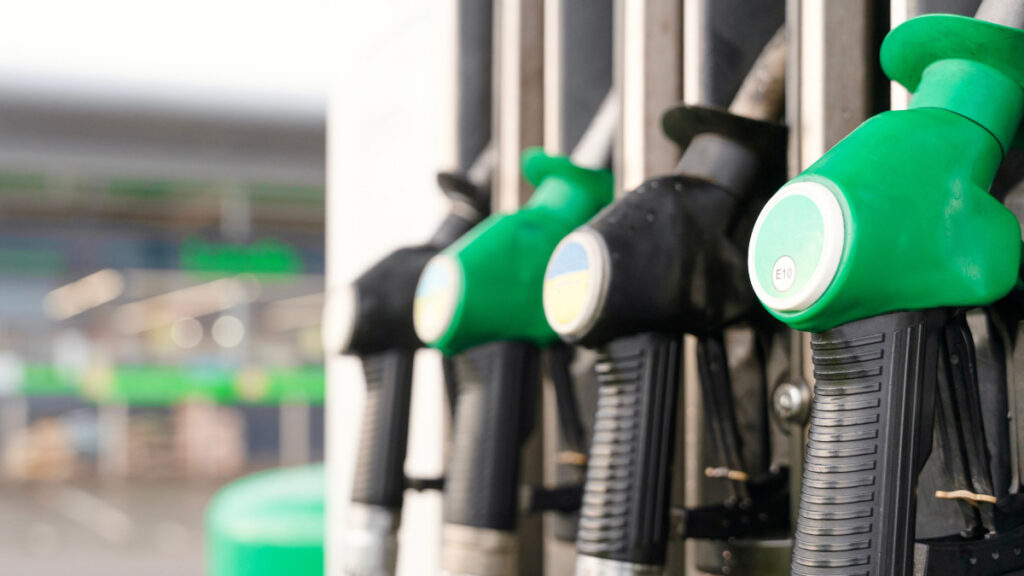
Fuel price recoveries for July, which were already positive, have continued to push in the right direction, lining motorists up for an even bigger cut at the pumps next month.
This follows a wave of positive sentiment in markets after the United States and Iran signed a memorandum of understanding (MoU) to end their war in the Middle East.
However, market tensions are far from over as US ally Israel continues to launch attacks on Lebanon, moving against the very first point of the MoU.
Nevertheless, a weaker oil price—which has now dropped to $80 a barrel—and a range-bound rand are helping recoveries.
According to the Central Energy Fund’s data for the end of week three in June, petrol prices show an over-recovery of R2.87 per litre, while diesel recoveries are far higher, between R4.53 and R4.92 per litre.
This is around 30 cents per litre higher than at the start of the week.
- Petrol 93: decrease of ~R2.82 per litre
- Petrol 95: decrease of R2.87 per litre
- Diesel 0.05% (wholesale): decrease of R4.53 per litre
- Diesel 0.005% (wholesale): decrease of R4.92 per litre
- Illuminating paraffin: decrease of R5.09 per litre
Typically, over-recoveries at these levels would put huge price cuts on the cards for motorists; however, the end of the National Treasury’s fuel levy relief will offset this.
After adding half of the fuel levy relief back into prices in June, the relief will fully terminate in July.
This will see R1.50 per litre be added back into petrol prices next month, with diesel prices having R1.96 per litre reintroduced.
However, even with the levies being added back, the fuel recoveries remain positive—meaning a cut at the pumps is still coming for July.
The table below outlines how the July fuel prices could be impacted by their return.
| July projections | (Under)/Over recovery Mid-month | Fuel tax added back in July | Projected change |
|---|---|---|---|
| Petrol 93 | ~R2.82 | (R1.50) | ~R1.32 |
| Petrol 95 | R2.87 | (R1.50) | R1.37 |
| Diesel 0.05% | R4.53 | (R1.96) | R2.57 |
| Diesel 0.005% | R4.92 | (R1.96) | R2.96 |
Market is still volatile
At this stage in the month, fuel price recoveries give a strong indication of how prices will change in the coming month.
However, it should be noted that the projections do not include any adjustments to the slate levy, which are outlined in the official announcement by the Department of Mineral and Petroleum Resources.
There is also still a window for market fluctuations to work against recoveries.
This can be seen, for example, in the weaker rand at the end of the week. The rand started the week strong, moving to R16.15 per dollar on news of a US-Iran peace deal.
However, these gains were pared back as the dollar strengthened amid hawkish signals from the US Federal Reserve, dampening appetite for riskier assets.
Analysts have said that the dollar’s advance reflects a sharp repricing of US rate risk rather than safe-haven demand.
“Upside surprises in payrolls and persistently low layoffs reinforced the view that the US economy can tolerate tighter policy. For South Africans, this keeps USD liquidity expensive and caps ZAR rallies,” said ETM Analytics in a note.
Investec Chief Economist Annabel Bishop noted that there are now 100% market expectations for a 25-basis-point interest rate hike in the US in October.
“The rand weakened, from R16.15/$ to R16.48/$, as US interest rate hikes place downwards pressure on economic activity globally, and domestically in South Africa,” she said.
Fortunately, the lower oil price is the main contributor to the current over-recovery in local fuel prices, and at $80 a barrel, this puts motorists in good standing.
Investors are currently assessing the outlook for the resumption of crude flows through the Strait of Hormuz, while keeping a close eye on lingering tensions across the region.
According to Bloomberg analysis, while crude prices have sunk, a full reopening of Hormuz may prove to be a tricky and drawn-out operation.
“To run smoothly, the process needs to be choreographed, with ships in the right place, wells restarted, infrastructure repaired and agreement on a de-mining operation,” the group said.
“Some shipowners remain cautious about conditions in the waterway and the Persian Gulf.”
















 Loading ...