

Bankrupt municipality coming after homeowners with solar, and new BEE rules for petrol stations


The South African rand weakened at the end of last week amid a stronger dollar and hawkish signals from the US Federal Reserve, which dampened demand for riskier assets.
The rand traded at 16.50 against the dollar, down about 0.3% from its previous close.
The currency faced pressure as investors reevaluated their expectations for US interest rates. Fed officials indicated that borrowing costs might need to remain high for an extended period to combat inflation.
The dollar strengthened against a basket of currencies, reaching a one-year high. Analysts have noted that the dollar’s rise reflects a significant repricing of US rate risk rather than an increase in safe-haven demand.
“Surprises in payroll figures and persistently low unemployment claims have reinforced the belief that the US economy can endure tighter monetary policy,” said ETM Analytics in a report.
“Additionally, lower Brent crude prices did not offset the rise in short-term US yields. For South Africans, this results in expensive USD liquidity and limits any potential rallies in the rand.”
South Africa’s benchmark government bond maturing in 2035 also weakened in early trading, with the yield rising 5 basis points to 8.32%.
On Monday, 22 June 2026, the rand was trading at R16.44 to the dollar, R21.71 to the pound, and R18.83 to the euro. Gold is trading lower at $4,117.86 an ounce, while oil prices were at $79.27 a barrel.
5 important things happening

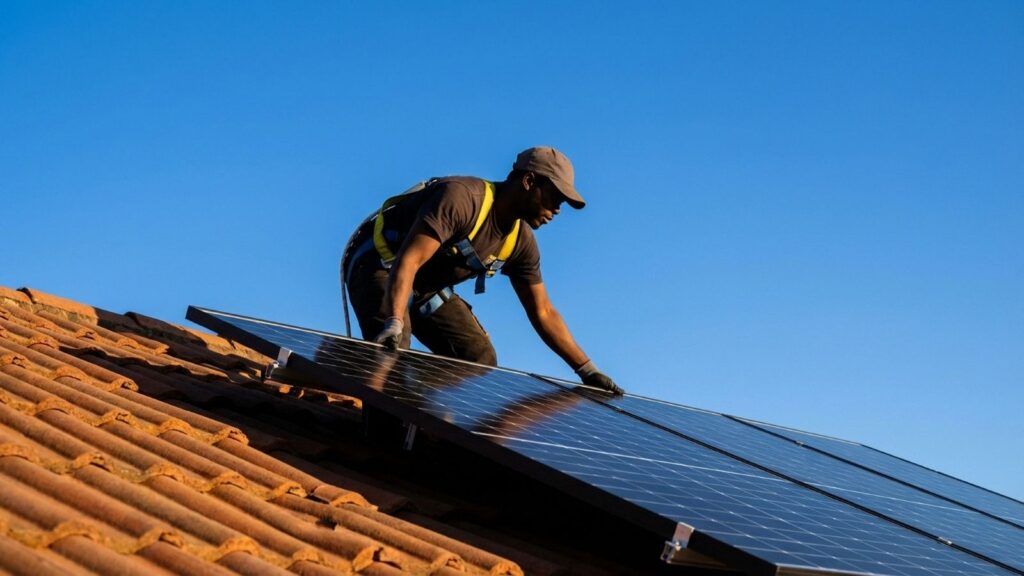
Municipality wants homes with solar power to pay extra fees: Emfuleni Local Municipality plans to introduce a R2,400 application fee and a monthly R463 levy for homes with solar power installations. The municipal council approved this proposal in June. [MyBroadband]
BEE rules for roadside petrol stations: The business group Sakeliga has warned that the South African National Roads Agency’s (SANRAL’s) new draft proposals will impose new broad black economic empowerment (BEE) requirements for petrol stations and other roadside businesses. [TopAuto]
Bad news for anyone with medical aid: The growing number of young people leaving medical aid is creating a negative feedback loop that threatens the sustainability of private medical aids. Medical aid funds are pushing above-inflation premium increases because they are losing healthier members. This leads more of these members to leave, exacerbating the problem. [BusinessTech]
South Africans flock to the United States: Thousands of white Afrikaners are emigrating from South Africa to the US through a refugee programme and H-2A visas. After the first group arrived in May 2025, around 6,500 more followed. An emergency declaration increased the US refugee cap for South Africans from 7,500 to 17,500 due to a backlog of applications. [Newsday]
BEE a concern for international investors: German companies in South Africa are showing cautious optimism amid reform signals and political stability. However, they have cited policy uncertainty and broad-based BEE compliance as significant challenges for business growth in the country. [Business Day]















 Loading ...