

New mandatory licence fee coming to South Africa, and R100 million national shutdown blow


South African markets remain positive, with the rand firming and oil prices dropping, and conditions rapidly returning to pre-war levels.
Oil prices in particular are falling everywhere as a peace deal between the US and Iran unleashes a wave of supply, overwhelming demand from buyers and prompting talk of a glut of crude.
It’s a staggering turnaround: less than three months ago, the world’s main physical oil benchmark hit an all-time high, and only a few weeks ago, senior industry executives were warning that global inventories were reaching critically low levels.
Today, the future of the conflict is still uncertain and much Middle Eastern production remains offline. Global inventories have indeed been dramatically drawn down during the war.
Yet Brent crude futures have already erased all their wartime gains — tumbling 43% from a high in late April — while the physical oil market is flashing signs of weakness more extreme than at any time since the demand collapse of Covid.
For the global economy, the dramatic switch from famine to feast means that worries of an oil-led inflation spike from the biggest supply disruption on record are all but vanquished.
For major oil producers in the Organisation of the Petroleum Exporting Countries, it means that questions about how quickly they can restore production may soon be replaced by questions about whether they are ready to curb supply to prop up prices, or ultimately find themselves in a fight for market share.
Beyond the immediate impact of the reopening, analysts from Morgan Stanley to Goldman Sachs Group Inc. have warned this week that the market is at risk of a glut heading into next year.
“Right now the overwhelming feeling is bearish,” said Kitt Haines, head of oil at Energy Aspects, a consultant.
Even before the US and Iran signed a memorandum of understanding to reopen the Strait of Hormuz in mid-June, suppliers inside the Persian Gulf had been ramping up shipments.
But in the weeks since, there has been a flood of more than 60 million trapped barrels that were frozen in place when the war began.
Both Saudi Arabia and the United Arab Emirates have been at or close to the level of exports they were shipping prior to the Iran war.
This was helped by US military protection while sailing through the Strait of Hormuz, together with pipelines they’ve been using to bypass the waterway.
Iranian oil, for years subject to heavy American sanctions, is now free to purchase again after the US issued sanctions waivers.
The recovery in Hormuz is happening at the same time that much of the oil market’s wartime workarounds are still in place.
China, which helped to stabilise the global market by drastically reducing its purchases, has remained largely on the sidelines.
And every week, millions of barrels continue to flow from emergency underground storage caverns on the US Gulf Coast, part of a record 400 million-barrel release designed to alleviate an oil crisis that no longer exists.
“The market is facing the risk of a temporary glut as trapped oil finally re-enters a system that has already spent months learning how to function without it,” Natasha Kaneva, the head of commodities research at JPMorgan Chase & Co., said in a note.
“The barrels now exiting Hormuz increasingly have nowhere to go except China. But China is not buying.”
It’s a surplus that’s visible on both the trading screens of Wall Street and the supertankers ploughing the world’s oceans. [Bloomberg]
5 important things happening today
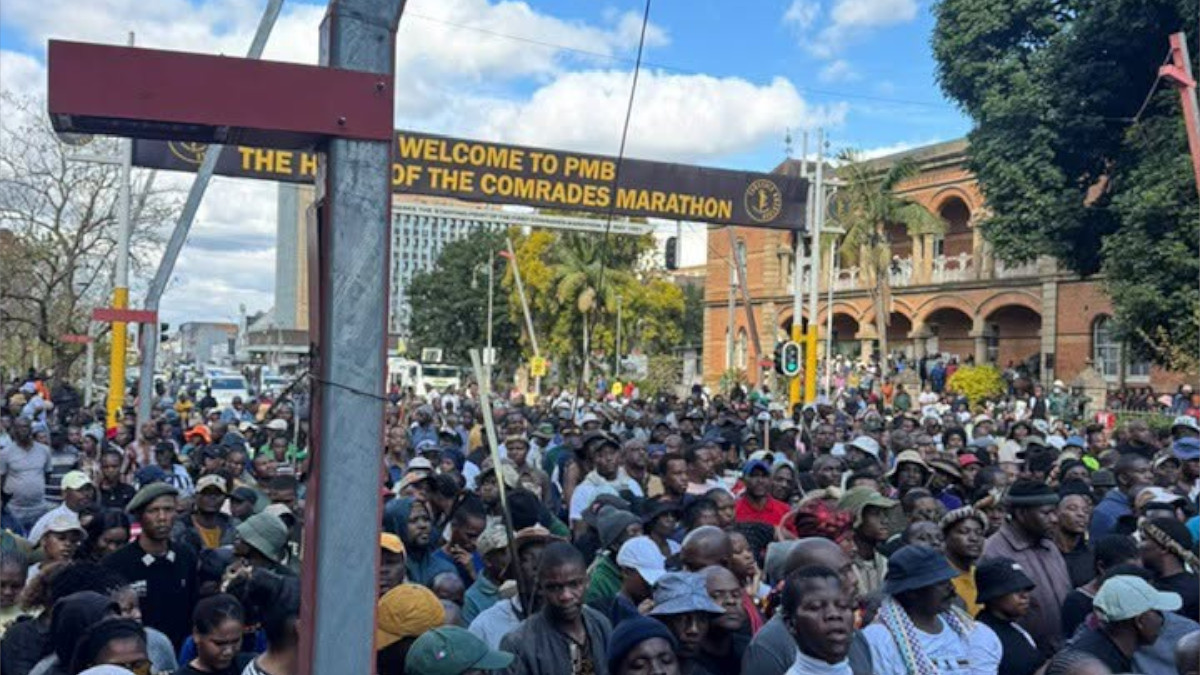
National shutdown cost: South Africa’s road freight and logistics sector reportedly lost as much as R100 million as a result of the national shutdown which took place on 30 June 2026. This figure reportedly included all cost estimations for extra security, extra shifts, extended warehousing, trip delays, and paid days for employees told to stay home. [Daily Investor]
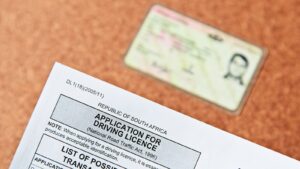
New licence fee: Minister of Transport Barbara Creecy has confirmed that the government is working on a new funding model for the Road Accident Fund (RAF). Creecy said there was merit in a separate mandatory RAF fee, which would be tied to vehicle registrations and licence disc renewals. [Top Auto]
Number plate changes on ice: Gauteng’s Department of Roads and Transport has put its plans to introduce new number plates on hold due to technical limitations. The new license plates were unveiled in June 2025, with plans to roll them out across Gauteng within six months. [Newsday]
Load shedding allegations: Former President Thabo Mbeki alleged that Eskom managers intentionally allowed the power utility to descend into load-shedding to exploit tender processes. It was one of the major allegations made by Mbeki during his speech at the 2026 National Democratic Revolution (NDR) Seminar, held on 29 June 2026. [Mybroadband]
Affordable housing debate; South Africans are divided over the City of Cape Town’s proposal to redevelop the King David Mowbray Golf Club into a mixed-use, high-density precinct. The plan has caused one of the city’s biggest debates. It puts the need for affordable housing against worries about losing a historic sports facility and a valued green space. [BusinessTech]







 Loading ...