

Warning to taxpayers being auto-assessed in South Africa


Tax experts are warning South Africans who are auto-assessed to review their income and remain compliant.
This recommendation is particularly relevant for all auto-assessed taxpayers, especially those with freelance work, additional income, or those who made withdrawals under a two-pot retirement system.
Everest Advisory Services CEO Thys van Zyl warned South Africans who view tax season as an annual administrative exercise to see it instead as an opportunity to conduct a comprehensive review of their overall financial position.
“Tax season should not simply be seen as another form that needs to be completed,” he said.
“Taxpayers who receive auto-assessments should carefully review their income, deductions, medical tax credits, investment income, retirement fund contributions and any two-pot withdrawals before accepting the assessment.”
Van Zyl said that the growing use of auto-assessments has simplified the administrative process, but it has not reduced the taxpayer’s responsibility.
He said that the South African Revenue Service’s (SARS) systems are far more advanced today.
The systems use information submitted by employers, banks, medical schemes, retirement funds, and other third-party data providers.
Experts warn that taxpayers should consider an auto-assessment as a draft rather than a final tax calculation.
This means that if any information is missing or incorrect, the tax return must be amended and resubmitted.
According to Van Zyl, many taxpayers mistakenly believe that an auto-assessment is always complete and error-free.
“A simpler process does not mean less responsibility. The ultimate responsibility for ensuring that all income, deductions and tax information are complete and accurate still rests with the taxpayer,” he said.
Van Zyl said the two-pot retirement system has also introduced a new tax risk that many people may not yet fully understand.
“For many taxpayers, this may be the first tax season in which the full tax implications of withdrawals from the savings component of the two-pot retirement system are reflected in their tax record,” he said.
Two-pot retirement systems
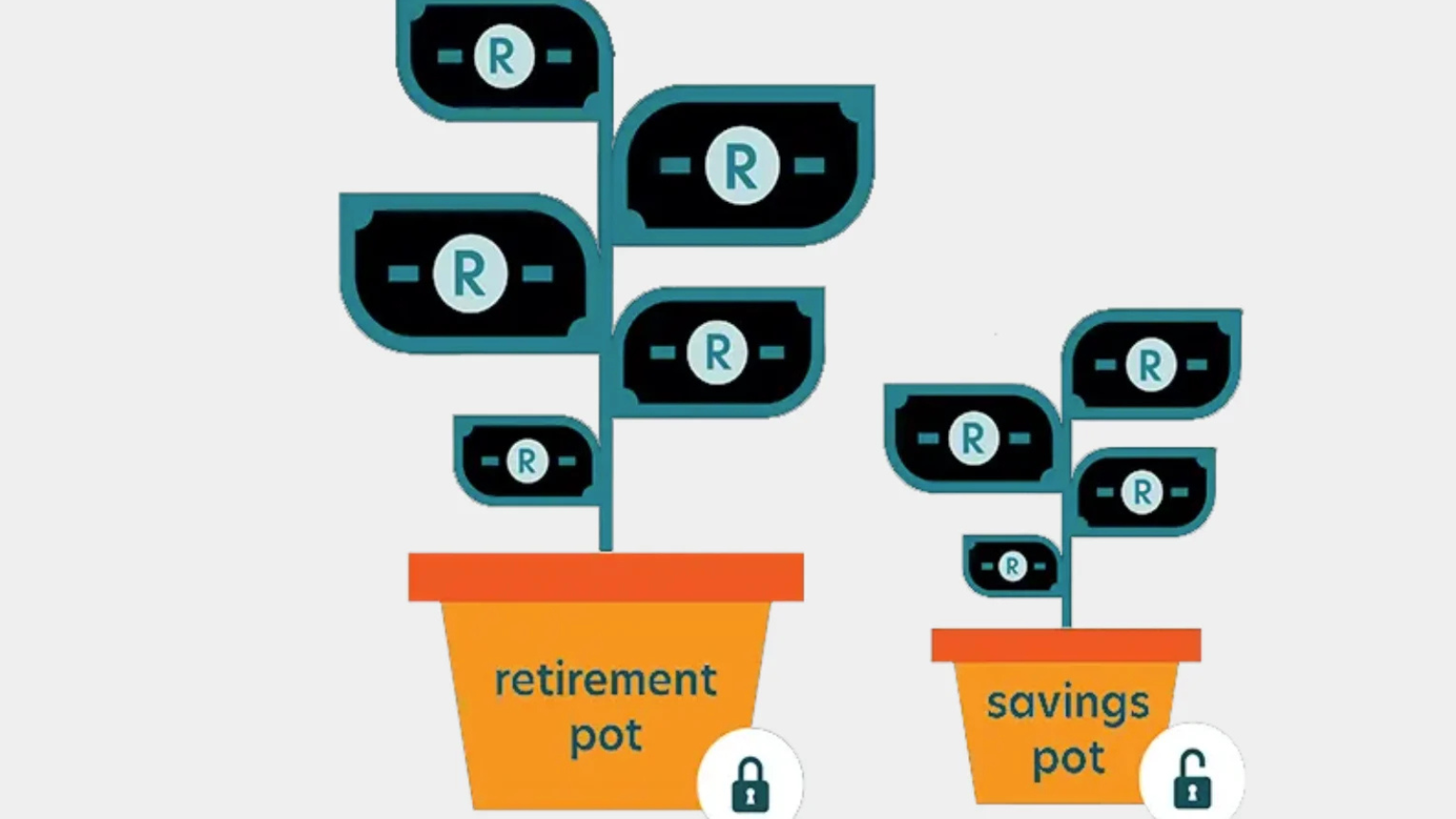
“The biggest misconception is that such a withdrawal is tax-free emergency funding or simply a bonus. That is not the case,” said Van Zyl.
He explained that withdrawals from the savings component form part of a person’s taxable income.
“When your annual tax assessment is calculated, your total taxable income may still be higher than expected, which could result in an additional tax liability.”
According to Van Zyl, although the two-pot system can provide temporary financial relief, each withdrawal carries tax implications and may also decrease the future compound growth of retirement savings.
Financial services group Alexforbes recently announced that it had processed and paid more than one million savings pot withdrawal claims since 2024, when the two-pot retirement system was introduced in South Africa.
The average amount claimed from each savings pot withdrawal is over R14,000, and the average turnaround time for each payment is five business days.
The group recorded more than R3.6 billion that was paid to the South African Revenue Service (SARS) on behalf of members.
Alexforbes revealed claims data, which indicates that many members are using the savings pot repeatedly across tax years. They reported that 67% of members who claimed in the 2025 tax year also submitted claims in 2026.
It was revealed that 38% of members who filed claims in the 2026 tax year submitted their claims within the first month of the 2027 tax year.
Additional data indicates that 31% of members who submitted claims in the 2025 tax year have made withdrawals within the past three years.
The group noted that these trends demonstrate a strong awareness and understanding of the two-pot system among members, highlighting an increasing desire among retirement fund members to access cash regularly.


















 Loading ...