

Warning to all people with a company vehicle as a perk in South Africa


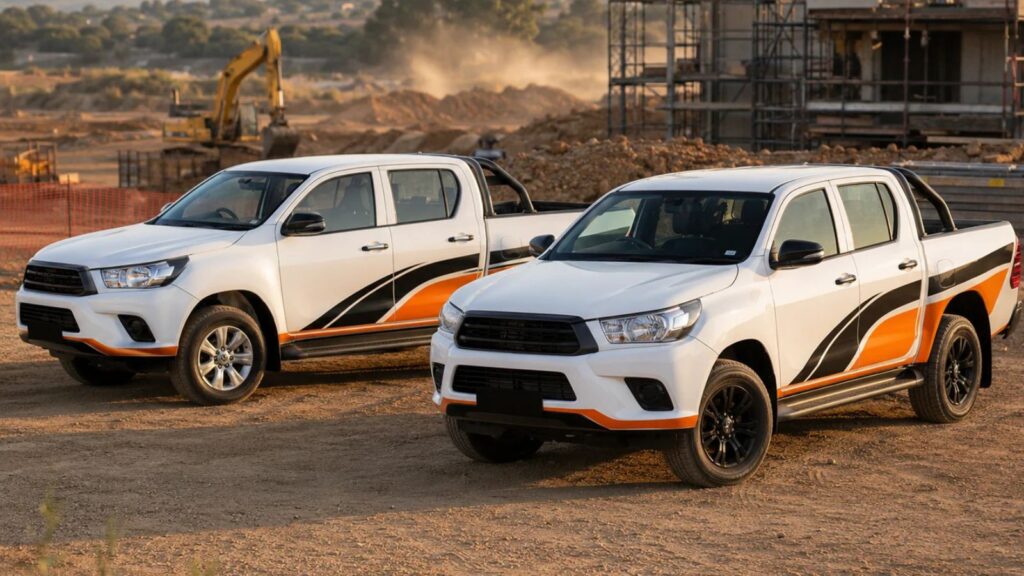
Tax experts warn that the idea of a tax-free company car does not exist because of the hidden costs associated with it.
The 2026 Budget has introduced an increase in general fuel levies. As a result, employees whose companies provide a company car but do not cover personal fuel expenses may experience higher commuting costs.
For those whose companies cover fuel expenses, while the calculations for fringe benefit tax will continue to be based on the vehicle’s standard value, the overall corporate cost of maintaining the vehicle will increase.
SARS considers the personal use of a company vehicle as additional income, and they calculate a monthly “taxable benefit” that is added to your payslip.
This extra “benefit” results in an increase in your Pay-As-You-Earn (PAYE) tax, meaning you end up paying more than you would if you used your own vehicle.
“A company car is usually not worth it. The lack of VAT recovery and the monthly fringe benefit tax make it expensive,” said Accounting and Tax firm Nuvia Auditors.
“You’re better off buying the car yourself and, if applicable, using a modest travel allowance to cover business trips.”
The monthly fringe benefit for a vehicle is calculated as a flat percentage of its determined value, which is based on the original purchase price, including VAT but excluding finance charges.
The percentages are as follows:
- 3.25% per month if the vehicle includes a maintenance plan.
- 3.50% per month if there is no maintenance plan.
It is important to note that, even if you have high business travel, an employee’s employer is required to withhold tax on the full fringe benefit each month.
The employee will receive an adjustment only after they file their tax return and provide logbook records. The accounting firm warned that this situation can create a cash flow disadvantage throughout the year.
The group said that if an individual has very high business mileage, a company car can be advantageous due to short-term tax depreciation and the company covering costs.
However, it is important to carefully compare this option with using a personal car and receiving a travel allowance.
The VAT misconception

In some cases, the group said, the allowance approach may provide similar or even better benefits with less hassle.
Tax experts clarify that a common misconception regarding company cars in South Africa pertains to VAT.
When a company purchases a passenger vehicle, such as a typical car, it cannot reclaim any input VAT, except in rare cases, such as for car dealerships.
The company must absorb the full 15% VAT on the purchase price, with no possibility of a refund.
According to the group, for example, if a company purchases a car for R500,000, the VAT would amount to R65,217 (at a rate of 15%).
The company cannot reclaim this R65,217 from SARS, as it is considered a sunk cost.
If a person were to buy the car personally, they would find themselves in the same situation regarding VAT, meaning there is no advantage to purchasing the car through the company.
When a business purchases an asset like a car, it can claim wear-and-tear (depreciation) for tax purposes.
The company is allowed to deduct a portion of the car’s cost each year, typically over a period of five years for vehicles.
This deduction helps reduce taxable income during those years, providing an upfront tax benefit.
However, there is an important consideration known as recoupment. If the company later sells the car for more than its tax-written-down value, the difference is added to taxable income in that year.
In simpler terms, the South African Revenue Service (SARS) can recoup some of the tax advantages gained from depreciation.

















 Loading ...