

South Africans cutting off streaming services, medical aid, and downsizing their homes



Cost-of-living pressures are forcing many households to cut back on discretionary spending, cancel subscriptions, reduce medical spending, and even move into smaller homes to better manage their finances.
According to TransUnion’s Consumer Pulse Study for the second quarter of 2026, households remain under significant financial strain, with little evidence of recovery over the past year.
The report found that only 43% of consumers said their finances were better than planned, while 40% reported being worse off than expected, reflecting what it described as “persistent strain rather than deterioration.”
Inflation remains the dominant concern for consumers, with 79% of respondents ranking it among their top three worries.
TransUnion said the pressure has been intensified by the persistent gap between income and inflation, which has left many families with little choice but to adjust their household budgets.
As a result, consumers are increasingly prioritising essential expenses while scaling back on non-essential spending.
The report noted that entertainment and subscription services have become some of the first expenses to be cut.
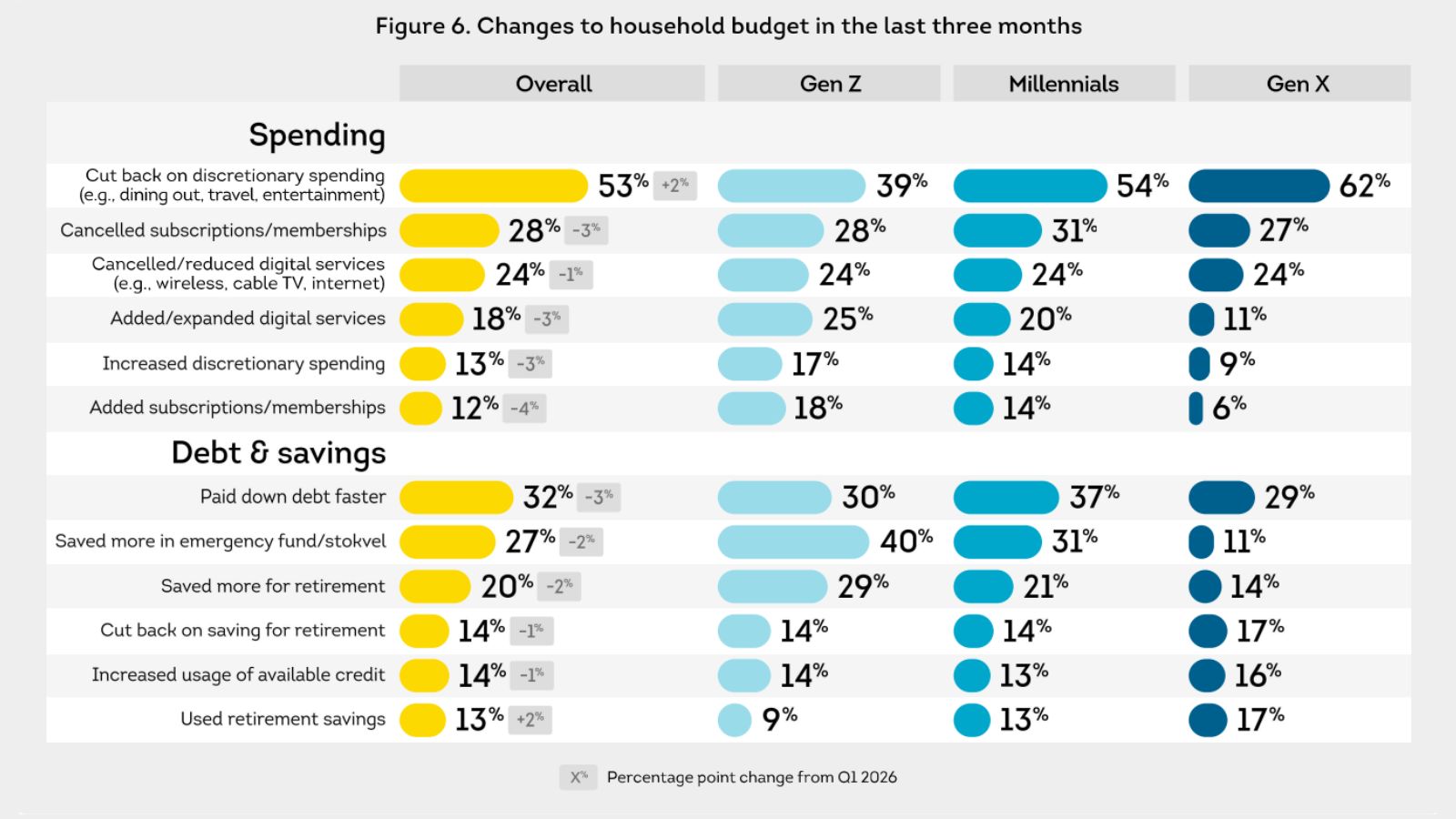
Over the past three months, 24% of consumers either cancelled or reduced digital services such as internet, cable television or wireless services, while 28% cancelled subscriptions or memberships.
The biggest spending cuts, however, have been in discretionary categories such as dining out, travel and entertainment, with 53% of respondents saying they had already reduced spending in these areas.
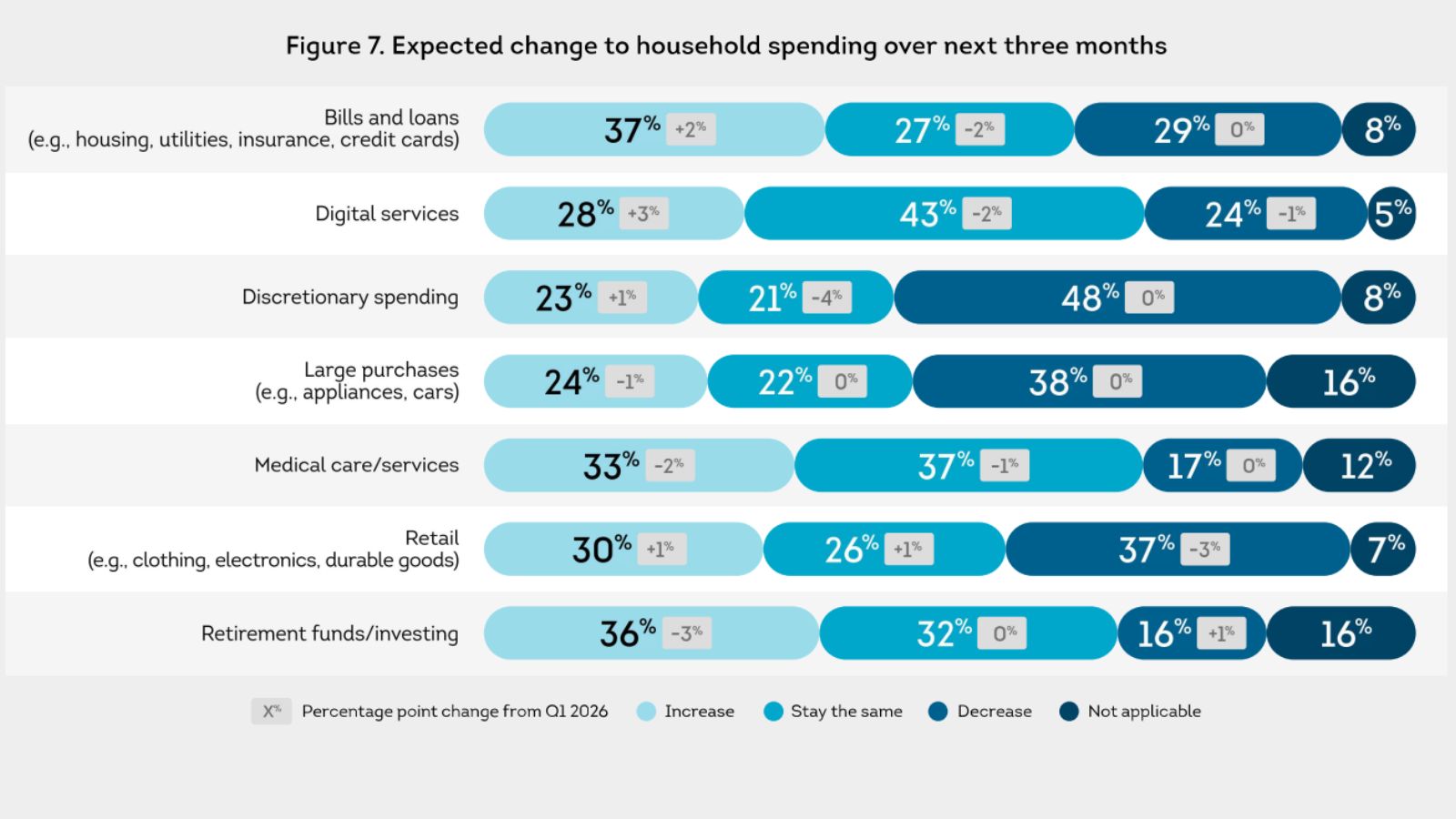
Consumers also expect to scale back spending elsewhere. Around 33% anticipate spending less on medical care and services over the coming three months.
37% expect to reduce spending on bills and loan repayments, while 36% on retirement savings and investments, and 30% on retail purchases.
The financial pressure is becoming severe for many households. Nearly four in ten respondents, or 39%, said they expect they will be unable to pay at least one of their current bills or loan repayments in full during the next three months.
Rates and taxes are impacting the property market
According to Raksha Darji, a senior economist at the Competition Commission, the cost-of-living crisis has been building for several years and continues to intensify as international and domestic pressures combine.
She said the crisis began following Russia’s invasion of Ukraine almost four years ago and has since been compounded by local structural challenges.
The burden is particularly heavy for lower-income households and younger South Africans trying to establish themselves financially or enter the property market.
“Low-income households spend about 66.81% of their income on food and housing utilities, leaving almost no room to absorb any shocks that may come their way,” Darji said.
She noted that electricity prices have increased by roughly 85% over the past six years, while water prices have risen by nearly 70%.
Both increases are substantially higher than overall inflation, which has risen by just over 30% during the same period.
As household budgets become increasingly stretched, many South Africans are also rethinking where and how they live.
Just Property CEO Paul Stevens described the current residential property market as “the great downsizing,” with homeowners increasingly choosing smaller, more affordable properties that are cheaper to maintain.
Stevens said demand for sectional title properties continues to grow as households seek relief from rising municipal tariffs, utility bills, security costs and property rates.
He added that buyers younger than 44 now account for almost half of all residential property purchases nationwide.
“These buyers want homes that support the way they live now. They want efficiency, security and financial manageability, which they’re finding in smaller, well-located units,” Stevens said.


















 Loading ...