

Company managing over R3 trillion in South African pension funds in deep trouble


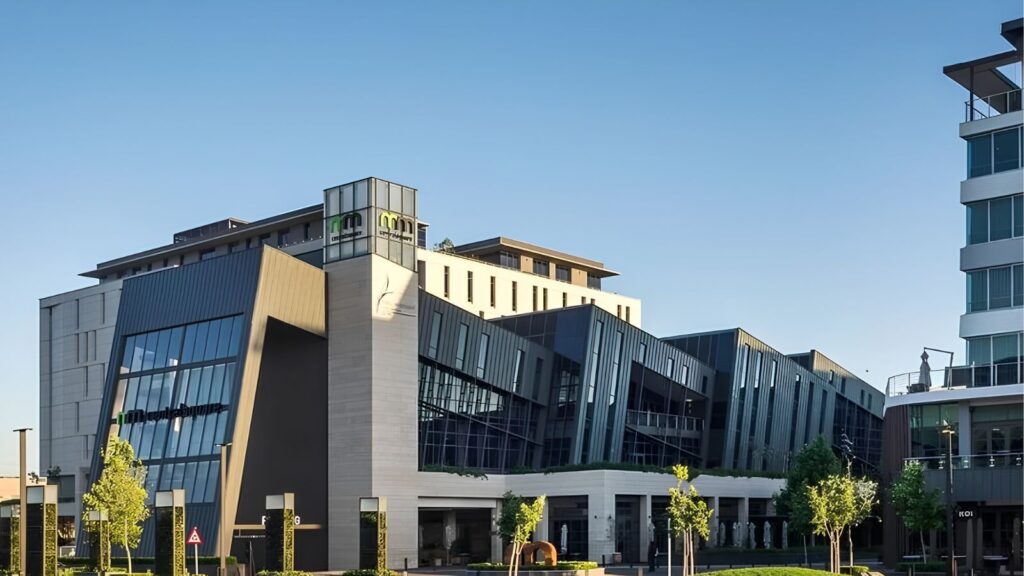
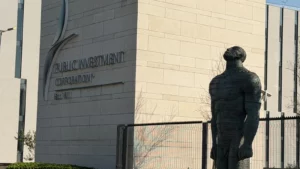
The Public Investment Corporation (PIC), which manages more than R3.6 trillion in public sector assets, is facing the biggest governance crisis in its history.
This has raised concerns about the leadership of the institution responsible for investing the retirement savings of millions of South African government employees.
The PIC is Africa’s largest state-owned asset manager. Around 88% to 89% of the assets it manages belong to the Government Employees Pension Fund (GEPF).
This means it oversees more than R3 trillion in public servants’ pension savings. The remainder comes from public funds, including the Unemployment Insurance Fund (UIF) and the Compensation Fund.
The current crisis began after a 26-page whistleblower complaint was submitted to the PIC board and Parliament in June 2026.
As a result of the complaint, chief executive Patrick Dlamini was suspended and acting chief investment officer August van Heerden was removed from the role.
Additionally, the Financial Sector Conduct Authority (FSCA) launched a formal investigation into the PIC’s governance and operational stability.
The decision to suspend Dlamini exposed deep divisions within the PIC board. The board reportedly voted 9-2 in favour of suspending him.
The two directors who opposed the move later resigned, followed by four more non-executive directors, bringing the total number of resignations to six within days.
Critics have noted that these appointments form part of a broader pattern of executive instability, with five senior executives suspended or removed over the past two years.
Independent analyst Khaya Sithole said the governance crisis extends well beyond the whistleblower complaint and is rooted in a years-old transaction involving Lanseria International Airport.
“The whistleblower isn’t really the start of the conversation. It is a transaction that would have given that whistleblower some basis for saying something had gone wrong,” he said in an interview with Kaya Biz.
Investment activity is likely to slow significantly
Sithole explained that the dispute dates back to around 2013, when the PIC funded an entity called Acapulco to buy a stake in Lanseria Airport. Under the agreement, the PIC could take ownership of the shares if the loan was not repaid.
“The question would have been, how much do you owe us versus what is the value of the shares that you are being forced to surrender,” he said.
According to Sithole, there is no dispute that Acapulco owed the PIC roughly R600 million. The disagreement centres on the valuation of the airport shares when ownership transferred to the PIC.
“If the shares were worth R600 million, this would have been the end of the conversation,” he said.
“If the shares had been worth less than R600 million, it would mean that the PIC is still owed something. If the shares were worth more than R600 million, it would mean that the PIC could take over the shares and pay the excess.”
He said this ultimately resulted in about R400 million being paid to Acapulco, prompting Dlamini to question the outcome.
This didn’t make sense, as Acapulco borrowed R600 million and never paid it, and to exit, the PIC had to pay.
Dlamini subsequently commissioned a PwC review of the transaction, but some board members argued he lacked the authority to do so, leading to his suspension.
Sithole said the chief investment officer’s departure has made matters worse, as the CIO normally oversees investment valuations and settlements.
“For the PIC to then let him go at the same point in time while this remains unresolved adds a layer of complexity where you’ve now paralysed the structures within the PIC,” he said.
He also argued that Deputy Finance Minister David Masondo, as board chair, should explain how the crisis unfolded.
“When a board finds itself in a crisis of this nature, the very first person who should be able to answer the question of what’s going on is the chairperson of the board,” Sithole said.
Despite the turmoil, Sithole said pensioners should not fear an immediate loss of their retirement savings.
“R3.6 trillion does not get wiped out overnight,” he said. However, he warned that investment activity is likely to slow significantly.
“Pending mandates, pending transactions and pending decisions are going to be paralysed by the simple fact that there’s no one left in the room to be making critical decisions,” he said.
Sithole warned that continued governance failures could make it increasingly difficult for the PIC to attract experienced investment professionals.













 Loading ...