

United States ambassador to South Africa in hot water


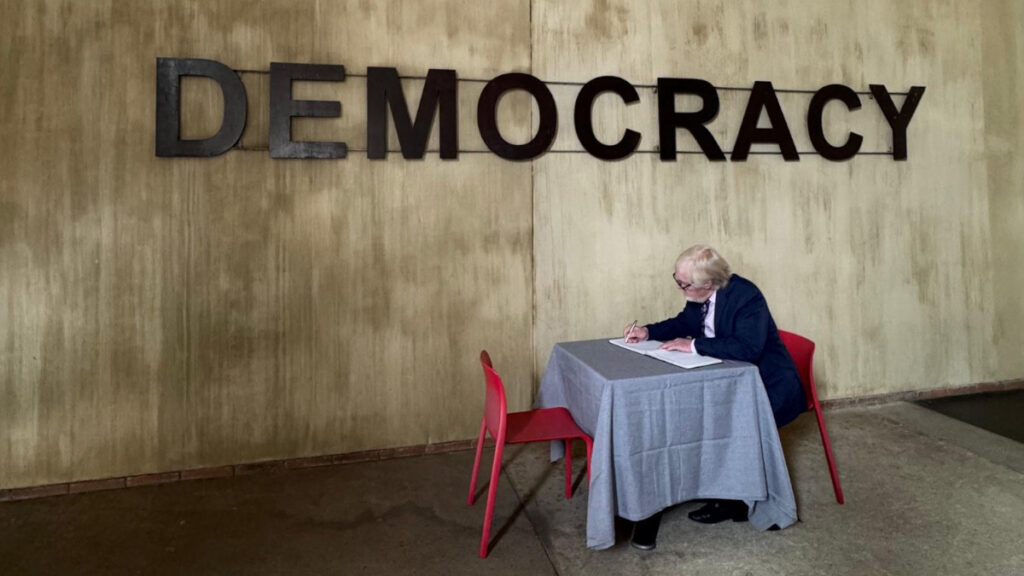
The Department of International Relations and Cooperation (DIRCO) has summoned United States Ambassador to South Africa, Leo Brent Bozell, to answer for his recent criticisms of the government.
DIRCO confirmed to the SABC that it had issued a demarche to Bozell this week—the second one this year.
A demarche is a formal political and diplomatic response from one government to another, typically expressing protest.
The move is unsurprising, given Bozell’s recent public statements and op-eds openly criticising the South African government and President Cyril Ramaphosa in particular.
Bozell has now been called in to explain what DIRCO characterised as “undiplomatic conduct”, the SABC said.
The US ambassador this week penned a lengthy op-ed, in which he called the South African government’s statements about the United States’ diplomatic demands “spin” and untruthful.
He outlined the process that he and Washington followed in presenting the so-called “five asks” to Pretoria to restore relations between the two countries.
By his account, the “asks” were presented to South Africa in November 2025, and his arrival in February 2026 accelerated discussions around them.
However, it was only in September that Ramaphosa delivered a formal response—after 9 months—and it failed to address the United States’ concerns.
This led US Secretary of State Marco Rubio to impose visa sanctions on targeted South Africans.
The South African government’s official response to the matter differs, with officials noting that a comprehensive response was provided.
It has since characterised Bozel and Rubio’s statements as attempts by the United States to remove South Africa’s sovereignty and force the government to bow to its demands.
Bozell was previously demarched in March 2026, after he said he didn’t care what South Africa’s courts had ruled about the “kill the boer” chant, saying it was hate speech.
He later backtracked on the statement, saying it was a personal view, and that “the US government respects the independence and findings of South Africa’s judiciary.”
This same stance will be tested with the Constitutional Court’s ruling on the Expropriation Act.
The five “asks” and the differing responses are outlined below:
| Ask | US Response | SA Response |
|---|---|---|
| That the South African government not interfere with the United States’ processing of Afrikaner refugees | This has been addressed. | This has been addressed. |
| That expropriation without compensation should not be allowed | Partly addressed, but not by the government. The matter is with the Constitutional Court, which will have final say. | The government supports land expropriation without compensation. The matter is with the Constitutional Court, which will have final say. |
| That President Ramaphosa and other senior government officials condemn the singing of “Kill the Farmer! Kill the Boer!” | Ramaphosa and the South African government refuse to condemn it. It has not been addressed. | “South Africa has enacted the Prevention and Combating of Hate Crimes and Hate Speech Act 16 of 2023. This legislation sets a stringent legal framework for the eradication of hate speech and the prosecution of hate crimes. This law is binding on both the State and non-state actors.” |
| That rural crime (ie farm murders) be formally designated a priority crime, with a real, announced plan to address it | The United States has offered financial support, with several plans available, including one designed by the South African government itself. It has not been addressed. | “The South African government remains seized with the challenges of crime in South Africa, which affects everyone and not targeting anyone based on their race, colour, or social origin.” |
| That South Africa create alternatives, such as equity equivalent investment programs (EEIP) to Broad-Based Black Economic Empowerment (BBBEE) ownership requirements | The South African government allows some business sectors to participate in EEIP but refuses to offer it to the telecoms or mining industries. | “It is our sovereign right to put in place laws that address the nation’s concern over centuries of racial injustice.” |













 Loading ...