

A sign South Africa is going backwards


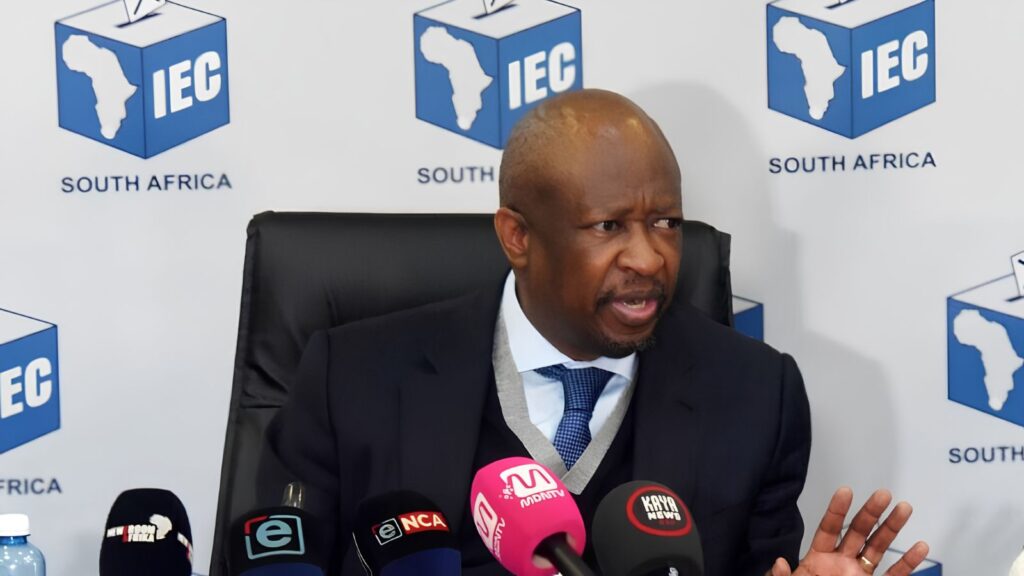
Former Statistician General Pali Lehohla stated that the low voter registration turnout is indicative of a democracy that is failing.
As the Electoral Commission of South Africa (IEC) intensifies voter registration efforts ahead of the 2026 local government elections, low voter turnout remains a significant concern.
Recently, the IEC has urged eligible voters to register or update their voter registration details online.
They have reminded the public that the Online Voter Registration Portal is zero-rated across major mobile networks.
This means users can access the registration portal without incurring mobile data charges, allowing them to register to vote or update their registration details even if they have no data available.
However, the IEC has emphasised that users must enable mobile data on their phones to connect to the portal.
While airtime or an existing data balance is not required to use the service, mobile connectivity must be activated.
The commission encourages voters not to wait until the last minute to check their registration information and ensure their details are up to date ahead of the 2026 Local Government Elections.
IEC Chief Electoral Officer Sy Mamabolo anticipates that Cooperative Governance and Traditional Affairs Minister Velenkosini Hlabisa will announce the local government election date next month.
Mamabolo spoke to the house of traditional leaders in preparation for the August voter registration weekend.
”After the second registration weekend on the 1st and 2nd of August, we anticipate that the Minister of Cogta, Velenkosini Hlabisa, will proclaim the election date,” said Mamabolo.
Mamabolo stressed that the President merely announced the date and that it has not yet been legally proclaimed.
Low voter turnout linked to poverty

Lehohla stated that the low turnout is not indicative of a maturing democracy, but rather results from factors such as poverty, unemployment, and a lack of action.
His research on the Labour Disappearance Index has shown a troubling correlation between a shrinking labour force and decreasing voter turnout.
In an interview on Talk Radio 702, Lehohla said that in 2025, 17.6 million people were employed, against 17.6 million people who were not economically active.
He said that this corresponds to the collapse of democracy, which can be plotted from 1994 to 2026. “In South Africa, democracy is disappearing as a consequence,” said Lehohla.
Lehohla explained that research into South Africa’s democracy found that 68% of the population found that democracy is not working.
He attributed this consensus as the driving force behind low voter turnout, and as fewer people turn out to vote in elections, more minority parties engage in “vulture culture”.
“The problem is that when you slide into that, you never know when you will come out. So, this is a very serious problem that we have to address,” he said.
“Under those circumstances, there is no democracy,” Lehohla explained in terms of the “vulture culture”.
He said that with a low number of voters, corruption will grow and the state could be destroyed. Lehohla proposed that putting power in the hands of the people was key to reviving democracy.
He said that when democracy disappears, the state disappears, and explained that after compiling and analysing the data, the results are too harrowing to contemplate.
Lehohla explained that once people see the data, grapple with it and use it to think about their own futures, it should enable people to claim their power, which could make them want to vote, and then “democracy comes alive again.”
“We need data… We don’t need food packs and T-shirts. We need data to activate democracy,” he said.


















 Loading ...