

How much it costs to visit South Africa’s most expensive national park – with locals getting a 78% discount


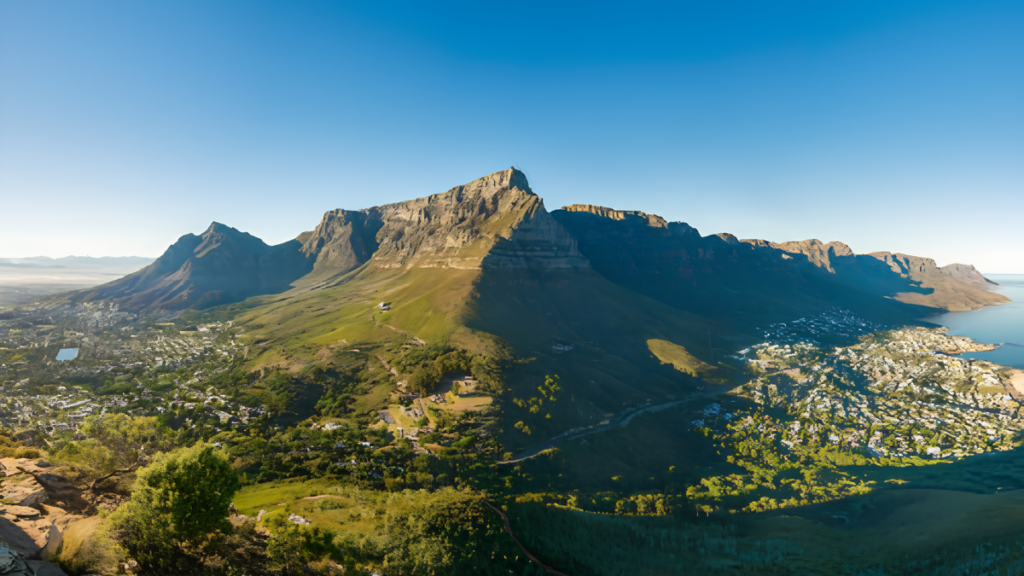
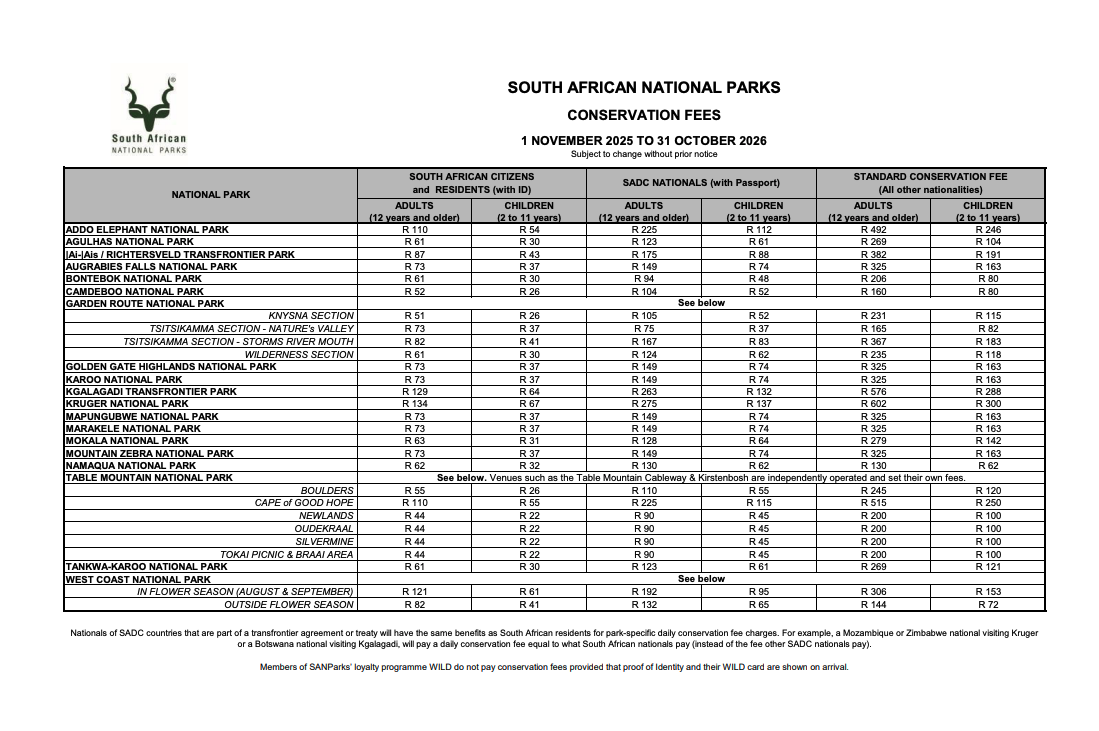
A South African adult entering Kruger National Park must pay R134 per day—78% cheaper than the R602 rate charged to foreigners.
By contrast, the lowest standard entry fee for a national park is R44 for an adult, which is a R90 difference before accounting for travel, food, or activities.
For a family of two adults and two children, the difference in entry costs is even more significant.
Entry to the Kruger National Park costs R402, while a national park with a R44 entry fee and a R22 fee for each child comes to R132. This creates a disparity of R270 for the same basic access.
These rates are applicable from November 1, 2025, to October 31, 2026.
For the rates, adults are defined as visitors aged 12 and older, children as those aged two to 11, and infants under two are admitted free of charge.
West Coast National Park is excluded from the main ranking since its fees fluctuate with the seasons.
For example, the resident adult price is R121 in August and September, compared to R82 outside the flower season. Mixing these two rates would make a standard year-round comparison less consistent.
Kruger National Park is one of South Africa’s Big Five destinations, with entry fees set at R134 for adults, R67 for children, and R402 for two adults and two children.
Another notable park is Kgalagadi Transfrontier Park, renowned for its red dunes and iconic black-maned Kalahari lions, where the pricing is R129 for adults, R64 for children, and R386 for families of two adults and two children.
Table Mountain National Park, particularly the Cape of Good Hope section, charges R110 for adults and R55 for children, which comes to R330 for a family of four.
In Addo Elephant National Park, which is a significant reserve for elephants and the Big Five in the Eastern Cape, the entry fees are R110 for adults, R54 for children, and R328 for two adults and two children.
The country home to 21 national parks
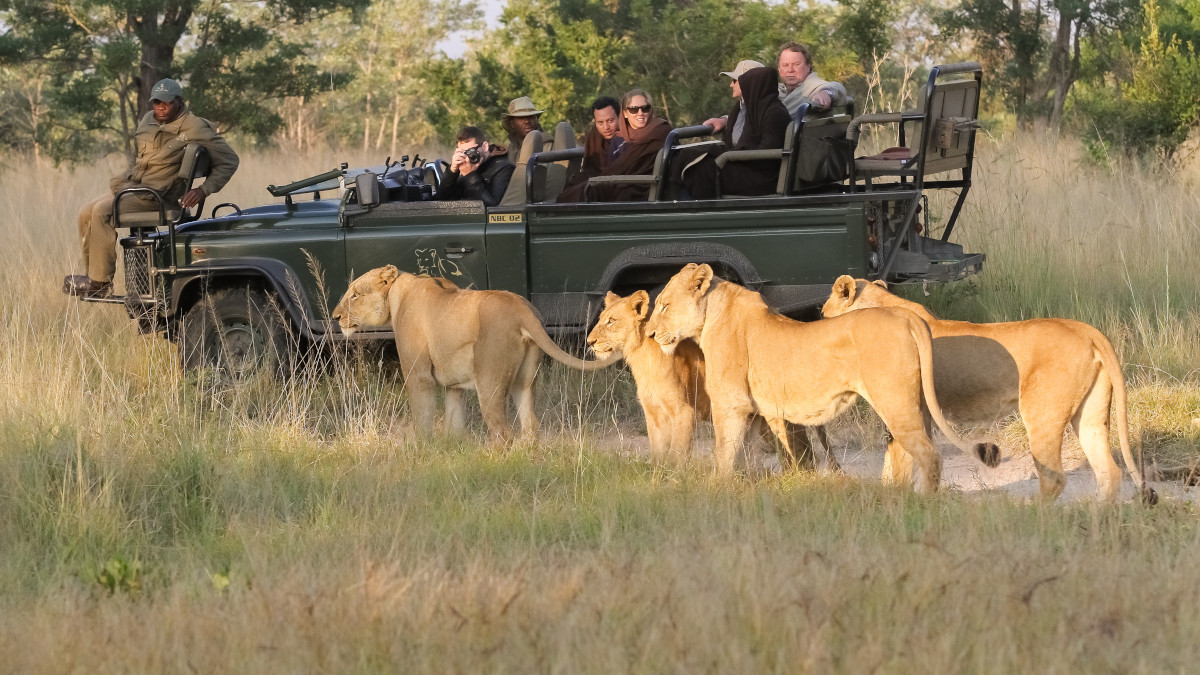
As a prominent conservation authority, SANParks is a public entity governed by the Department of Forestry, Fisheries and the Environment (DFFE).
Its central focus is on inclusive conservation, in contrast to past policies that emphasised exclusion.
SANParks said the shift supports advancing policies aligned with the National Development Framework for Sustainable Development and the National Development Plan.
There are 21 national parks in South Africa, which feature three UNESCO World Heritage Sites and ten marine protected areas.
This is outlined in the National Environmental Management: Protected Areas Act No. 57 of 2003.
These parks represent approximately 70% of state-owned terrestrial protected areas and 22% of state-managed marine protected areas.
These parks cover more than four million hectares (ha) of land and nearly 370,000 ha of sea.
Five of these parks are essential components of Transfrontier Conservation Areas that collaborate with Namibia, Botswana, Zimbabwe, Mozambique, and Lesotho.
SANParks said rates are in South African Rand and include VAT, but they can change without advance notice.
Visitors should also check which proof of South African status is accepted before travelling, as resident rates require qualifying identification, such as valid ID’s or passports etc.
The figures cover daily conservation entry only. Accommodation, travel, food, activities, parking and separately operated attractions are not included in the family totals.
South African National Parks Entry Fees









 Loading ...